






SleekPixel for astrologers and horoscope writers
Online astrologers build audience through weekly horoscopes, transit alerts, and full-moon readings, each shipping as a square Instagram card. SleekPixel reads each astrology post in WordPress and renders the card from the sign, transit, date range, and reading-excerpt custom fields on the post.
♾️ Lifetime License available
From horoscope post to a shareable weekly card
Astrology audiences expect a steady cadence of content. Weekly horoscope per sign, transit alerts as they happen, full-moon and new-moon readings, eclipse alerts, mercury-retrograde explainers. Each of those needs its own visual identity in the feed, and each has to ship reliably without burying the astrologer in card-design tax.
SleekPixel reads the astrology post in WordPress as the source of truth. Weekly horoscope posts have a sign taxonomy term, a date_range custom field, a transit_summary field, and a reading_excerpt. Transit-alert posts have a transit_name and an aspect. Templates compose those fields into card variants, one family per content type, all sharing the same astrological visual language so the feed reads as a unified body of work.
The astrologer writes the reading, fills the fields, and the cards render. Weekly horoscopes ship 12 cards (one per sign) from one source post when the template uses the sign taxonomy to loop. Transit alerts ship a single card. Full-moon readings ship a feed card and a story variant. The rollout becomes a one-step share instead of a half-day design task.
Workflow
Set up the astrology rollout system
Define the astrology post types
Design the template family
Connect taxonomies
Publish the reading
Output
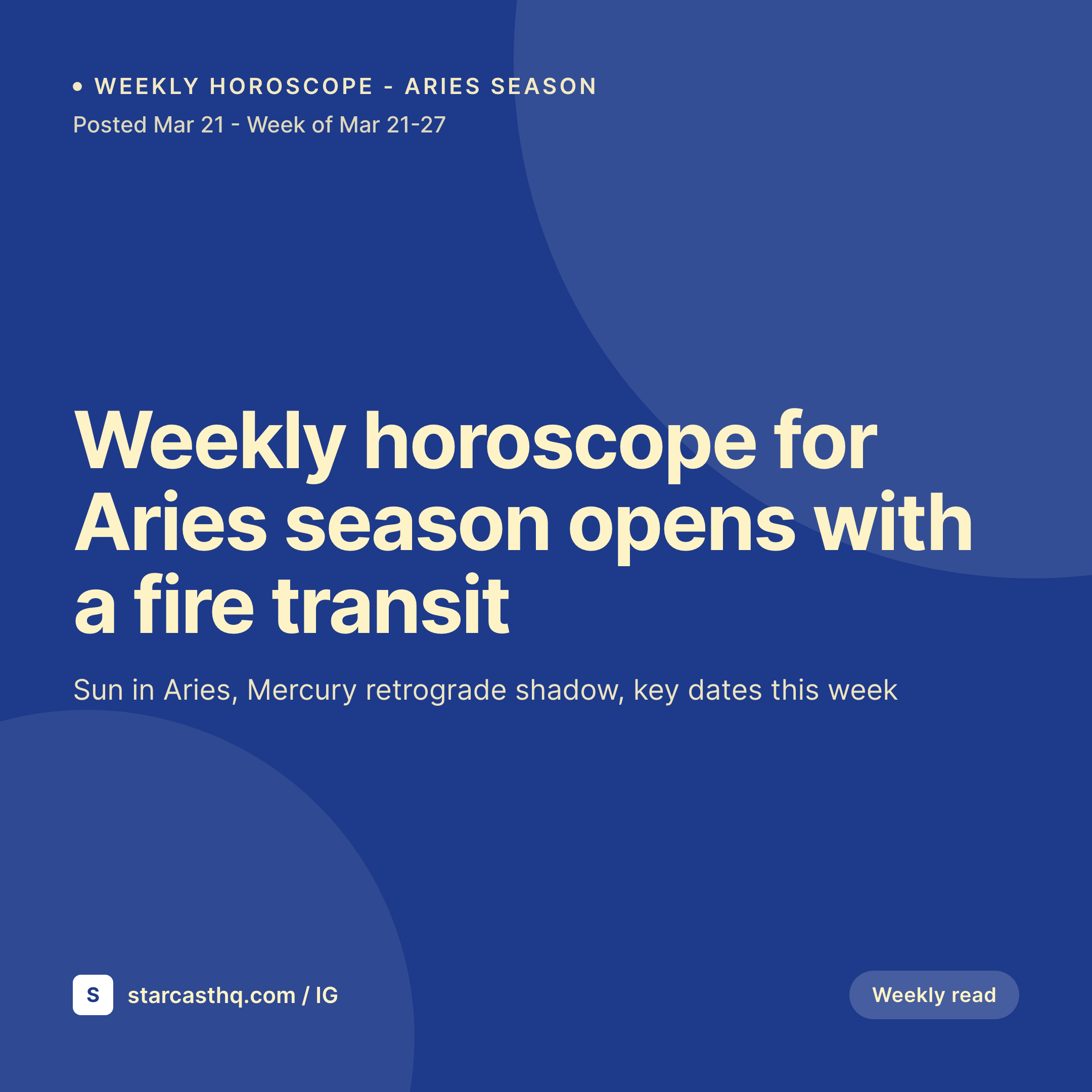
Sample weekly horoscope card
A 1080x1080 Instagram-feed card rendered from one weekly horoscope post, with the sign glyph, date range, and key-transit summary pulled from the post's custom fields and taxonomy.


Comparison
Manual horoscope cards vs SleekPixel for astrologers
Canva per sign per week
- Twelve cards per week (one per sign) is two hours of Canva work minimum
- Sign glyphs drift in style as the astrologer iterates the brand identity
- Date ranges retyped per card, easy to typo on a busy posting day
- Transit summaries get truncated wrong, falling outside the safe area
- Posts skip entirely when the astrologer has client readings booked back-to-back
SleekPixel
- Twelve horoscope cards (one per sign) render from one weekly post automatically
-
signtaxonomy drives the glyph and color variant per card -
Date range pulled from
date_rangefield, formatted consistently - Transit alerts ship feed and story variants from the same source post
- Bulk-rerender after a brand refresh updates every past card cleanly
Features
What SleekPixel gives you for astrologer
Per-sign loop rendering
One weekly horoscope post with a per-sign reading field array loops at render time and outputs twelve cards (one per sign) in one save. The astrologer writes once, the cards ship as a coordinated weekly rollout in minutes.
Transit-aware templates
Transit-alert posts route to a transit template variant that emphasizes the aspect glyph and the affected signs. Full-moon and new-moon posts route to a lunar template variant with the moon-phase art and the date prominent.
Glyph styling library
SleekPixel ships a set of sign and planet glyphs designed for card legibility at 1080 square. Astrologers can swap to their own glyph set by uploading SVG files mapped to the sign and planet taxonomy terms directly.
Use cases
Where this fits online astrology practice
Weekly horoscope rollouts
Twelve sign cards ship every Sunday from one weekly post. The cards queue in the scheduler for sequential release across the week so each sign hits its own audience cleanly.
Transit-alert quick shares
When a major transit is exact (Mars conjuncts Saturn, eclipse window), a transit-alert post ships with a card immediately. Two-hour write-and-ship turnaround from the trigger.
Full-moon and new-moon readings
Each lunation gets a longer reading post with feed and story cards. Lunation date, sign placement, and aspects pull from custom fields so the card stays consistent.
The bigger picture
Why card systems build astrology audiences
Astrology audiences are loyal but visually demanding. The chart, the glyphs, the planetary symbols, the moon phases, the aspect lines, all carry meaning that has to be respected on a card or the audience reads it as amateur. The same audience also expects a steady cadence: weekly per sign, transit alerts at the right moment, lunation readings on schedule, eclipse callouts when they happen.
Hitting both bars (visually rigorous and reliably consistent) by hand is exhausting, and most online astrologers burn out their share workflow within a year. Templated, fields-driven cards solve both problems at once. The visual rigor lives in the template once, the consistency lives in the rendering pipeline, and the astrologer's actual attention stays on the readings and the client work.
Over a multi-year online practice, that compounding decides whether the astrologer can grow to a sustainable audience or has to keep starting over after every burnout cycle.
Questions
Common questions about SleekPixel for astrologer
Yes. The weekly horoscope post stores twelve sign readings as a repeater field (one entry per sign). SleekPixel loops over the field array at render time and outputs twelve cards, each with that sign's glyph, color, and reading excerpt baked in.
Yes. Upload SVG files for each sign and planet glyph and map them to the corresponding taxonomy term. SleekPixel uses the custom glyphs at render time across all horoscope, transit, and lunation cards so the visual identity stays the astrologer's own.
Transit-alert post type with a publish-now workflow. The astrologer drafts the alert, fills the transit name and aspect taxonomy, hits publish. SleekPixel renders the card and the story variant within two seconds for immediate share to the audience.
Configurable per practice. Each astrology system has its own template variant family if the conventions differ enough. Western uses tropical sign dates, vedic uses sidereal, Hellenistic emphasizes the rulerships. SleekPixel maps the system to the right variant.
Both. Simple cards use text and glyph layouts. Advanced cards can include a small chart wheel generated from positional data in custom fields. The wheel renders as an SVG composite into the card's hero zone at the right scale.
Yes. Any plugin that writes ephemeris or chart data to post meta is supported. Map the plugin's meta keys into template variables and the cards render from the plugin's calculated data without any duplication of work needed.
Yes. The lunation taxonomy term (new moon, waxing crescent, full moon, etc.) maps to a phase-art variant. SleekPixel pulls the right phase image at render time so each lunation post ships with the correct phase visual identity automatically.
Vary the background gradient by season (Aries-Gemini = spring, etc.) and keep the type and glyph treatment identical across the year. SleekPixel can map sun-in-sign taxonomy to a season background while the template structure stays unchanged.
Pricing
More than 1000+
happy customers
Explore our flexible licensing options tailored to your needs. Upgrade your license anytime to access more features, or opt for a lifetime license for ongoing value, including lifetime updates and lifetime support. Our hassle-free upgrade process ensures that our platform can grow with you, starting from whichever plan you choose.
Lifetime ♾️
Most popular
EUR
once
- Unlimited websites
- Lifetime updates
- Lifetime support
...or get the Bundle Deal
and save €250 🎁
The Bundle (unlimited sites)
Pay once, own it forever
Elevate your WordPress site with our exclusive plugin bundle that includes all of our premium plugins in one package. Enjoy lifetime updates and lifetime support. Save significantly compared to buying plugins individually.
What’s included
-
SleekAI
-
SleekByte
-
SleekMotion
-
SleekPixel
-
SleekRank
-
SleekView
€749
Continue to checkoutBrowse more
- Pinterest pins
- Bluesky profile banners
- Apple Podcasts covers
- X Space banners
- KDP hardcover cover
- Ko-fi shop images
- Twitch overlay
- Farcaster cast images
- Discord server banners
- Lemon Squeezy product covers
- Twitter card images
- Linktree banner image
- Beacons.ai banner
- Slack channel headers
- Dribbble shot covers