






SleekPixel for incorporation cards
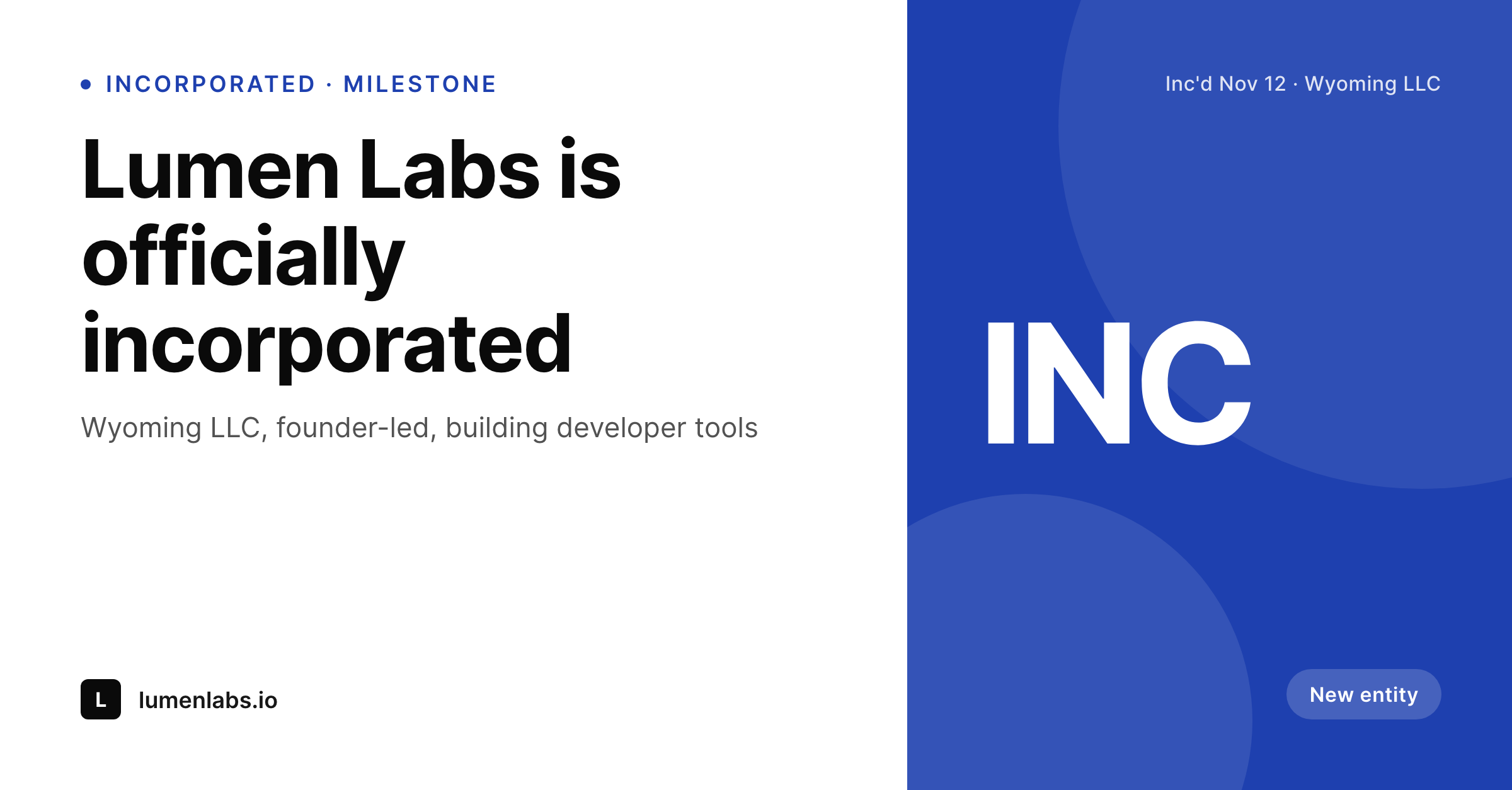
SleekPixel reads the company name, jurisdiction, entity type, and incorporation date from one milestone post and renders a LinkedIn-ready card. The graphic looks like a real milestone, not a stock-photo handshake, which is what investors and peers actually want to see.
♾️ Lifetime License available
Incorporation is a milestone worth marking properly
Whether the company is a Wyoming LLC, a Delaware C-corp, a UK Ltd, or a Singapore Pte Ltd, the incorporation moment is one of the few early-stage milestones that justifies a public artifact. Most founders post a vague 'we are now a real company' update with no real visual. A card that names the company, jurisdiction, and structure tells investors and peers the milestone is concrete.
SleekPixel reads the milestone post's company_name, jurisdiction, entity_type, and inc_date fields, then renders a 1200x1200 LinkedIn-post card. The card emphasizes the company name, surfaces the jurisdiction and structure, and dates the incorporation. The full launch narrative stays in the post body.
Subsequent operational milestones (banking, Stripe, first product) inherit the same template family. The cards build a visual launch archive that any early hire, investor, or partner can scroll through, which is exactly what a serious early-stage company should leave behind.
Workflow
How a card renders, end to end
Create the milestone post
milestone CPT post when incorporation closes. Fields: company name, jurisdiction, entity type, incorporation date, narrative.
Bind the template
Save
Share and archive
Output
Sample incorporation card
Rendered from one milestone post: company name, jurisdiction, entity type, and incorporation date. The launch narrative lives in the post body.
Comparison
Default linkedin post vs SleekPixel for incorporation cards
Stock-photo skyline image
- Incorporation posts use generic city skylines or handshake stock photos
- Jurisdiction and entity type (real signals) get dropped from marketing graphics
- Manual design per milestone means most early milestones get no graphic at all
- Multi-entity companies (US + EU) lack visual consistency across announcements
- Incorporation dates drift between LinkedIn posts and legal records
SleekPixel
-
Reads
company_name,jurisdiction,entity_type,inc_date - Company name dominates the card at typographic scale
- Jurisdiction (Wyoming, Delaware, UK, etc.) and entity type visible
- LinkedIn-post 1200x1200 with a Twitter 1200x675 variant
- Falls back to company-and-jurisdiction-only headline if entity type is unset
Features
What SleekPixel gives you for incorporation card
Entity-aware
The card surfaces the legal entity facts that matter: jurisdiction, structure, date. Whether the audience is investors, peers, or future hires, the same details answer their basic questions.
Investor-friendly
Investors archive the card with their portfolio notes. Forward-friendly visuals make the early-stage update flow smoother, which compounds over many milestones.
Family-consistent
Subsequent operational milestones - banking live, payments live, first hire - inherit the same template family. The cards build a visual history that any early hire or partner can scroll through.
Use cases
Where the incorporation card belongs
Founder LinkedIn post
The day the entity finalizes, the founder posts the card. The artifact travels through advisor and investor networks more readily than a text-only update.
Early investor update
Embed the card in the next investor update email. It is the first piece of visual context for a relationship that may run for years.
Early hire onboarding
When the first few employees come on, they see the incorporation card as part of the company history. The artifact grounds the early-stage story in operational reality.
The bigger picture
Why incorporation is a milestone worth designing for
Early-stage companies have very few public milestones, and incorporation is one of the few that the founder controls completely. The artifact attached to that milestone shapes how investors, advisors, peers, and future hires perceive the company's seriousness. A founder who posts a stock-photo skyline with a vague tagline communicates one thing; a founder who posts a card naming the jurisdiction, entity type, and incorporation date communicates something different.
The second founder looks like someone who treats operational milestones with the same rigor they apply to product decisions. Beyond first impressions, the incorporation card sets the visual template for everything that follows. Banking live, payments processing, first paying customer, first hire - each becomes its own milestone post from the same template family.
The cumulative effect across a year of milestones is a visible launch archive that any early stakeholder can browse and that any future PR or fundraising push can repurpose. The cost of building this archive at the time is essentially zero once the template exists; the cost of building it retroactively, a year later when the company needs a polished history, is enormous. The right time to ship the incorporation card is the day the incorporation finalizes.
Questions
Common questions about SleekPixel for incorporation card
The legal name (with 'LLC', 'Inc.', 'Ltd.', etc.) is the most accurate version. The card can carry either the legal name or the marketing name; most teams use the marketing name with a small footer line specifying the legal name.
Yes. The conversion is its own milestone with its own card. Founders who convert from an LLC to a Delaware C-corp during a fundraise often post a milestone card to mark the change.
No. Those are operational identifiers that should not appear on public-facing cards. The card surfaces the jurisdiction and entity type; the underlying numbers stay private.
Optional. A small region can render founder names from a founders field. Most solo or small founding teams include this; larger teams skip it.
One post per entity. Holding companies and operating subsidiaries are separate legal entities and deserve separate milestone cards if their incorporation moments matter publicly.
The entity-type field renders whatever you put in it. 501(c)(3), B-corp, PBC, cooperative - the template is structure-agnostic.
Yes, especially in B2B where customers verify vendor legal status before signing. Linking to the milestone post in early customer emails answers the 'are you a real company?' question without anyone asking.
Yes - run the card for the parent company, then again for each subsidiary as they form. The visual continuity tells the story of an expanding company.
Pricing
More than 1000+
happy customers
Explore our flexible licensing options tailored to your needs. Upgrade your license anytime to access more features, or opt for a lifetime license for ongoing value, including lifetime updates and lifetime support. Our hassle-free upgrade process ensures that our platform can grow with you, starting from whichever plan you choose.
Lifetime ♾️
Most popular
EUR
once
- Unlimited websites
- Lifetime updates
- Lifetime support
...or get the Bundle Deal
and save €250 🎁
The Bundle (unlimited sites)
Pay once, own it forever
Elevate your WordPress site with our exclusive plugin bundle that includes all of our premium plugins in one package. Enjoy lifetime updates and lifetime support. Save significantly compared to buying plugins individually.
What’s included
-
SleekAI
-
SleekByte
-
SleekMotion
-
SleekPixel
-
SleekRank
-
SleekView
€749
Continue to checkoutBrowse more
- LinkedIn newsletter headers
- Amazon Storefront banners
- Weibo post images
- GitHub social preview images
- LinkedIn document post covers
- Rednote (Xiaohongshu) post
- Ko-fi shop images
- Amazon A+ content images
- Instagram collab post images
- TikTok ad images
- LINE official account banners
- Mailchimp email banner
- Odnoklassniki banners
- Stan Store cover
- Warpcast frame images