






SleekPixel for raw honey producers: jar and market cards from WordPress
Small apiaries sell on harvest stories. Each jar varietal and farmers market post already carries varietal, hive location, jar size, and market dates. SleekPixel renders each as a 1080 by 1080 Instagram card that doubles as OG image and Facebook share for the local food page.
♾️ Lifetime License available
From harvest post to market-ready Instagram card
Small apiaries sell on context. A wildflower jar from a Door County hive tells a different story than a clover jar from a Wisconsin alfalfa farm, and the buyer at the Sturgeon Bay Saturday market wants to see that story before they hand over $14. The Instagram feed is where that story compounds, but only if the cards look like a real apiary rather than a hobby account with phone-snap photos.
SleekPixel reads each harvest and market post directly. varietal, hive_location, jar_size, cases_available, harvest_date, and filtration render into a 1080 by 1080 Instagram card. Market posts swap in market_name, market_dates, and booth_number into a market-specific layout. The apiary name and any organic or local certifications sit in a fixed footer line.
Update the cases available after a market weekend, the card refreshes. Add a new buckwheat varietal in late summer, the card exists the moment the post is published. Refresh the apiary identity, every jar and market card regenerates overnight. The result is a small apiary whose feed reads like a real working honey house, not a Pinterest-board mockup.
Workflow
From harvest post to market-ready card
Define harvest and market posts
Design two card templates
Connect the fields
{varietal}, {cases_available}, and {market_name} into the templates. SleekPixel renders on save and on every field update.
Share from the post
Output
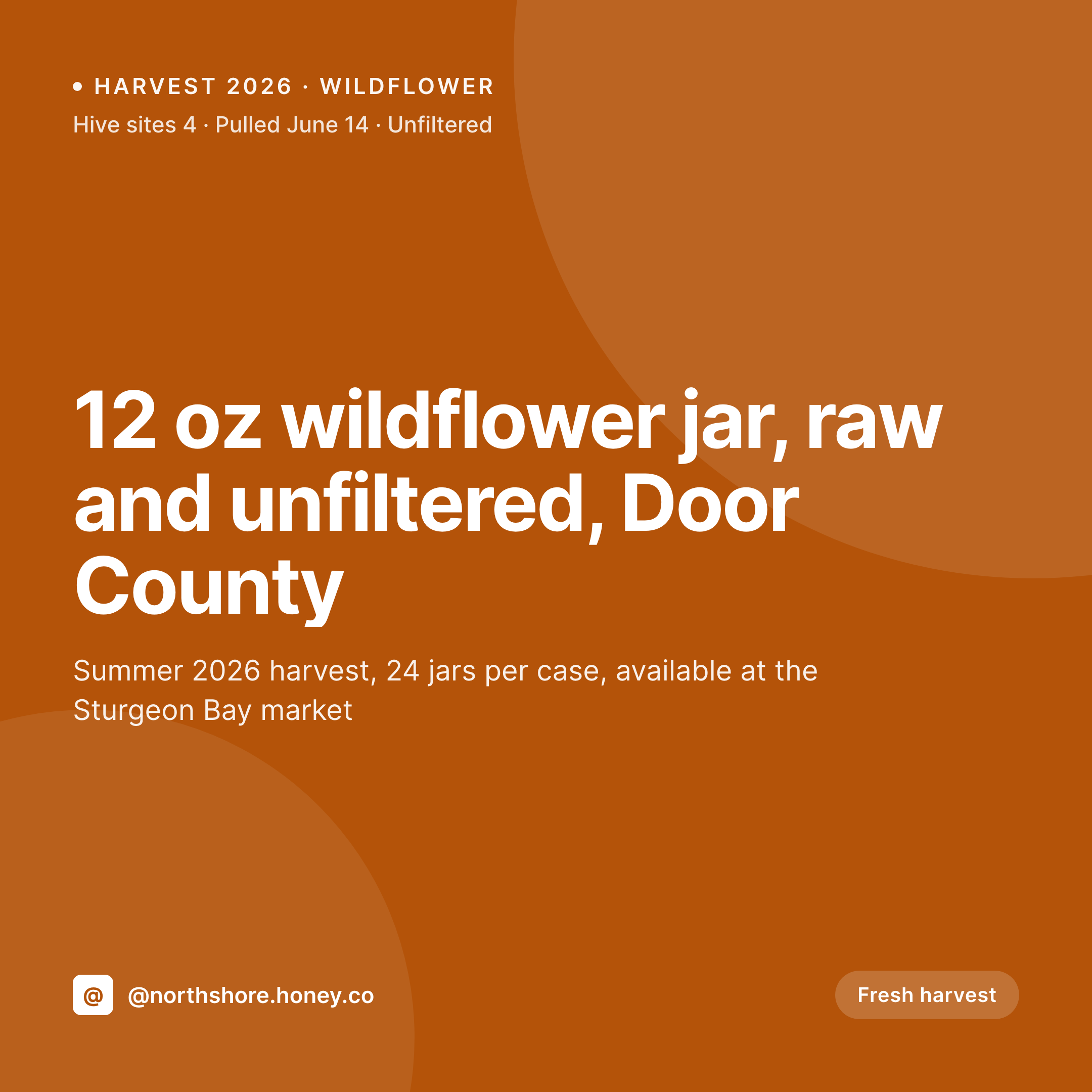
Sample wildflower jar harvest card
A 1080 by 1080 Instagram card rendered from one harvest post, with varietal, hive location, jar size, cases available, and harvest date surfaced together.

Comparison
Phone-snap photos vs SleekPixel for raw honey producers
Phone-snap jar photo
- Most small apiary feeds use phone-snap photos with no varietal or harvest detail visible
- Market schedule cards rebuilt in Canva each Friday, taking an hour per market weekend
- Cases available retyped per post, often wrong by Saturday morning at the booth
- Varietal spelled inconsistently across cards, weakening the apiary's varietal story
- Apiary rebrand requires opening every harvest post manually to update the new colors
SleekPixel
-
Reads
varietal,hive_location,jar_sizeper harvest - Market name, dates, and booth number render directly from each market post
- Instagram-correct 1080 by 1080 dimensions enforced at render time on every card
- Certifications (organic, local-honey, treatment-free) sit in a fixed footer line
- Bulk regenerate refreshes every harvest and market card overnight after a rebrand
Features
What SleekPixel gives you for raw honey producer
Varietal and hive callouts
Varietal, hive location, and harvest month each render as tagged callouts from fields on the harvest post. Buyers at the market recognize the story behind the jar before they reach the booth and ask the keeper.
Cases available count
A cases_available field renders as a live count on the card. Update the count after each market weekend and the card refreshes, so the feed never advertises a jar that sold out two Saturdays ago.
Certification footer
Organic certification, local-honey verification, and treatment-free status render in a fixed footer line. The credential line travels with every card, signaling quality to buyers who know what each label actually means.
Use cases
Where this fits a small working apiary
Solo working beekeepers
A single beekeeper with 20 to 100 hives cannot afford a marketing afternoon per varietal. Harvest posts become cards automatically, so the social feed keeps pace with the honey house.
Farmers market vendors
Apiaries selling at three or four weekly markets need a card per market. Market posts render with the right dates and booth numbers, so each market crowd sees the right schedule in the feed.
Varietal-focused producers
Apiaries with a strong varietal story (wildflower, buckwheat, basswood, cranberry) surface the varietal on every jar card. The varietal story compounds across the feed and the market booth.
The bigger picture
Why honey buyers respond to varietal storytelling
Raw honey is one of the few food categories where the producer's story matters more than the producer's logo. A buyer at a Saturday market is not picking the jar with the cleanest label, they are picking the jar from the keeper who told them about the wildflower bloom on the bluff at Door County, the buckwheat field at the back of the apiary. Instagram is where that storytelling compounds when the keeper cannot stand at every market.
The problem has always been that real beekeepers do not have Canva afternoons. Honey houses fill from June to September, market weekends fill May to October, and the small apiary's social feed quietly dies around August. SleekPixel keeps the feed alive without keeping the keeper out of the honey house.
Each harvest post already carries varietal, hive location, jar size, and cases available. Each market post already carries name, dates, and booth number. The cards render from those fields at the right size, with the apiary's certifications travelling on every share.
The market booth fills faster on Saturday because the buyer already met the keeper on Wednesday in the feed.
Questions
Common questions about SleekPixel for raw honey producer
Yes. Each post type or each post_kind value maps to a different template variant. Harvest cards show varietal and jar size, market cards show dates and booth number, behind-the-scenes posts show hive location and beekeeper credit.
Not directly. SleekPixel renders the image and exposes it on the post. The beekeeper downloads the card or uses a scheduling tool like Later, Buffer, or Meta Business Suite to publish with the rendered image attached.
Update the cases_available field to zero or set a sold_out boolean on the harvest post. The template surfaces a sold-out banner automatically, so the feed stops advertising a jar that is no longer available.
Yes. Store organic certification, local-honey verification, and treatment-free status as plugin settings or on a global options page. The template references them in a fixed footer so every card carries the same credential line.
Those tools manage inventory and sales, not WordPress posts. Most beekeepers mirror selected jar data into custom fields on a WordPress harvest post. SleekPixel reads the fields once they live in WordPress, regardless of the upstream tool.
Use the same harvest post type with a product_kind field. The template picks a layout variant per kind, so candles show wax weight and burn time, tinctures show concentration and bottle size, jars show varietal and ounces.
Yes. Bulk regenerate from the SleekPixel admin re-renders every harvest and market post with the updated template. The cards on Instagram update the next time the posts are re-shared from the apiary website.
Yes. Add a hive_map_image attachment field. The template composites a small map illustration beside the jar photo so a wildflower jar can show the actual hill or bluff the bees foraged from.
Pricing
More than 1000+
happy customers
Explore our flexible licensing options tailored to your needs. Upgrade your license anytime to access more features, or opt for a lifetime license for ongoing value, including lifetime updates and lifetime support. Our hassle-free upgrade process ensures that our platform can grow with you, starting from whichever plan you choose.
Lifetime ♾️
Most popular
EUR
once
- Unlimited websites
- Lifetime updates
- Lifetime support
...or get the Bundle Deal
and save €250 🎁
The Bundle (unlimited sites)
Pay once, own it forever
Elevate your WordPress site with our exclusive plugin bundle that includes all of our premium plugins in one package. Enjoy lifetime updates and lifetime support. Save significantly compared to buying plugins individually.
What’s included
-
SleekAI
-
SleekByte
-
SleekMotion
-
SleekPixel
-
SleekRank
-
SleekView
€749
Continue to checkoutBrowse more
- Ko-fi shop images
- podcast cover art
- Snapchat Discover tiles
- Discord event cover
- Bluesky profile banner
- Amazon A+ content images
- Twitch stream overlay images
- Patreon tier images
- Etsy shop banners
- Substack post thumbnail
- Buy Me a Coffee banners
- Facebook Marketplace images
- Flickr cover photo
- Tumblr header
- LinkedIn newsletter headers