






SleekPixel for ship it cards: turn changelog entries into shareable cards
Changelog posts deserve a real card on the share, not the homepage hero or a Canva export from six months ago. SleekPixel reads the version, release date, and shipped items from the post and renders a Twitter card that matches the changelog the moment it goes live.
♾️ Lifetime License available
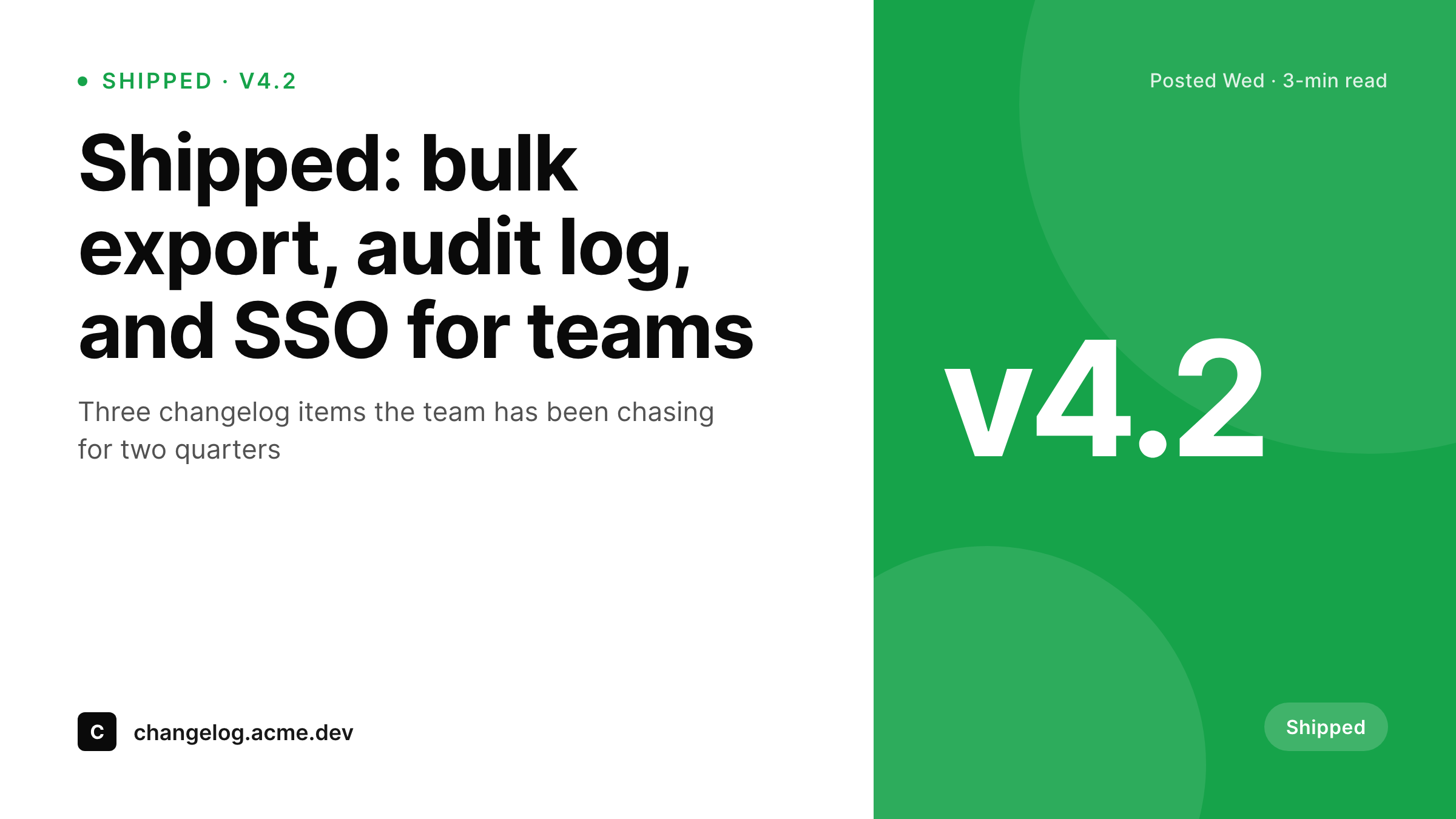
Ship it cards that match the changelog post on save
A ship it card is the kind of asset that the team wants for every release and almost never gets for every release. The first few are exported from Figma the day before launch. The next dozen get done in the rush of the launch week, with the version number typed by hand into the design file. By release ten, the changelog post goes out with no image at all, or with a fallback that says nothing about what shipped. The post unfurls on X with the homepage hero and the engineering team mutters about it without filing a ticket.
SleekPixel binds the ship it card to the changelog post type. The template reads the release_version, release_date, and a shipped_items repeater. On save, a 1200x675 PNG is written into wp-content/uploads and the post head gets a twitter:image meta tag pointing at the file URL. The card on social shows the actual version that shipped, the actual date, and the actual items, because the render is live against the post fields.
Old releases benefit too. When v2.0 gets linked back to from a comparison blog post in v4.2, the card unfurls with the v2.0 details, not whatever Canva file someone half-finished and never exported.
Workflow
From changelog post to live ship it card
Register changelog fields
release_version, release_date, and a shipped_items repeater to the changelog post type. Existing posts can be backfilled in one migration.
Build the ship it template
Save the changelog post
Cross-post the launch
Output
Sample ship it card
The Twitter card shows the release version mark, headline list of shipped items, and the release date pulled from the changelog post fields.
Comparison
Manual ship it card vs SleekPixel for ship it card
Figma export per release
- Each release needs the version number retyped into a Figma file by a human
- Late changelog edits break the card because the export is already locked
- Smaller releases ship without any card because nobody had time to design one
- Cards across the changelog archive drift visually as branding evolves
- Marketing and engineering both think the other team owns the export
SleekPixel
-
Template reads
release_version,release_date, andshipped_items - 1200x675 PNG rendered into uploads on every changelog post save
-
twitter:imageandog:imagemeta tags written automatically - Same card works as a Slack release announcement preview
- Batch regenerate refreshes the entire changelog archive on rebrand
Features
What SleekPixel gives you for ship it card
Version on the card
The release_version field renders into the corner mark and the headline area. Patch releases, minor releases, and major releases each get a card that reads as part of the same series.
Shipped items rendered
A repeater field of shipped items renders as a bullet list inside the card. The Twitter card on a v4.2 share shows the three headline items the team wants the audience to see first.
Regenerates on edit
Late additions to the shipped items or a corrected release date rebuild the card. The version on social tracks the version in the changelog post without a manual re-export.
Use cases
Where the ship it card earns its render
Launch tweet
The launch tweet links to the changelog post and the unfurl shows the version, date, and headline items, so the tweet body can focus on the story not the metadata.
Internal Slack
The same PNG previews in the release-announcements channel, so the internal team reads the launch with the same identity as the public share.
Release email
The newsletter that goes out with the launch can embed the same card, so subscribers and X followers see the same artifact for the same release.
The bigger picture
Why ship it cards matter for changelog discipline
A ship it card is more than a social asset. It is a forcing function that ties the visible launch artifact to the structured changelog post on the site. Teams that bind the card to the post end up with cleaner changelog data because the card cannot render without the version, the date, and the shipped items being filled in correctly.
Teams that rely on Canva exports decouple the social asset from the changelog post, so the post can ship with thin metadata and the asset can ship with stale metadata, and nobody notices for months. The discipline compounds. After a year of release posts with rendered cards, the changelog archive is also a structured database of versions, dates, and shipped items.
That data can drive a release notes feed, an in-product update banner, or an enterprise customer briefing without re-entering anything. The ship it card is the visible surface, the structured changelog is the asset, and the SleekPixel binding is what makes one a faithful reflection of the other across every release the team ships.
Questions
Common questions about SleekPixel for ship it card
Yes. SleekPixel runs on any post type, including a dedicated changelog or release post type. Map the template to that post type and the render fires on every save.
Yes. A repeater field of shipped items renders as a bullet list inside the card template. The first three items are usually enough at 1200x675 without crowding the design.
Editing the release_date field triggers a regenerate. The PNG in uploads is overwritten and the meta tag URL serves the corrected card the next time the post unfurls.
No. If you set a featured image manually, you can choose whether the SleekPixel render takes priority over it in the meta tags. The two assets live side by side in the post.
Yes. You can keep one template per major version, so v3 changelog posts render with the v3 brand and v4 with the v4 brand. Re-running a batch regenerate across v3 archives keeps the historical identity intact.
Yes. Slack reads og:image for link unfurls, and SleekPixel writes the same rendered PNG into the og:image tag, so the Slack preview matches the X share.
Yes. The Gutenberg sidebar includes a download button so the team can grab the PNG for a Loom thumbnail, a Notion release page, or a slide deck without going through uploads.
No. Rendering happens on the WordPress install during the post save event. The file is static after that and page views serve a PNG from your own domain with no per-view cost.
Pricing
More than 1000+
happy customers
Explore our flexible licensing options tailored to your needs. Upgrade your license anytime to access more features, or opt for a lifetime license for ongoing value, including lifetime updates and lifetime support. Our hassle-free upgrade process ensures that our platform can grow with you, starting from whichever plan you choose.
Lifetime ♾️
Most popular
EUR
once
- Unlimited websites
- Lifetime updates
- Lifetime support
...or get the Bundle Deal
and save €250 🎁
The Bundle (unlimited sites)
Pay once, own it forever
Elevate your WordPress site with our exclusive plugin bundle that includes all of our premium plugins in one package. Enjoy lifetime updates and lifetime support. Save significantly compared to buying plugins individually.
What’s included
-
SleekAI
-
SleekByte
-
SleekMotion
-
SleekPixel
-
SleekRank
-
SleekView
€749
Continue to checkoutBrowse more
- Telegram channel images
- Shopify product images
- Pinterest video pin covers
- Twitch stream overlay images
- Nostr note images
- Patreon cover images
- Bluesky profile banners
- Apple Podcasts covers
- Snapchat Discover tiles
- WeChat Moments images
- Lemmy post images
- Odnoklassniki banners
- LinkedIn carousel slides
- Twitch overlay
- Spotify Canvas