






SleekPixel for Signal sticker packs
A 512x512 cover and a set of 512x512 sticker tiles rendered from WordPress fields. Each sticker pack lives as a post with a list of glyphs, captions, and accent colors. SleekPixel emits the PNGs that the Signal sticker pack creator expects.
♾️ Lifetime License available
Sticker packs are publication objects, not one-off downloads
A Signal sticker pack is a small publication. A cover, a set of stickers, captions, and a creator handle. Most pack creators design the set in Figma, export each tile by hand, run the cover through a separate template, and upload the whole pack via Signal's sticker pack creator. The set then drifts as the creator's brand evolves and the pack looks dated within a year.
SleekPixel reframes the pack as a WordPress post. The post carries a title, a cover field, and a list of sticker entries with glyph, caption, and color slots. On save, SleekPixel renders the 512x512 cover and every sticker tile into the uploads directory, named by slug. The creator zips the tiles, opens the Signal sticker pack creator, and uploads the set in one batch.
When the brand evolves, the pack re-renders. The same Signal pack ID can host a new revision, and the creator's other packs can render in the new style without redoing each tile in Figma. The cover, the stickers, and the OG image for the pack's WordPress page all flow from one source.
Workflow
From WordPress pack post to Signal pack
Create a pack post
Render the cover and tiles
Zip the folder
Upload via Signal
Output
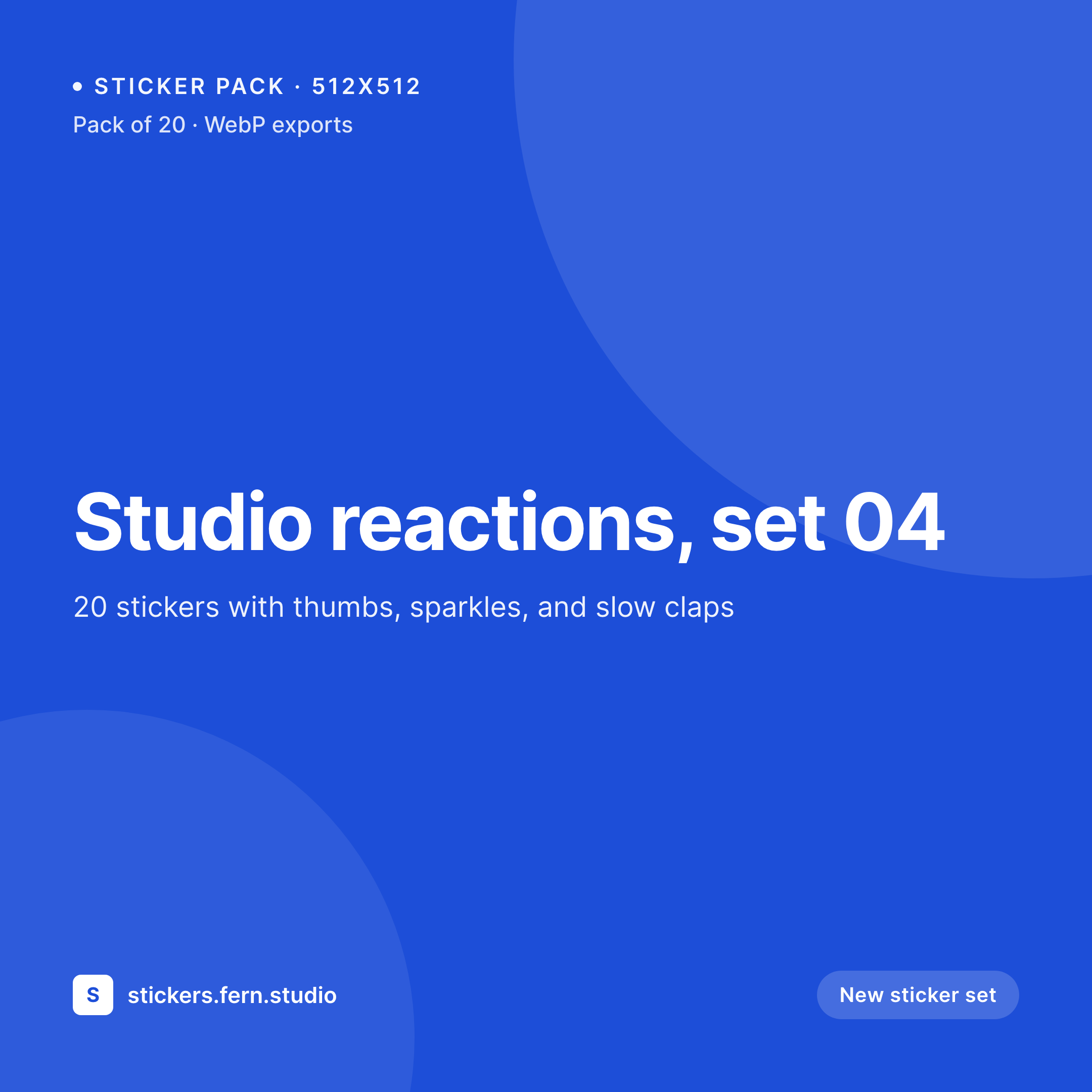
Sample Signal sticker pack tile
A 512x512 PNG rendered from a sticker entry in a WordPress pack post, showing the glyph, caption, and accent color from the entry's fields.

Comparison
Figma per pack vs SleekPixel for Signal stickers
Figma export per tile
- Every pack means twenty separate Figma exports plus a cover export
- Sticker captions drift between the Figma file and the pack's marketing page
- Re-rendering a pack after a rebrand is a manual redrawing of every tile
- No source-of-truth for the pack lives outside the design file
- Each new pack reinvents the layout because the previous file is hard to revise
SleekPixel
- 512x512 cover and tile PNGs from a single WordPress pack post
- Sticker entries stored as a repeater field with glyph, caption, and color
- Bulk render the entire pack on save, named by slug for easy zipping
- Re-render across packs when the brand evolves, no redrawing required
- Same source emits the cover and the WordPress pack page's OG image
Features
What SleekPixel gives you for Signal sticker pack
Repeater-driven entries
Sticker entries live as a repeater field on the WordPress pack post. Adding a sticker is adding a row, and the render walks the list and emits a 512x512 PNG per row.
Per-sticker accent
Each sticker carries its own accent color in the repeater, so the pack reads as a set without every tile sharing one background. The creator controls the palette in WordPress.
Zip-ready output
Rendered PNGs land in a per-pack subfolder of the uploads directory, named by sticker slug. The creator zips the folder and uploads the pack in one batch via Signal.
Use cases
Where sticker pack automation pays off
Band fan packs
Bands can ship reaction packs per album. The album post in WordPress drives the cover and the sticker set, with per-track stickers.
Company packs
Companies running an internal Signal can ship a reactions pack per quarter, sourced from a quarterly post in the company knowledge base.
Illustrator merch packs
Indie illustrators can sell sticker packs whose source post in WordPress also runs the product page on the same site, with one render.
The bigger picture
Why packs read better when they share a source
Signal sticker packs feel like throwaway design objects until a creator ships several. The third pack should obviously share a visual language with the first two, and the creator should not have to remember which Figma file held which set. The reality for most creators is that pack two looks like pack one, but pack three drifts, pack four looks like a new project entirely, and the creator's body of work scatters.
The fix is to treat the pack as a publication. A WordPress post is the source, the repeater drives the tiles, and SleekPixel produces the assets. The shape of the pack lives in fields, not in a design file, and changing the shape is changing a field.
The body of work stays coherent because every pack flows from the same render pipeline. Across a year the creator ships five packs, the visual language holds, and the creator never spends an afternoon exporting tiles before a release.
Questions
Common questions about SleekPixel for Signal sticker pack
Signal's sticker pack creator accepts WebP at 512x512 with a maximum size per sticker. SleekPixel renders PNGs natively. Run the PNGs through a WebP converter, or use a small post-render step to emit WebP alongside PNG. The render dimensions and layout are identical.
Signal allows up to 200 stickers per pack. SleekPixel's repeater can hold as many entries as the WordPress site allows. The render walks every entry and emits one PNG per row regardless of count.
No. Signal does not expose a public API for sticker pack creation. The creator uploads the zipped tiles via Signal's official desktop sticker pack creator. SleekPixel produces the assets, the creator publishes the pack.
Yes. Each pack post is a WordPress post, so it has revision history. Bump the pack version in a field, re-render, and re-upload to a new Signal pack ID. The old pack stays available for users who already installed it.
A repeater field with three subfields: glyph (a short string or emoji), caption (under 20 chars), and accent (hex color). ACF and Meta Box both expose this shape, and SleekPixel reads either.
Yes. A reusable sticker template can be rendered from any pack post that includes the right repeater row. The same caption and glyph can render into a holiday pack and a year-end pack with different accents.
A 20-sticker pack at 512x512 PNG runs around 2 to 5 MB depending on color complexity. WebP compresses to roughly a third. The per-pack subfolder in uploads stays under 10 MB for most packs.
Yes. The creator checks dimensions and file size before publishing. SleekPixel's 512x512 PNG renders pass dimension checks, and PNG size stays under Signal's per-sticker limit unless the layout includes large photographic backgrounds.
Pricing
More than 1000+
happy customers
Explore our flexible licensing options tailored to your needs. Upgrade your license anytime to access more features, or opt for a lifetime license for ongoing value, including lifetime updates and lifetime support. Our hassle-free upgrade process ensures that our platform can grow with you, starting from whichever plan you choose.
Lifetime ♾️
Most popular
EUR
once
- Unlimited websites
- Lifetime updates
- Lifetime support
...or get the Bundle Deal
and save €250 🎁
The Bundle (unlimited sites)
Pay once, own it forever
Elevate your WordPress site with our exclusive plugin bundle that includes all of our premium plugins in one package. Enjoy lifetime updates and lifetime support. Save significantly compared to buying plugins individually.
What’s included
-
SleekAI
-
SleekByte
-
SleekMotion
-
SleekPixel
-
SleekRank
-
SleekView
€749
Continue to checkoutBrowse more
- Pinterest pins
- Rumble thumbnails
- YouTube Shorts thumbnails
- Mailchimp email headers
- Gumroad product covers
- Facebook event covers
- Snapchat Spotlight covers
- LinkedIn article covers
- Audible audiobook cover
- WeChat Moments images
- Bandcamp banner
- podcast cover art
- Twitter header banners
- Instagram bio link banners
- Notion page covers