






SleekPixel: a UXPin alternative for share images on WordPress
UXPin builds polished prototypes and component libraries, but exporting share cards for every WordPress post still ends in screen recordings and PNG handoffs. SleekPixel keeps the design system inside WordPress, binds tokens to post fields, and renders an OG image at request time without a Figma or UXPin export step.
♾️ Lifetime License available
Why UXPin stops short of WordPress
UXPin is built for product design teams who need code-backed components, accessibility checks, and rich interaction states. The tool excels at prototypes, but the output never reaches the WordPress front end on its own. Every share card still requires a designer to open the file, swap a headline, export PNG, then upload to the _yoast_wpseo_opengraph-image meta key on the post.
SleekPixel narrows the focus to the slice of work that touches WordPress posts. Layers in a template bind directly to post_title, post_excerpt, post_author, ACF groups, and any taxonomy term. Edit a post and the share card follows. Tweak the brand tokens once and every rendered image picks up the new colors, fonts, and spacing on the next crawler visit, with no further work on your end.
You do not replace UXPin for prototypes or interactive flows. You move the OG image step out of the design tool entirely so editors stop pinging designers for one-off exports and back-catalog rebrands stop turning into week-long projects.
Workflow
From UXPin exports to self-serve in four steps
Install SleekPixel
Define brand tokens
Bind components to post fields
post_title, ACF groups, or taxonomy terms. Editors never have to retype copy.
Render PNG on demand
og:image requests, renders a PNG with the current tokens and template, and caches the result. Token edits invalidate the cache and trigger fresh renders.
Output
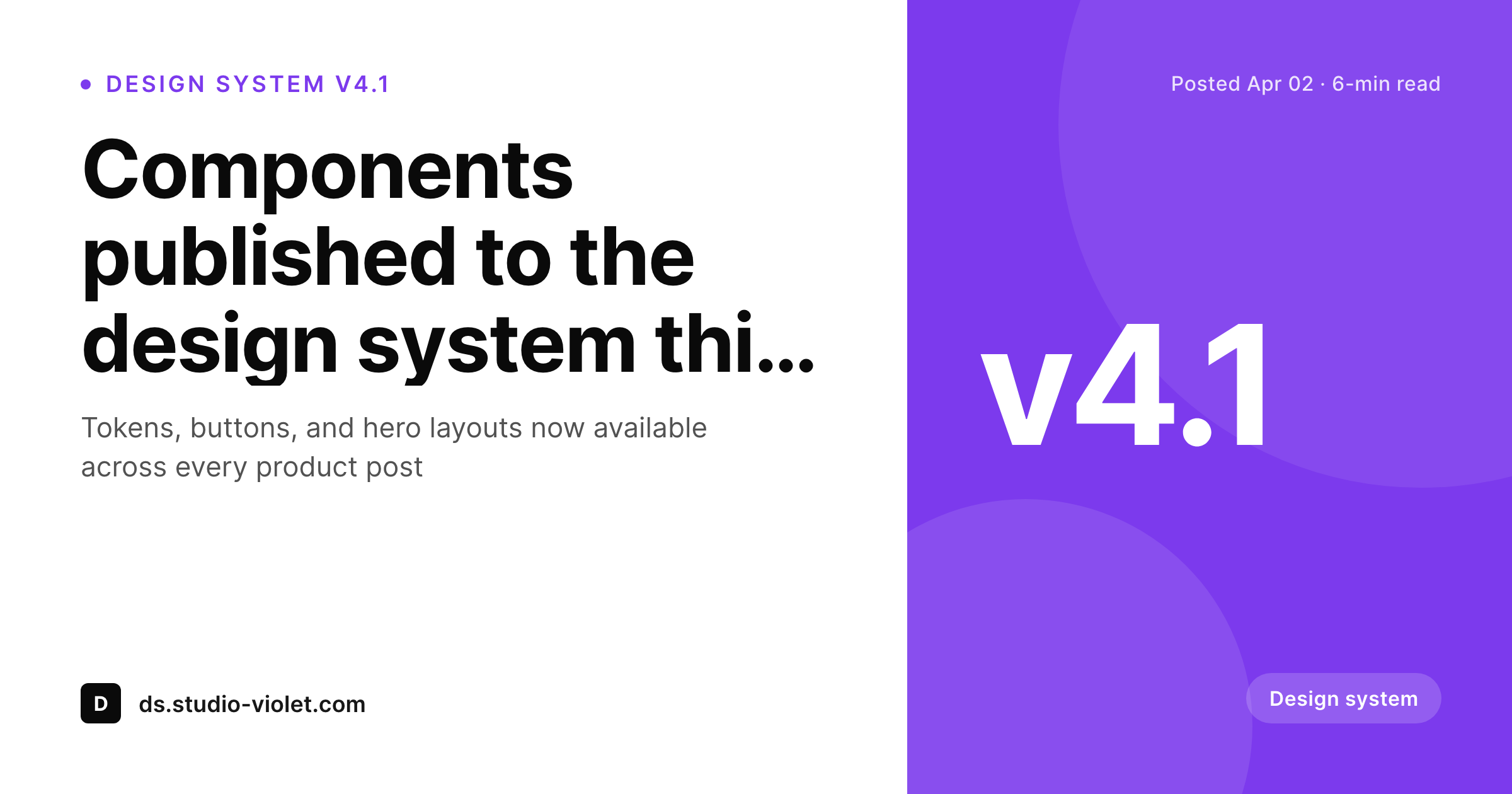
Sample design system release card
Design system release card rendered from a custom post type with version number, component count, and release notes pulled from ACF fields.
Comparison
UXPin export vs SleekPixel for WordPress
UXPin export + manual upload
- Designers export PNGs from UXPin then upload each one to a WordPress post by hand
- Token changes inside UXPin do not propagate to share images already published online
- Editors cannot adjust a UXPin design from wp-admin without leaving the post screen
- Per-seat pricing scales with the team, even for editors who only swap a headline once
- Bulk rebuilds across hundreds of posts require manual export and re-upload for each card
SleekPixel
- Bind WordPress fields to layer text, colors, and images with a UI built for editors
- Define brand tokens once and have every template inherit the same color and font set
-
Cache rendered PNGs in
wp-content/uploadsfor fast crawler responses - Override the share image per post when a single article needs a custom variant
- Live preview inside the post screen so editors see the final image before publishing
Features
What SleekPixel gives you for UXPin alternative for WordPress
Token-driven templates
Define brand colors, type scales, and spacing once. Every template references the tokens, so a single edit updates the look of every share image across the site without touching individual layouts.
Reusable component library
Build reusable groups for headers, footers, badges, and stat blocks. Drop a component into any template and connect it to the right post fields. Updates to the component flow into every template that uses it.
Inline post preview
Editors see the final share image right inside the post edit screen. The preview updates as fields change, so designers do not have to chase down approval rounds in a separate prototyping tool.
Use cases
Where design teams swap UXPin exports for SleekPixel
Design system rollouts
Design ops teams publish a token set in SleekPixel that mirrors the UXPin library, so editorial share images stay on brand without daily designer involvement.
Editorial production
Editors swap headlines and authors in the post screen. SleekPixel re-renders the OG image with the right tokens and component arrangement automatically.
Product launch posts
Marketing teams plug launch-day copy into a CPT entry. The share image renders with the launch template, the right hero color, and a CTA pulled from a meta field.
The bigger picture
Why a UXPin alternative for share images matters
Design tools were built for prototypes and code-backed components, not for spinning up one share image per post. UXPin keeps the design system polished, but every export still ends with a designer in Slack handing off PNGs to a marketing channel. The bottleneck is not the design tool.
It is the gap between the design system and the WordPress post screen where editors actually work. SleekPixel closes that gap by living inside wp-admin, reading post fields directly, and rendering an OG image at request time. Token edits propagate the same way a Figma library push does, except the output is a real PNG on a real URL instead of a node in a design file.
Editors stop interrupting designers. Designers stop spending Friday afternoons exporting last-minute share cards. The design system survives because it actually ships, not because it sits in a tool that never touches production.
Questions
Common questions about SleekPixel for UXPin alternative for WordPress
No. UXPin is still the right tool for full product prototypes, interaction states, and code-backed component handoff. SleekPixel covers the share-image slice of the work, where the output is a single PNG bound to WordPress post fields, not a full screen flow.
There is no automatic sync today. Most teams maintain a small set of brand tokens in SleekPixel that mirror the UXPin source of truth. A weekly review keeps the two aligned without a full integration layer.
The SleekPixel meta box in the post edit screen renders a live preview using current field values. Editors see the headline, byline, and category mapped onto the template before hitting publish, so surprises after the fact are rare.
Saving a token or template change invalidates the cached PNGs that referenced them. The next crawler request renders a fresh image. You can also force a bulk rebuild from the template settings if you want every back-catalog post to refresh immediately.
Yes. Rendered PNGs live in wp-content/uploads and are cached aggressively. The render cost only hits the first crawler that requests an OG image after a change. Subsequent requests serve the cached file straight from disk or CDN.
Templates use WordPress's standard post-revision system, so each save is versioned and attributable. Teams typically split work by template family rather than editing the same layout simultaneously, and merge changes through the revision history.
SleekPixel focuses on the rendered image rather than interactive component states, so the WCAG model differs. The template editor surfaces color contrast for text layers and warns when a binding produces unreadable combinations against the background.
SleekPixel is a one-time purchase or a yearly site license, not per seat. A team of ten editors and three designers pays the same as a single-user site, which is usually a fraction of the cost of running UXPin alongside a separate share-image workflow.
Pricing
More than 1000+
happy customers
Explore our flexible licensing options tailored to your needs. Upgrade your license anytime to access more features, or opt for a lifetime license for ongoing value, including lifetime updates and lifetime support. Our hassle-free upgrade process ensures that our platform can grow with you, starting from whichever plan you choose.
Lifetime ♾️
Most popular
EUR
once
- Unlimited websites
- Lifetime updates
- Lifetime support
...or get the Bundle Deal
and save €250 🎁
The Bundle (unlimited sites)
Pay once, own it forever
Elevate your WordPress site with our exclusive plugin bundle that includes all of our premium plugins in one package. Enjoy lifetime updates and lifetime support. Save significantly compared to buying plugins individually.
What’s included
-
SleekAI
-
SleekByte
-
SleekMotion
-
SleekPixel
-
SleekRank
-
SleekView
€749
Continue to checkoutBrowse more
- Pinterest pins
- Notion page covers
- Twitch profile banner
- Audible audiobook cover
- Flickr cover photo
- Twitch offline banners
- Spotify playlist cover
- Open Graph images
- YouTube Shorts cover
- Mastodon profile header
- Behance project covers
- Weibo post images
- LinkedIn article covers
- Etsy cover photos
- X list banners