






SleekPixel for YARPP related-posts clusters
YARPP builds related-post relationships via fulltext indices on post_title, post_content, and shared taxonomy. SleekPixel reads the resolved related list and renders a per-post OG image that surfaces the cluster size, so the share signals depth as well as the single post.
♾️ Lifetime License available
Related clusters are the reason readers stay.
YARPP (Yet Another Related Posts Plugin) builds fulltext indices on post_title and post_content, with a configurable weight contribution from shared taxonomy and categories. At query time it produces a sorted relevance list per post and stores threshold-based caching so the dashboard does not have to recompute on every page load.
The whole point of installing YARPP is to keep readers in the cluster. The share of a single post is, by extension, the share of the cluster behind it: readers who click through expect to find related rabbit-holes. Default OG generators see only the single shared post and miss the cluster entirely, so the share previews none of the depth the surrounding site actually offers.
SleekPixel reads the YARPP relevance-cache layer to find the resolved related-post list for the current post, picks the top-N entries above the configured threshold, and renders a per-post OG image that names the post and surfaces the cluster size. Optional fields include the shared-taxonomy badges and the average relevance score, so a richly clustered piece shares as such instead of as a one-off post.
Workflow
From YARPP cache to social card
Read the relevance cache
Count above threshold
Render the OG image
Hook recalculation
Output
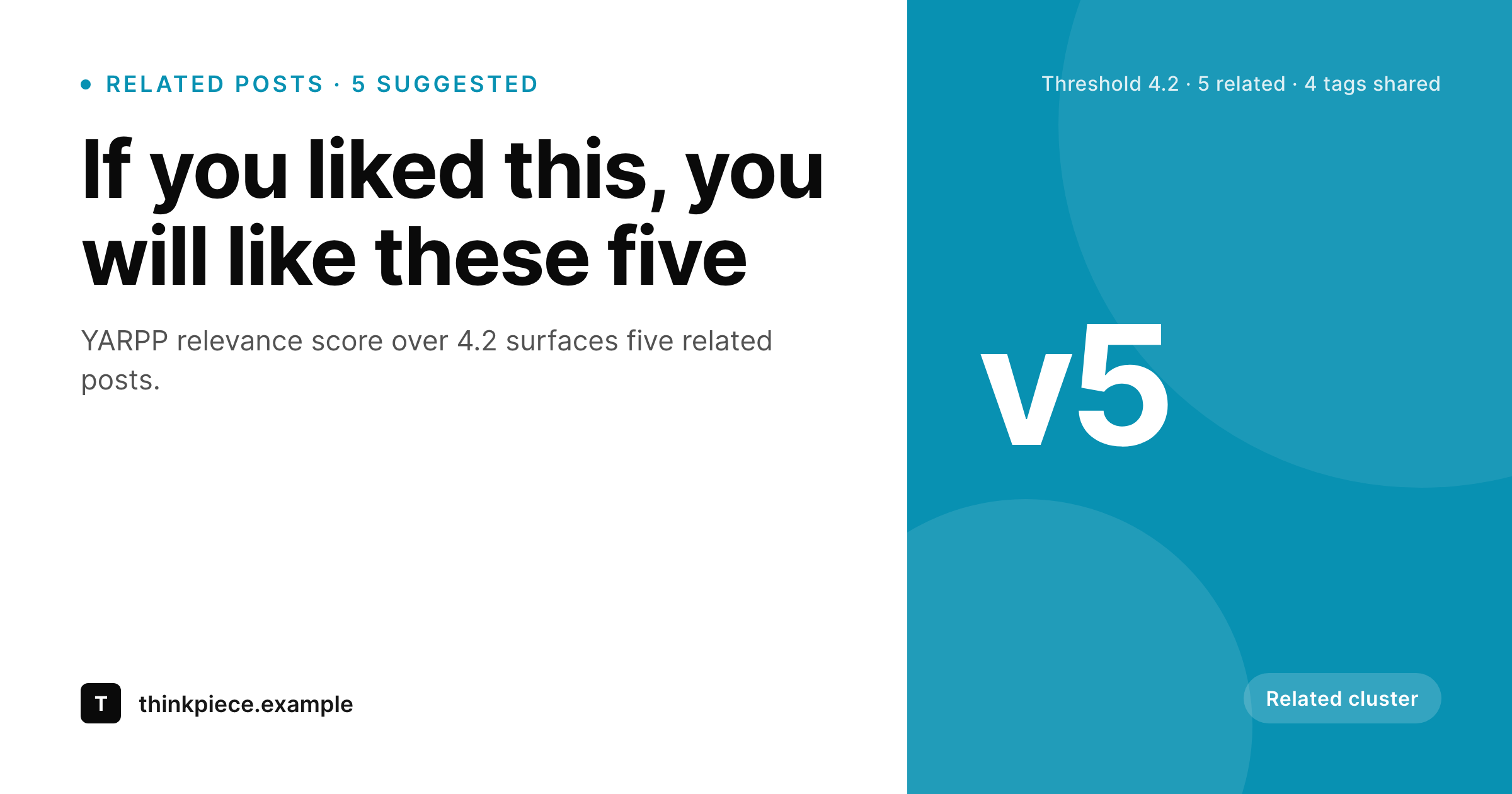
Sample YARPP-aware card
Generated from a real YARPP-driven post: related-post count, top relevance, and shared taxonomies pulled from the YARPP relevance cache.
Comparison
Default theme OG image vs SleekPixel for YARPP
Default theme OG image
- Default OG image never signals that a post sits in a rich related-cluster
- Single hits and deeply-clustered hits share with identical theme cards
- Shared taxonomies that drive YARPP relevance never surface in shares at all
- Editors cannot signal cluster depth from a default link preview in any feed
- Relevance-cache updates never propagate to the share preview of a post
SleekPixel
- Reads YARPP's relevance cache to resolve the top-N related posts per post
- Surfaces cluster size and top relevance score as the headline stat on the card
- Renders shared taxonomy terms as small badges signalling thematic anchors
- Refreshes on YARPP relevance recalculation and on any cluster-changing save
- Supports per-post-type scoping for sites mixing news, evergreen, and product
Features
What SleekPixel gives you for YARPP
Cluster size on card
The count of related posts above the YARPP threshold renders as the headline stat, so the share signals 'this post is part of a deep cluster'.
Shared taxonomy badges
Shared categories and tags that drive YARPP relevance render as small badges, signalling the thematic anchor connecting the cluster's posts.
Recalculation aware
On every YARPP relevance recalculation, SleekPixel regenerates the OG image so the cluster size on the card always matches the current data.
Use cases
Where YARPP-driven sites benefit most
Evergreen content sites
Evergreen-heavy sites share with cards that show every post sits inside a rich evergreen cluster, signalling depth to first-time visitors.
News archives
News and topic archives share with cards that surface cluster depth, so a single news share previews the archive of related coverage.
Reference and how-to sites
How-to sites get share previews showing how every post links into related tutorials, recruiting deeper time-on-site per share click.
The bigger picture
Why related clusters deserve to be in shares
YARPP exists because the highest-leverage moment on a content site is the second pageview after a share lands. A single share that converts into three more pageviews is worth far more than a share that converts into one. The related-cluster strategy is the entire reason editors install YARPP in the first place, and yet defaults strip it out of share previews entirely.
A SleekPixel card that surfaces the cluster size, badges the shared themes, and signals the depth of the related rabbit-hole turns each share into recruitment for the second click as well as the first. The fields already live in YARPP's relevance cache. The plugin computes them anyway for the widget.
SleekPixel reads what YARPP already writes and regenerates the OG image on every recalculation. Across a year of evergreen growth on a 500-post site, that is hundreds of automatically refreshed cluster-aware previews keeping the share story aligned with the depth of the content.
Questions
Common questions about SleekPixel for YARPP
Both. YARPP writes the same relevance cache for the free fulltext algorithm and the paid premium one. SleekPixel reads from the cache without caring which algorithm produced it, so the integration works in either configuration.
YARPP recalculates relevance on a cron and on certain save events. SleekPixel hooks the same recalculation action and regenerates the OG image whenever the cluster size changes, so the share never lags behind the related-posts widget.
Yes. SleekPixel can render up to three related-post titles as small lines below the headline. This works well for newsroom sites where the cluster names themselves are interesting and helps drive the second click.
Brand-new posts with no relevance data fall back to a neutral card that omits the cluster stat and shows the publish date in the footer. Once YARPP runs its first recalculation, the next regeneration cycle adds the cluster size.
Yes. YARPP exposes per-post-type configuration and SleekPixel respects the same scoping. You can run cluster-aware rendering for blog posts and keep static rendering for product or landing-page CPTs that do not benefit from related clusters.
Only when the cluster size or the top-N membership changes meaningfully. A score nudge that does not reorder the related-post list does not trigger a rebuild, which keeps the regeneration cost proportional to the cluster's real change.
No. SleekPixel registers higher-priority filters on the og:image and twitter:image hooks. The SEO plugin continues to provide description, twitter:card type, and schema while SleekPixel renders the cluster-aware image.
Locally in wp-content/uploads/sleek-pixel/ on your own server. Your existing CDN handles delivery. No third-party host appears in the og:image URL and no per-render fees apply.
Pricing
More than 1000+
happy customers
Explore our flexible licensing options tailored to your needs. Upgrade your license anytime to access more features, or opt for a lifetime license for ongoing value, including lifetime updates and lifetime support. Our hassle-free upgrade process ensures that our platform can grow with you, starting from whichever plan you choose.
Lifetime ♾️
Most popular
EUR
once
- Unlimited websites
- Lifetime updates
- Lifetime support
...or get the Bundle Deal
and save €250 🎁
The Bundle (unlimited sites)
Pay once, own it forever
Elevate your WordPress site with our exclusive plugin bundle that includes all of our premium plugins in one package. Enjoy lifetime updates and lifetime support. Save significantly compared to buying plugins individually.
What’s included
-
SleekAI
-
SleekByte
-
SleekMotion
-
SleekPixel
-
SleekRank
-
SleekView
€749
Continue to checkoutBrowse more
- YouTube podcast thumbnails
- Instagram Shop product images
- Warpcast frame images
- Facebook group banners
- X social cards
- Telegram channel cover images
- YouTube Shorts covers
- KDP hardcover cover
- KDP paperback cover
- YouTube Shorts cover
- YouTube end screens
- Depop listing images
- Mastodon post images
- Instagram stories
- LinkedIn newsletter headers