






SleekPixel for data point cards: render the single-stat share
A data point post is a single stat with a label and a source. The card needs that stat at the center of the frame. Designed by hand, these cards slip the number or source. SleekPixel renders the card from the post fields, so the X share carries the stat correctly the moment the editor saves.
♾️ Lifetime License available
Single-stat cards built from the data post fields
A data point post is the simplest research format and one of the highest-performing on X. The whole post is built around a single number with a label and a source. The card has to carry that number, label, and source in a single glance. Designed by hand, the number on the card often differs from the number in the post body because the design file was made first and the post got refined later. The audience reshares the wrong number, and the team spends days correcting the record across replies and quote tweets.
SleekPixel binds the data point card to the data post type. The template reads stat_value as a string for the big number, stat_label as the descriptive line, stat_source as the attribution, and stat_period for the time window. On save, a 1200x675 PNG is written into wp-content/uploads and the post head gets a fresh twitter:image tag. The X share carries the exact stat from the post body, so reshares cannot accidentally amplify a stale number from an older design file.
Older data points stay accurate because the render is bound to the post. A stat from last quarter linked from a new analysis still unfurls with the right number, source, and period, because there is no static export to go out of date.
Workflow
From data point save to live X card
Register data fields
stat_value, stat_label, stat_source, and stat_period to the data point post type via ACF before drafting the post. Older posts can be backfilled.
Design the stat template
Publish the data point
wp-content/uploads and the twitter:image meta tag is written into the post head ready for the X share.
Share to X with the stat
Output
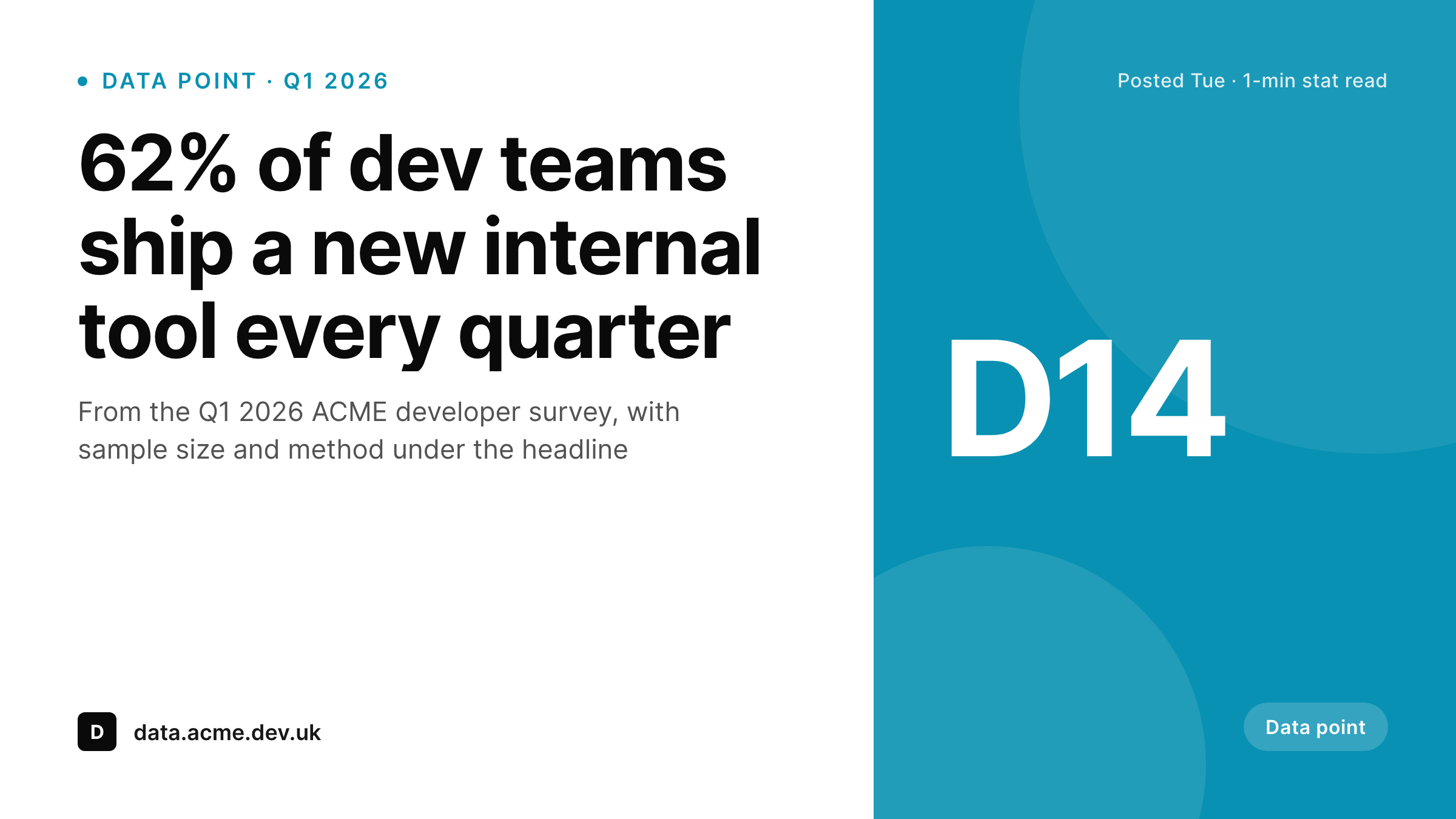
Sample single-stat data point card
The Twitter card shows the headline stat as a large number, the descriptive label, the source, and the time period pulled from the data point post fields.
Comparison
Manual stat card vs SleekPixel for data point card
Designer stat graphic per post
- Number on the static graphic and number in the post body drift after a stat refinement
- Source attribution gets cropped or omitted on busy weeks, weakening the data point
- Time period on the card gets generalized to fit a layout instead of the actual quarter
- Older data points unfurl with the homepage hero because no archive graphic existed
- Reshares amplify a stale number because the design file never got updated after the post
SleekPixel
-
Template binds to
value,label, and source fields per data point - Big number rendered as the center of the card with a fitting routine across digit counts
- 1200x675 PNG rendered into uploads on every data point post save, ready for X
-
twitter:imagemeta tag written automatically through the SEO plugin filter - Batch regenerate refreshes the data point archive on a single template edit
Features
What SleekPixel gives you for data point card
Big number at the center
The stat value renders as the largest element on the card with a fitting routine that handles 12%, 62%, or 1,247 cleanly. The number reads at a glance on the X feed, which is the only job a data point card has.
Label and source visible
The descriptive label and the source attribution render under the number in clear smaller type. The audience reads what the number measures and where it came from in the same glance as the stat itself.
Time period stamped
The stat period stamps on the card so audiences know whether the number is Q1 2026, FY 2025, or a live indicator. The period stays in sync with the post body because both render from the same field.
Use cases
Where the data point card earns its share
Researcher X share
The data point URL unfurls on X with the stat, label, source, and period visible. The X copy can extend the implication of the stat rather than re-stating the number the card already carries.
Weekly data newsletter
The same PNG drops into the weekly data newsletter as a recurring feature. Subscribers recognize the data point card style and read the stat before they open the email body in full.
Press and analyst share
Press and analysts who cite the data point reshare the card, and the source attribution travels with the number. Reshares cannot strip the source because the source is rendered into the PNG.
The bigger picture
Why a templated stat card protects every shared number
A stat on the internet has a half-life. Once a number leaves the original post, it travels across reshares, quotes, and downstream coverage, and every step is a chance for the number to drift. The first defense against that drift is a card where the number, the label, the source, and the time period travel together as one image.
Manual design files cannot maintain that hygiene at scale because every data point post would need its own export, and the design step would inevitably skip the source on a busy week. Binding the card to the data point post means the post fields are the source of truth for both the body copy and the card. A refined stat updates the card on save.
A corrected source travels with the next share. An older data point linked from a new analysis still carries the right number because the render is live against the post. The result is a data feed where every share carries its own evidence chain, which is the kind of hygiene that makes the team's data citations get picked up rather than questioned.
Questions
Common questions about SleekPixel for data point card
For the simplest data points, the number is the strongest hook. For data points that benefit from a chart, see the chart explainer card page group, which is purpose-built for chart with caption shares and uses a different template layout optimized for chart legibility.
The number block uses a fitting routine that drops the font size in defined steps when the number has many digits. 12%, 1,247, and 412,000 all read clearly at a glance, with the descriptive label sized in proportion below.
Yes. A comparison_value field can render as a smaller stat next to the headline number. '62% (up from 38% in 2023)' renders as two stats with a relationship rather than a single number floating without context.
The source field accepts a short form for the card and a long form for the post body. The card shows the short form so the layout stays clean, and the post body cites the full source with link for the reader who wants to verify.
The card renders the value exactly as typed into the field. The team controls rounding by setting the field. A regenerate after a data refresh updates the card to the new value the same way it updates the post body.
Yes. The template engine emits a 1200x675 X-card and a 1200x1200 LinkedIn-square in the same save pass, and the right meta tag points at the right file per platform with no extra editor work.
No. SleekPixel injects the twitter:image through the same filter Yoast and Rank Math expose, so only one twitter:image tag ends up in the head and it points at the freshly generated data point PNG.
Local on save using a bundled headless browser. There is no per-render fee, no usage cap, and no external service dependency, which matters for a data publishing workflow that may file many small notes per week.
Pricing
More than 1000+
happy customers
Explore our flexible licensing options tailored to your needs. Upgrade your license anytime to access more features, or opt for a lifetime license for ongoing value, including lifetime updates and lifetime support. Our hassle-free upgrade process ensures that our platform can grow with you, starting from whichever plan you choose.
Lifetime ♾️
Most popular
EUR
once
- Unlimited websites
- Lifetime updates
- Lifetime support
...or get the Bundle Deal
and save €250 🎁
The Bundle (unlimited sites)
Pay once, own it forever
Elevate your WordPress site with our exclusive plugin bundle that includes all of our premium plugins in one package. Enjoy lifetime updates and lifetime support. Save significantly compared to buying plugins individually.
What’s included
-
SleekAI
-
SleekByte
-
SleekMotion
-
SleekPixel
-
SleekRank
-
SleekView
€749
Continue to checkoutBrowse more
- Ko-fi shop images
- Amazon Storefront banners
- Rednote (Xiaohongshu) post
- Spotify Canvas
- Pinterest video pin covers
- Depop listing images
- Facebook Shop product images
- Behance banner
- Flickr cover photo
- LINE official account banners
- Facebook Marketplace images
- Pinterest board covers
- Bluesky profile banners
- Nostr note images
- YouTube podcast thumbnails