






SleekPixel for Disqus Comment System sites
Disqus hosts the thread on its own infrastructure and embeds an iframe on the post. The Disqus WordPress plugin caches the per-post comment count in wp_postmeta under dsq_post_comments_count. SleekPixel reads that meta, composes a share card that names the count, and pins it to the post share preview.
♾️ Lifetime License available
Bring the hosted thread back onto the share
Disqus is the hosted comment service that replaces the default WordPress comment section with an iframe pointing at the Disqus infrastructure. The thread lives on Disqus's servers, but the WordPress plugin caches the per-post comment count locally in wp_postmeta under dsq_post_comments_count and the Disqus shortname in wp_options under disqus_forum_url. Listing pages use those cached values.
The piece that defaults break is the share image. Disqus tells the world about the thread on the post page, but the share preview is the default WordPress OG image with no signal that a thread exists. A post with eighty comments shares with the same picture as a post with zero. SleekPixel uses the cached count as a design slot. The headline names the post, the badge stamps the comment count, and the subhead names the most-recent thread author when the API token is available.
The result is a share that respects the Disqus model. The thread stays hosted on Disqus, the iframe still loads on the page, and the cached count drives the picture. No comment text is fetched, no API quota is burned at render. The card tells the reader there is a thread on the other side.
Workflow
From cached count to share card
Install alongside Disqus
Pick a thread template
Map count fields to slots
dsq_post_comments_count in postmeta, the Disqus shortname from disqus_forum_url and the post title for the headline.
Save the post in WordPress
save_post SleekPixel reads the cached Disqus count and renders the card. The PNG goes into uploads, and the og:image meta on the post head picks up the new URL.
Output
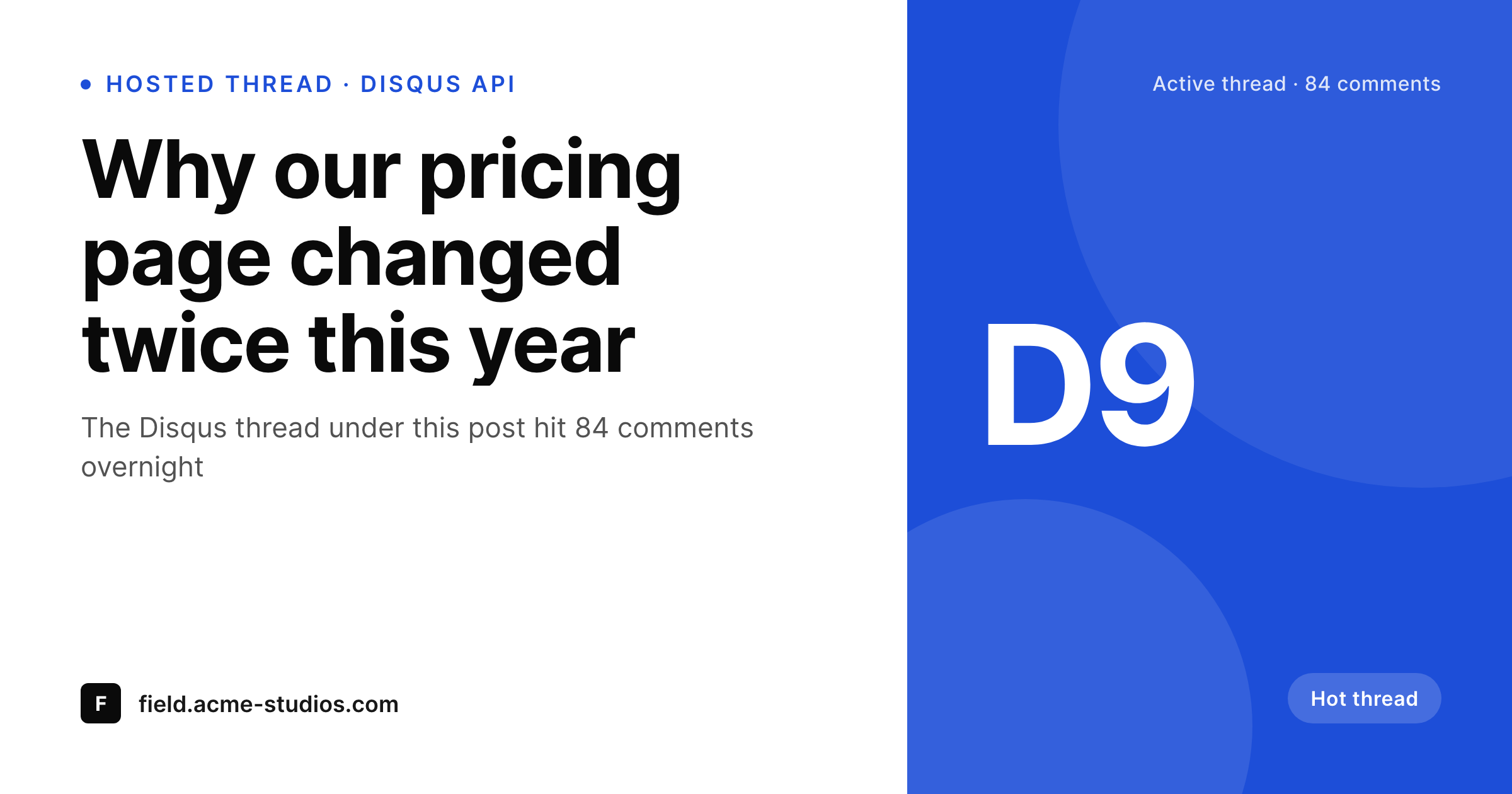
Sample hot-thread share card
Rendered from a Disqus-enabled post. The comment count comes from dsq_post_comments_count in postmeta, the brand line from the Disqus shortname.
Comparison
Default Disqus share vs SleekPixel for Disqus
Default WordPress OG image
- Disqus has no WordPress-side share image generator
- The cached comment count never appears on the post share preview
- Hosted thread is invisible to readers on Slack and LinkedIn
- Posts with active threads share with the same image as quiet posts
-
No hook from
dsq_post_comments_countto a per-post social card
SleekPixel
-
Reads
wp_postmetafor the cacheddsq_post_comments_countvalue -
Reads
wp_optionsfor the Disqus shortname indisqus_forum_url - Stamps the comment count as a top-right badge on the share card
- Adds a hot-thread badge when the count crosses a configurable threshold
- No external Disqus API call at render time, postmeta is the source
Features
What SleekPixel gives you for Disqus Comment System
Comment count as badge
The template uses the Disqus-cached comment count as a top-right badge. Readers scrolling a feed can tell which posts have an active discussion under them before they click through to read the post itself.
No API hit at render
SleekPixel reads the cached count from wp_postmeta rather than the Disqus API at render time. The render path stays local to WordPress, no API quota is burned and no external dependency blocks the save.
Hot-thread accent badge
Posts with comment counts above a configurable threshold get a hot-thread badge on the card. The threshold sits on a template setting, so editorial sites can pick the count that matches their normal traffic patterns.
Use cases
Where Disqus-powered sites get the most lift
Opinion editorial blogs
Opinion sites that use Disqus for the comment layer get a per-post card that names the thread count and signals which posts to click.
Industry publications
Industry publications with cross-site Disqus profiles get a card that reflects the conversation on each post, rendered from local postmeta.
Niche community blogs
Niche communities that picked Disqus for the universal login get a share preview that finally reflects the thread the community is building.
The bigger picture
Why hosted-thread sites need a share card
Disqus moves the comment thread off the WordPress install and onto Disqus's own infrastructure. The result is a thread that has a universal login, persistent identities across sites and a moderation toolkit nothing on WordPress alone can match. The piece that the model gives up is the share preview.
A Disqus-powered post shares with the default WordPress OG image, and the thread on the other side of the iframe is invisible to a reader scanning a feed. The cached count that Disqus writes into wp_postmeta is the data WordPress already has about the thread, but no default plugin uses it on the share. SleekPixel uses it.
The count becomes a badge on the card, the post title becomes the headline, and the Disqus shortname goes on the brand line. Readers in Slack or LinkedIn see the count first and click through aware that there is a discussion to read. The render itself never burns Disqus API quota, because the data is already cached locally.
Disqus gets the public credit for the thread, WordPress gets the per-post share card it should have had from the start, and the editorial team gets a higher click-through on every post that has a real discussion under it.
Questions
Common questions about SleekPixel for Disqus Comment System
No. The render reads the cached count from wp_postmeta under dsq_post_comments_count, which the Disqus WordPress plugin writes on its own schedule. No API key is required at render time, and no external Disqus call is made.
The Disqus plugin refreshes the cache on a schedule, typically every fifteen minutes or whenever a post is saved. SleekPixel reads the value at the moment save_post fires. If the cache is stale, the card uses the last cached count, and the next refresh updates it.
Yes, optionally. If the site has a Disqus API access token in wp_options, SleekPixel can fetch the latest commenter's display name and render it in the subhead slot. The API call is rate-limited and only fires when the cached count changes by more than a threshold.
Both. The legacy Disqus plugin and the newer Conduit plugin both write to the same dsq_post_comments_count postmeta key. SleekPixel reads the same field in either case, so a site can switch between the two without breaking the share card.
Yes. The threshold and the badge label live on the template, which can be scoped by language via Polylang or WPML. Each language can render a different hot-thread label without changing the underlying postmeta query.
SleekPixel respects the post's Disqus enabled flag. If Disqus is turned off for a specific post via the per-post setting, the count badge slot is hidden and the card renders as a regular post share preview with title and excerpt only.
No. The render reads a single postmeta value and writes a PNG into uploads. Both operations complete inside the normal save_post request without any external HTTP call, so editors see no measurable delay on publish.
The Akismet card aggregates moderation counts across a weekly window. The Disqus card uses a single post's cached comment count as a per-post badge. Both run on WordPress data, but the Disqus card is per-post while the Akismet card is per-week site-wide.
Pricing
More than 1000+
happy customers
Explore our flexible licensing options tailored to your needs. Upgrade your license anytime to access more features, or opt for a lifetime license for ongoing value, including lifetime updates and lifetime support. Our hassle-free upgrade process ensures that our platform can grow with you, starting from whichever plan you choose.
Lifetime ♾️
Most popular
EUR
once
- Unlimited websites
- Lifetime updates
- Lifetime support
...or get the Bundle Deal
and save €250 🎁
The Bundle (unlimited sites)
Pay once, own it forever
Elevate your WordPress site with our exclusive plugin bundle that includes all of our premium plugins in one package. Enjoy lifetime updates and lifetime support. Save significantly compared to buying plugins individually.
What’s included
-
SleekAI
-
SleekByte
-
SleekMotion
-
SleekPixel
-
SleekRank
-
SleekView
€749
Continue to checkoutBrowse more
- Mailchimp email headers
- YouTube podcast thumbnails
- Amazon A+ content images
- Spotify playlist cover
- TikTok shop images
- Bandcamp release cover
- Instagram grid tiles
- LinkedIn post images
- Beacons.ai banner
- Bluesky link cards
- Facebook Marketplace images
- Behance project covers
- YouTube end cards
- Apple Podcasts covers
- SoundCloud banner