






SleekPixel for panel discussion cards: render the speaker lineup share
A panel event post carries a date, a topic, four speakers, and four headshots. Redesigning the card for each panel takes a designer twenty minutes nobody has on launch week. SleekPixel binds the card template to the event post so the speaker grid, date, and topic line render on publish.
♾️ Lifetime License available
Panel cards stop being a per-event Figma task
A panel discussion card is the kind of share asset that looks easy at panel one and falls apart at panel ten. Each event has a different topic, a different lineup, and a different set of headshots. The first three are designed by someone who cares about kerning. By panel five the headshots are rough crops from LinkedIn, by panel ten the editor gives up and the post unfurls with the homepage hero. The speaker lineup, which is the whole reason anyone clicks the share, never makes it onto the image.
SleekPixel solves this by binding the panel card to the event post itself. The template reads panel_topic, the panel_date and panel_time fields, and a speakers repeater that carries each speaker name, role, and headshot attachment ID. When the editor saves the event post, a 1200x1200 PNG is rendered into wp-content/uploads and the og:image tag is written into the post head. The card on the share matches the lineup without anyone reopening a design file.
The benefit compounds across a season of panels. Old panel posts, surfaced by a related-event widget or quoted in a sponsor recap, still unfurl with the right four faces and topic line, because the render is bound to the post, not to an exported file that lives in a designer's Dropbox.
Workflow
From event post save to live LinkedIn card
Register panel fields
panel_topic, panel_date, panel_time, and a speakers repeater with name, role, and headshot attachment to the event post type via ACF or CPT UI.
Build the panel template
Publish the event post
wp-content/uploads and the og:image meta tag is written into the head, ready for the LinkedIn unfurl scrape.
Share to LinkedIn directly
Output
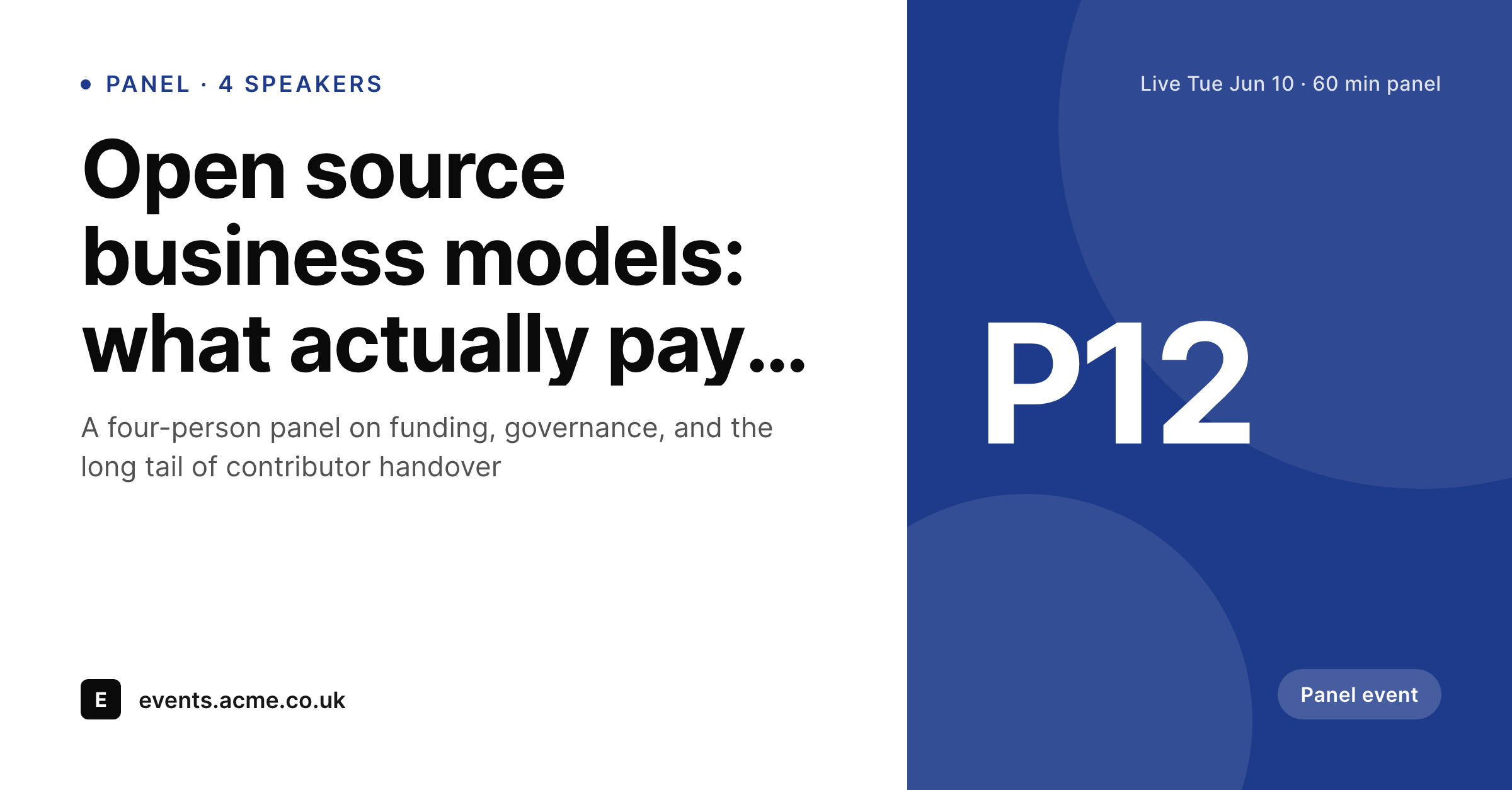
Sample panel discussion card
The LinkedIn post card shows the panel topic, date and time, and a four-up grid of speaker headshots with names and roles pulled from the event post repeater.
Comparison
Figma panel card vs SleekPixel for panel discussion card
Manual Figma export per panel
- Every panel needs a fresh Figma frame with four headshots cropped and placed by hand
- Last-minute speaker swaps require reopening the design file and re-exporting on deadline
- Headshot quality varies wildly because each one comes from a different LinkedIn export
- Old panel posts unfurl with the homepage hero because no archived export ever existed
- Marketing and events teams argue about who owns the export step on launch week
SleekPixel
-
Template binds to
panel_topic,panel_date, and a speakers repeater - Speaker headshots cropped from the WordPress media library by attachment ID
- 1200x1200 PNG written to uploads on every event post save, ready for LinkedIn
-
og:imagemeta tag written automatically, so the share unfurls cleanly - Batch regenerate refreshes the entire panel archive on rebrand or template change
Features
What SleekPixel gives you for panel discussion card
Speaker grid baked in
The speakers repeater renders as a four-up grid with circle-cropped headshots, names, and roles. Adding a fifth speaker or removing one rebuilds the layout without anyone touching a design file.
Date and topic on the card
Panel date and topic line render as the headline area, so the LinkedIn unfurl carries the most clickable information without the post copy needing to repeat it for the audience that already saw the share.
Regenerates on edit
A swapped speaker, a corrected date, or a refined topic line rebuilds the card the moment the post is saved. The version on LinkedIn tracks the version on the site automatically.
Use cases
Where the panel card actually gets shared
LinkedIn announcement
The event post URL unfurls on LinkedIn with the four speakers visible, so the post copy can focus on the topic rather than re-listing the names everyone is about to see anyway.
Weekly events newsletter
The same PNG drops into the weekly events newsletter as the lead image, so the email and the LinkedIn post read as one consistent campaign instead of two separate designs.
Speaker reshare kit
Speakers get the same card to share from their own LinkedIn profiles, with their headshot already on it, so reshare reach is bigger than a generic event banner.
The bigger picture
Why a templated panel card matters for an event series
A panel discussion series is a recurring asset, not a one-off launch. The reason audiences remember the series is that panel one, panel ten, and panel thirty look like part of the same conversation rather than thirty unrelated graphics. Manual design effort cannot keep that consistency across a year because the people who built the original template stop owning the export step by panel five.
Binding the card to the event post lets the recurring asset survive team changes. The events coordinator who edits the post also produces the share card by saving it. Old panel posts, when linked back to from a sponsor case study or a yearly recap, still unfurl with the actual lineup that was on stage, not whatever Canva file someone exported the week of the event.
Branding decisions made later, such as a new logo lockup or an updated color palette, propagate by running a batch regenerate across the panel archive rather than by reopening thirty Figma files. The result is that the events team owns the panel surface end to end, including the social card, with no recurring design dependency.
Questions
Common questions about SleekPixel for panel discussion card
Yes. The speakers repeater is dynamic, so a three-up or five-up grid renders from the same template. The layout adjusts the speaker tile size to fill the card cleanly, and the file dimensions stay 1200x1200 for LinkedIn.
Edit the speakers repeater on the event post and remove the entry. SleekPixel regenerates the PNG on save and overwrites the file in uploads. The LinkedIn share next time someone scrapes the URL shows the corrected lineup.
No. The template applies a center-crop circle mask, so any headshot uploaded to the WordPress media library renders as a clean circle on the card. Original aspect ratio does not affect the output.
Yes. The template can read a sponsors repeater of attachment IDs and render a sponsor strip in the footer. The strip resizes to fit one to five sponsor logos without breaking the layout.
LinkedIn renders 1200x1200 cleanly on both feed and post previews and crops 1200x627 horizontally. The 1200x1200 square is recommended for panel cards because the speaker grid reads better without horizontal letterboxing.
No. SleekPixel hands the rendered file URL to Yoast or Rank Math through the standard filter so the meta tag uses the new image. Only one og:image tag ends up in the head, and it points at the generated PNG.
Yes. The block sidebar has a download button so events coordinators can grab the card and forward it to speakers. The same file also lives at a public URL in uploads, so the share link can be sent over email.
No. Rendering happens locally on save and the file is static after that. There are no per-view API costs, no per-month render caps, and no third-party service to manage during a busy panel week.
Pricing
More than 1000+
happy customers
Explore our flexible licensing options tailored to your needs. Upgrade your license anytime to access more features, or opt for a lifetime license for ongoing value, including lifetime updates and lifetime support. Our hassle-free upgrade process ensures that our platform can grow with you, starting from whichever plan you choose.
Lifetime ♾️
Most popular
EUR
once
- Unlimited websites
- Lifetime updates
- Lifetime support
...or get the Bundle Deal
and save €250 🎁
The Bundle (unlimited sites)
Pay once, own it forever
Elevate your WordPress site with our exclusive plugin bundle that includes all of our premium plugins in one package. Enjoy lifetime updates and lifetime support. Save significantly compared to buying plugins individually.
What’s included
-
SleekAI
-
SleekByte
-
SleekMotion
-
SleekPixel
-
SleekRank
-
SleekView
€749
Continue to checkoutBrowse more
- LinkedIn showcase page banners
- Threads social images
- Amazon A+ content images
- Bluesky feed banner
- Tumblr header
- LinkedIn banner images
- Lemon8 post
- LinkedIn article covers
- Twitch panel images
- Reddit subreddit banners
- Lemon Squeezy product covers
- KDP hardcover cover
- KDP paperback cover
- Snapchat snap images
- Passes page banner