






SleekPixel for pixel artists and sprite commissioners
Pixel artists live on Instagram and Twitter, where one good portfolio card can fill a commission queue for a month. SleekPixel reads each portfolio post in WordPress and renders a 1080-square card with the sprite preview, the palette swatches, and the commission status, ready to share.
♾️ Lifetime License available
From portfolio post to a commission-ready square card
Pixel artists rely on portfolio reach to find buyers, and Instagram is still the strongest discovery surface for the niche. A sprite shared raw at 32 by 32 pixels disappears in the feed. A 1080-square card with the sprite scaled cleanly with nearest-neighbor, the palette listed below, and the commission status in the corner is what actually pulls a tap.
Building that card per portfolio entry by hand is the friction that kills the rollout. Most pixel artists post their work to a WordPress portfolio (or a Bricks or Cwicly site), then never share it because the social card is yet another design pass on work they already finished. SleekPixel ends that pass. The portfolio post already has the sprite_image, the palette custom field with hex swatches, the dimensions field (32x32, 64x64), and the commission_status taxonomy. Templates pull all four into a card with the sprite zoomed cleanly, the palette dots in a row, and a corner badge that flips between open and closed.
One template, every portfolio post, every share. Nearest-neighbor scaling means the sprite stays crisp at any feed size, palette swatches stay consistent, commission status stays current without editing the card.
Workflow
Set up the pixel portfolio template
Define the portfolio post type
Design the card layout
Set the scaling mode
dimensions field with a fallback for missing values.
Publish the sprite
Output
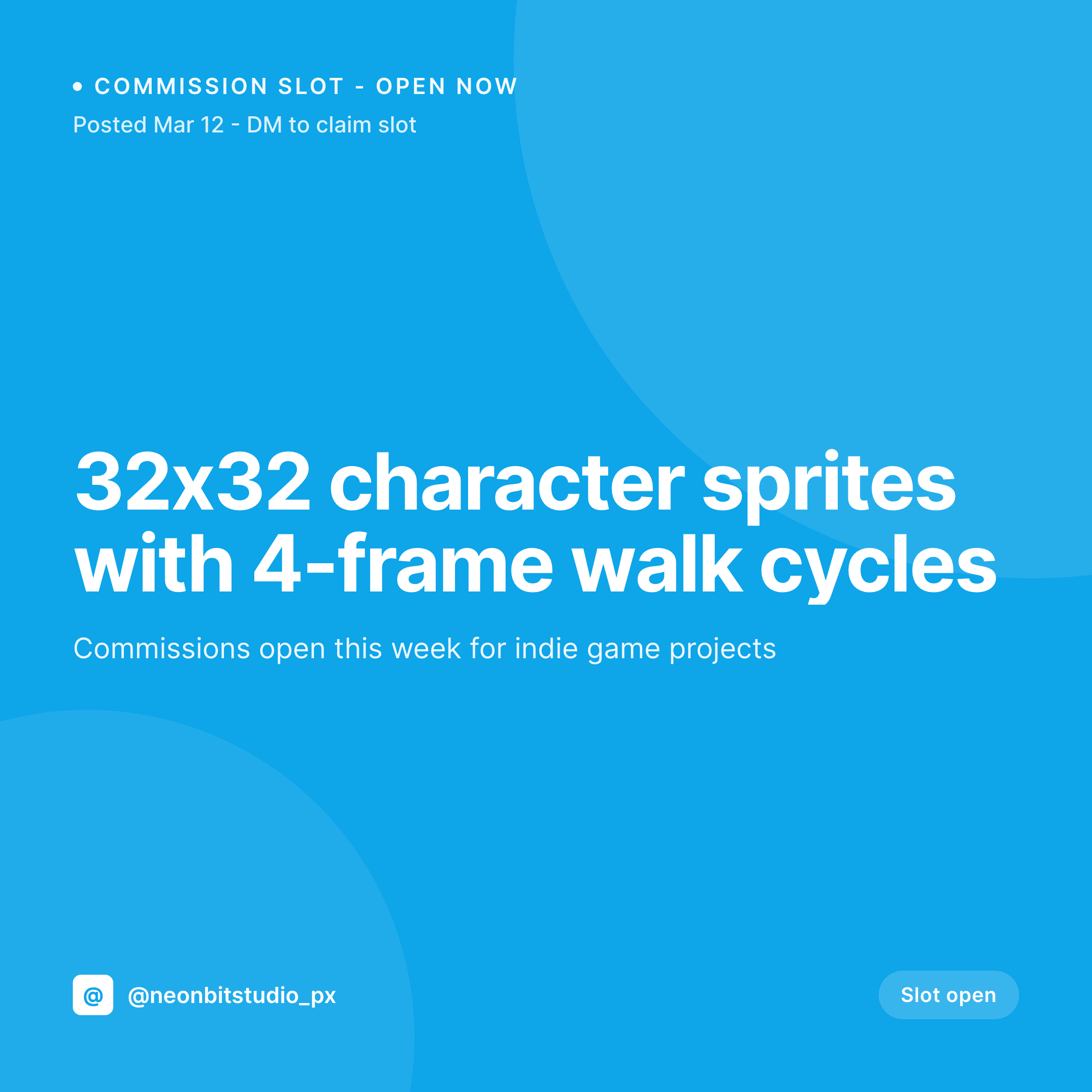
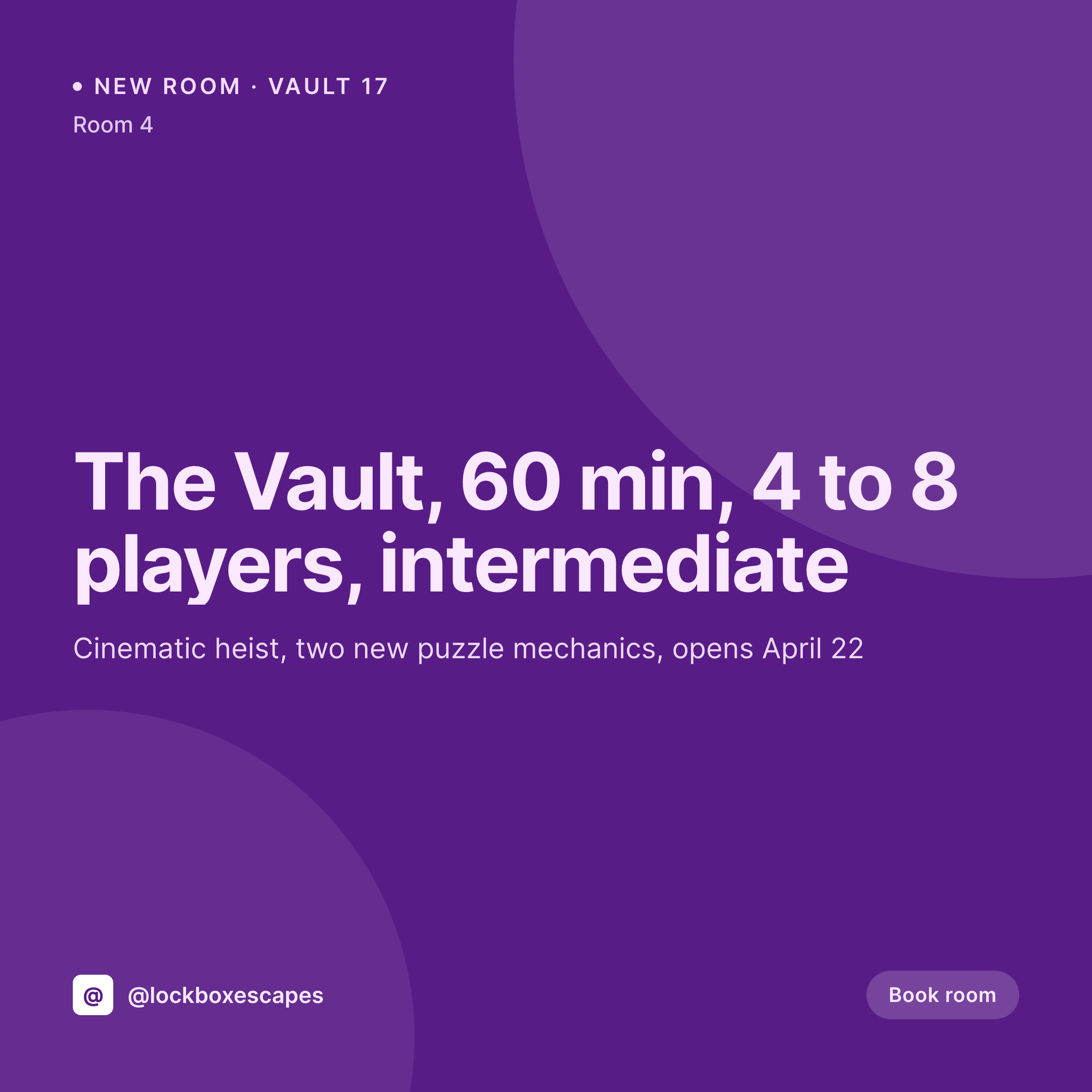
Sample pixel sprite portfolio card
A 1080x1080 Instagram-feed card rendered from one portfolio post, with the sprite scaled nearest-neighbor and the palette swatches pulled from a custom field on the post.

Comparison
Manual portfolio cards vs SleekPixel for pixel artists
Aseprite export plus Figma
- Export from Aseprite, open Figma, build the card by hand each time
- Sprite scaling gets blurry without the right nearest-neighbor setting
- Palette swatches retyped on every card, easy to drift off the actual sprite
- Commission open or closed state never matches the latest status
- Posting drops off entirely when the artist is mid-commission and busy
SleekPixel
- Sprite renders with nearest-neighbor, never blurry no matter the zoom level
- Palette swatches auto-extracted from the sprite or pulled from a field
- Commission status badge flips automatically when the taxonomy changes
- Same template renders feed square, story, and reels cover variants
-
dimensionsfield becomes the corner caption with no manual entry
Features
What SleekPixel gives you for pixel artist
Nearest-neighbor scaling
SleekPixel respects pixel art's hard edges. Sprites scale up with nearest-neighbor sampling, never bilinear, so the pixels stay sharp even when blown up to 1080 square or 1920 tall.
Palette extraction
Either point SleekPixel at a sprite and it pulls the dominant palette automatically, or define swatches in a custom field and they render as dots on the card next to the sprite preview.
Commission state aware
Tag a portfolio post with open, closed, or wait-list and the card's corner badge updates automatically. Change the taxonomy on the post and the next render swaps the badge instantly.
Use cases
Where this fits pixel-art commission practices
Sprite commission rollouts
Each finished commission gets a clean portfolio card with the client credit, sprite size, and a current-slot indicator. The card drives the next inquiry without breaking the artist's flow state.
Tutorial and process posts
Process posts ship with a card that shows the final sprite plus a small process strip. The strip pulls from a gallery field, so process posts become a separate template family.
Curated portfolio resharing
Quarterly best-of cards highlight a selection of past sprites. The card pulls from a curated portfolio category and shows four sprites in a grid, all from existing posts.
The bigger picture
Why portfolio cards drive commissions
Pixel-art commission queues fill or empty based on Instagram and Twitter reach. The portfolio site exists to convert a tap into a brief and a deposit, but the tap only happens if the social card looks good in the feed. Buyers scrolling are not patient, they want to see the sprite, the size, and whether a slot is open in under a second.
Cards built by hand can clear that bar, but they cost the artist twenty minutes each, and the artist is the bottleneck on the actual commission work. Pixel artists who systematize their share workflow reach more buyers without sacrificing studio time, because the card is a derivative of the portfolio post, not a separate design pass. The slug to the conversion is short: feed scroll, tap the card, land on the portfolio entry, read the brief options, click DM.
That whole motion only works if the first step, the card, is consistently good across hundreds of posts over a multi-year practice.
Questions
Common questions about SleekPixel for pixel artist
Yes. Sprite zones in SleekPixel templates can be set to nearest-neighbor scaling explicitly, so a 32x32 sprite blown up to 800 pixels on the card stays sharp instead of going soft like a bicubic resample would.
Either works. Auto-extraction reads the unique pixel colors and outputs the top eight as swatches. Or define a palette custom field with hex codes and SleekPixel renders those as the canonical swatch row instead.
Use the portfolio post type's category or a custom taxonomy to route between template variants. Tag with character, tileset, or UI and SleekPixel picks the matching template at render time.
A taxonomy on the post with terms like open, closed, wait-list, or holiday. SleekPixel maps each term to a corner badge variant. Customize the variant copy and color per term in the template settings.
Static only. Animated GIFs of walk cycles work great on Twitter natively, but Instagram-feed cards have to be static. Render the still-frame card with SleekPixel and post the GIF separately to the artist's story.
Yes. Two-slot templates support a hero zone with the scaled sprite plus a corner native-size preview. SleekPixel renders both at the right zoom level from the same source image automatically.
Yes. SleekPixel works at the post level, so any post type registered by a portfolio plugin is supported. Map the plugin's field names to template variables and the cards render from the plugin's existing data structure.
Vary the background gradient or the corner badge color by category or by post date. Small variation reads as fresh in the feed without breaking the unified visual identity, and SleekPixel maps category to background style.
Pricing
More than 1000+
happy customers
Explore our flexible licensing options tailored to your needs. Upgrade your license anytime to access more features, or opt for a lifetime license for ongoing value, including lifetime updates and lifetime support. Our hassle-free upgrade process ensures that our platform can grow with you, starting from whichever plan you choose.
Lifetime ♾️
Most popular
EUR
once
- Unlimited websites
- Lifetime updates
- Lifetime support
...or get the Bundle Deal
and save €250 🎁
The Bundle (unlimited sites)
Pay once, own it forever
Elevate your WordPress site with our exclusive plugin bundle that includes all of our premium plugins in one package. Enjoy lifetime updates and lifetime support. Save significantly compared to buying plugins individually.
What’s included
-
SleekAI
-
SleekByte
-
SleekMotion
-
SleekPixel
-
SleekRank
-
SleekView
€749
Continue to checkoutBrowse more
- Xiaohongshu cover images
- Klaviyo email banner
- Bluesky feed banner
- TikTok ad images
- Lens Protocol posts
- Medium article headers
- Telegram bot avatar
- Rednote (Xiaohongshu) post
- Twitch offline banners
- YouTube podcast thumbnails
- Instagram grid tiles
- YouTube end cards
- YouTube ad thumbnails
- Behance project covers
- Rumble thumbnails