






SleekPixel for release roadmap cards
SleekPixel reads each roadmap post's quarter, milestone list, and last-updated date, then renders a 1200x675 Twitter-optimized teaser card on save. Every roadmap update ships with a share asset that matches the previous one, without a designer per quarter.
♾️ Lifetime License available
Stop publishing roadmaps with a generic share card
Roadmap posts get the most engineering, the most stakeholder review, and the least design attention. The post lists the quarter's milestones, ships to the public blog, and gets shared on Twitter with the same OG card the company uses for press releases. Customers, analysts, and prospects all see the same generic preview and scroll past without registering the update.
SleekPixel turns the roadmap into a recurring visual series. You design one template in the admin that pulls fields like quarter, milestone_list, last_updated, and theme_color. Every time a roadmap post saves, SleekPixel renders a 1200x675 Twitter-optimized card listing the top milestones and writes the URL into the twitter:image meta tag.
The product team writes the roadmap, the card renders from the post on save, and the company tweet, the customer Slack share, and the LinkedIn post all carry the same series identity. Q1, Q2, and Q3 cards look like installments. Edit the template once and every past quarter's card refreshes. Add a new field, every roadmap inherits it.
Workflow
From roadmap draft to teaser share
Design the roadmap template
Route to the roadmap post type
Save the roadmap post
Share each quarter
Output
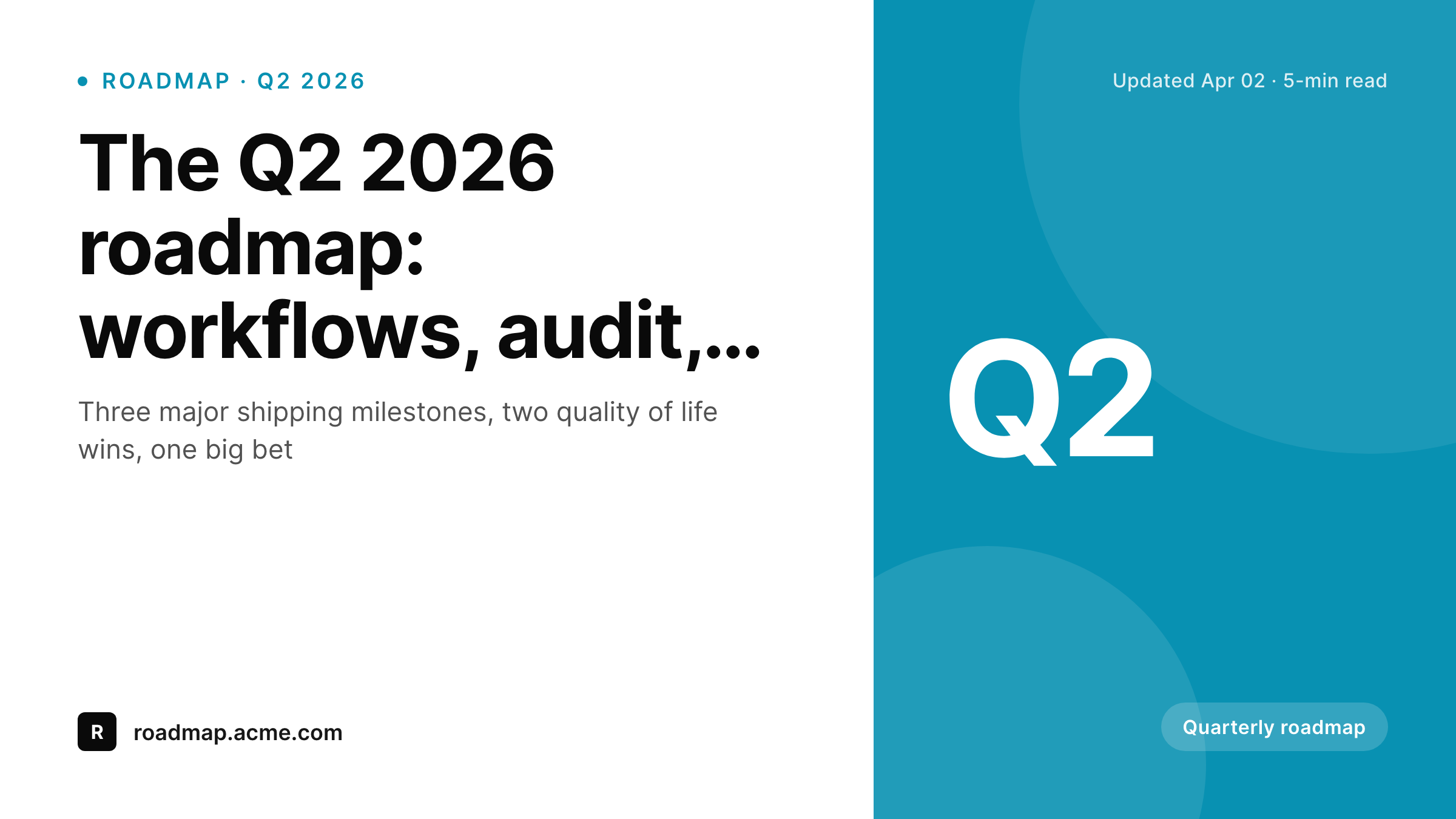
Sample quarterly roadmap teaser
Card rendered from a roadmap post quarter, top milestones, and theme color on save. Same template applies to every quarter shipped from the team.
Comparison
Default theme OG image vs SleekPixel for release roadmap cards
Default theme OG image
- Roadmap publishes with the standard blog OG card, no quarterly identity
- Customers cannot tell at a glance which quarter the post covers
- Each quarter looks like a one-off blog post in the social feed
- Designer queue does not block a roadmap post, so the card stays generic forever
- Analyst shares carry the company logo, not the roadmap signal
SleekPixel
- Per-roadmap 1200x675 card rendered on save, Twitter-optimized
-
Fields:
quarter,milestones,updated,theme - Top-three milestones rendered automatically from the milestone array
- Bulk regenerate past quarter cards after a brand refresh
- Falls back gracefully when a milestone field is empty on older posts
Features
What SleekPixel gives you for release roadmap card
Quarter front and center
The template surfaces the quarter in large display type so feed scrollers know at a glance which roadmap version they are looking at. Q2 2026 reads as Q2 2026 from a thumbnail in mobile feed.
Top milestones rendered
Templates iterate over the milestone array and render the top three or four as a visual list on the card. Customers see the headline bets without clicking through to the post.
Updates as the quarter ships
Roadmaps change mid-quarter. SleekPixel re-renders the card on every save, so the share asset always reflects what the post currently lists, instead of locking in a stale snapshot from launch day.
Use cases
Where roadmap cards earn each click
Product marketing teams
Quarterly roadmap posts ship with a card that matches the previous quarter. Customers and analysts treat the series as a planned release cadence rather than ad hoc blog posts.
Customer success teams
Renewal reps paste roadmap URLs into customer Slack channels and the card preview shows the quarter and the top milestones, supporting the conversation visually.
Analyst relations teams
Analyst-facing roadmap shares carry a consistent visual identity across quarters, signaling a mature product organization with planned releases.
The bigger picture
Why a recurring roadmap card builds trust
Public roadmaps are one of the highest-trust artifacts a product company ships. Customers read them to plan adoption, analysts read them to evaluate maturity, and prospects read them to predict whether the product will still exist in a year. A roadmap shipped quarterly with a consistent visual identity reads as a planned cadence.
A roadmap shipped with the same generic blog card every time reads as marketing copy. The visual signal is part of how stakeholders calibrate the trust they place in the post. Companies like Linear, Stripe, and Vercel publish roadmap updates with consistent visual identities specifically because the consistency reinforces the planning culture.
The compounding effect over a few years of quarters is a public archive of roadmaps that looks like a series, not a stack of disconnected blog posts. SleekPixel ships the consistency without burning design hours on every quarter, which is the only way recurring roadmap posts maintain visual identity past the first two cycles. The post content stays the same.
The teaser card adds the cadence signal that turns roadmap content into a recognizable program.
Questions
Common questions about SleekPixel for release roadmap card
Yes. Templates support array iteration with limit, sort, and field selection. Store milestones as a repeater field, ACF group, or JSON array on the post, then iterate to render the top items on the card.
SleekPixel re-renders on every save. Each update produces a fresh card, and the share URL points to the latest render. Social caches refresh on next share or on demand via platform debuggers.
Yes. Routing rules support per-category, per-tag, and per-CPT template assignment. A platform roadmap can use one design language, a specific product roadmap another, and the plugin picks the right template per post automatically.
Yes. Twitter's summary_large_image card displays at a 1200x675 ratio in feed, which is the dimension SleekPixel renders to. Other platforms gracefully crop or letterbox if needed, or you can render multi-variant outputs from one template.
Optional. Templates accept status fields per milestone and can render colored dots, badges, or strike-through for shipped items. The post stores the status, the template renders it. No on-card logic, just the data the post already holds.
Yes. SleekPixel reads any registered post meta, ACF, or custom taxonomy. Point the template at your existing roadmap post type and reference the fields by key. No code changes to the post type itself.
No. Rendering takes a fraction of a second on modern hosting. The image generates once on save, stores as a static PNG in uploads, and serves through the CDN. Authors do not wait for rendering on save.
Each quarter's post keeps its own generated card. Old quarters remain accessible at their URLs with the card that was current at last save. Bulk regeneration brings the archive to the latest template if you refresh the design language.
Pricing
More than 1000+
happy customers
Explore our flexible licensing options tailored to your needs. Upgrade your license anytime to access more features, or opt for a lifetime license for ongoing value, including lifetime updates and lifetime support. Our hassle-free upgrade process ensures that our platform can grow with you, starting from whichever plan you choose.
Lifetime ♾️
Most popular
EUR
once
- Unlimited websites
- Lifetime updates
- Lifetime support
...or get the Bundle Deal
and save €250 🎁
The Bundle (unlimited sites)
Pay once, own it forever
Elevate your WordPress site with our exclusive plugin bundle that includes all of our premium plugins in one package. Enjoy lifetime updates and lifetime support. Save significantly compared to buying plugins individually.
What’s included
-
SleekAI
-
SleekByte
-
SleekMotion
-
SleekPixel
-
SleekRank
-
SleekView
€749
Continue to checkout