






SleekPixel for sprint recap cards: ship the recap, not a screenshot
Engineering teams that publish a sprint recap every two weeks end up with twenty cards a year and a backlog of half-finished Figma frames. SleekPixel binds the recap card template to the post itself, so the sprint number, the dates, and the shipped count are all part of the render.
♾️ Lifetime License available
Recap cards stop being a per-post design task
A sprint recap card is one of those assets that looks easy until you ship the twentieth one. Each recap has a different sprint number, different dates, a different list of shipped items, and a different team lead writing it. The first three are designed by someone who cares. By sprint twelve the post goes out with a screenshot of a paragraph, or no image at all, because the design team has moved on. The recap then unfurls on X and LinkedIn with whatever default the theme provides, which is usually the homepage hero.
SleekPixel solves this by binding the recap card to the recap post itself. The template reads the sprint_number custom field, the sprint_start and sprint_end dates, the shipped_count integer, and the post title. When the editor saves the post, a 1200x675 PNG is rendered into the WordPress uploads directory and the twitter:image meta tag is written into the post head. The card on social matches the post without anyone opening Figma.
This matters more on the long tail than the day-of share. A recap from sprint 12 that gets quoted in sprint 47 should still unfurl with the right sprint number and the right dates. Static screenshots cannot do that. A live render from post fields can.
Workflow
From recap post save to live Twitter card
Add the recap fields
sprint_number, sprint_start, sprint_end, and shipped_count as ACF fields on the recap post type. Existing recaps can be backfilled with a one-time migration.
Build the recap template
Publish the recap
wp-content/uploads and twitter:image is written into the post head.
Share to X and Slack
Output
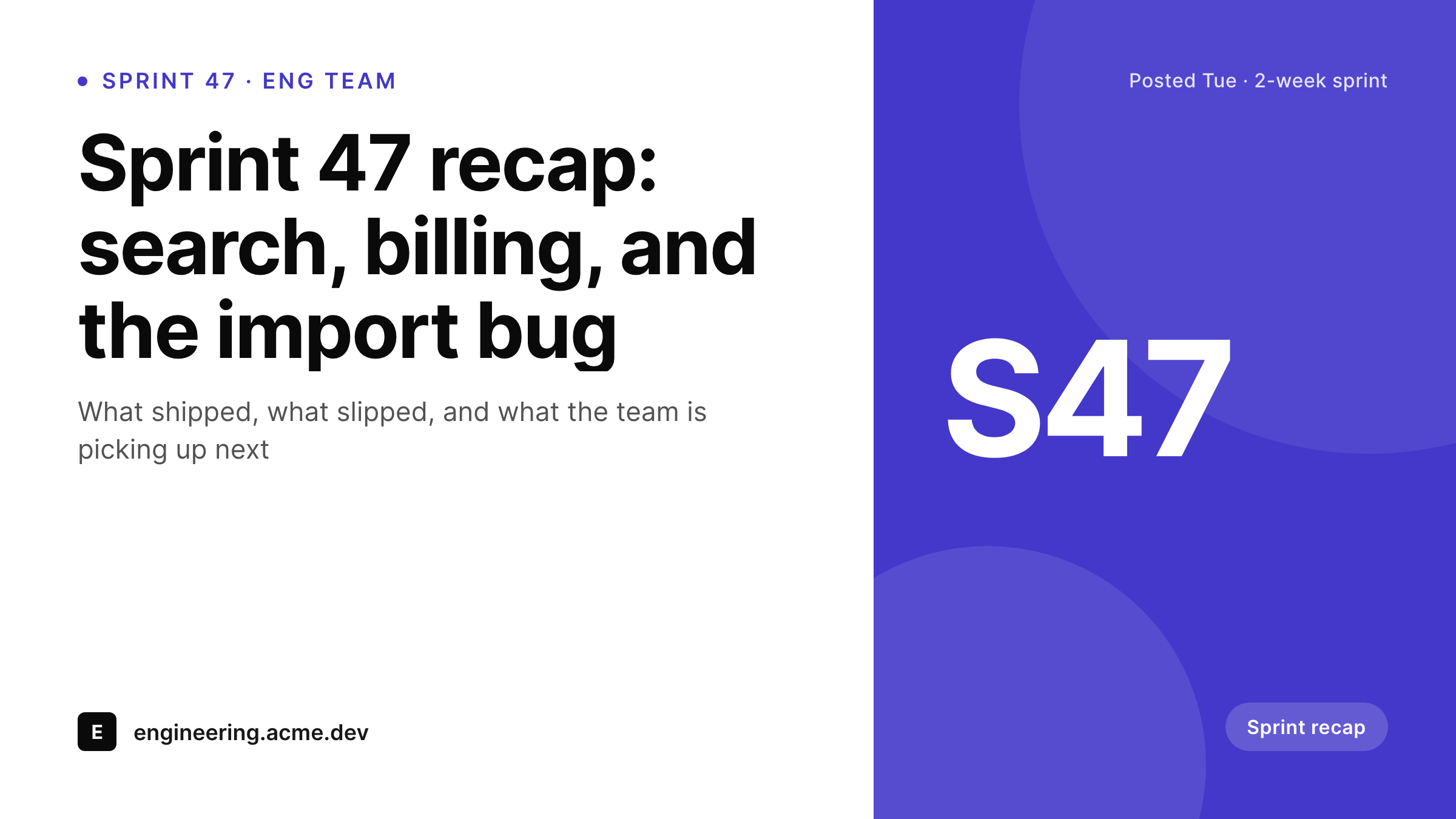
Sample sprint recap card
The Twitter card pulls sprint number, date range, and shipped count from the post and renders them next to the recap headline, ready for the share.
Comparison
Figma recap card vs SleekPixel for sprint recap card
Manual Figma export per recap
- Every recap needs a new Figma frame with the new sprint number typed in by hand
- The export step is forgotten on busy sprint endings and the post ships without a card
- Sprint dates drift in the design file and the published card shows the wrong week
- Old recaps still unfurl with the homepage hero because no one re-renders the archive
- Designers become the bottleneck for a recurring asset the engineering team owns
SleekPixel
-
Template binds to
sprint_number,sprint_start,sprint_end, andshipped_count - 1200x675 PNG written into uploads on every recap post save
-
twitter:imageandog:imagemeta tags written automatically - Batch regenerate re-runs the template across the full recap archive
- Engineering owns the recurring asset without filing a design ticket
Features
What SleekPixel gives you for sprint recap card
Sprint fields baked in
Sprint number, start date, end date, and shipped count come from the post custom fields and are rendered into the card. Editors fill the post once and the card follows.
Regenerates on edit
A late correction to the shipped count or a copy edit to the recap headline rebuilds the card. The version on social tracks the version on the post without any manual export step.
Same template, every sprint
One HTML and CSS template renders every recap, so brand consistency across sprint 1 and sprint 47 is automatic. Branding changes propagate by re-rendering the archive.
Use cases
Where the recap card actually gets used
Twitter and X share
The recap post link unfurls on X with the sprint number and dates visible in the card, so the tweet does not need to repeat them.
Internal Slack
The same PNG works as the Slack channel preview, so the recap dropped into eng-announcements reads consistently with the public share.
Engineering newsletter
Cross-posted recaps in a monthly engineering newsletter use the same card, so subscribers see the same identity as people who land via X.
The bigger picture
Why a templated recap card matters over time
A sprint recap is a recurring artifact, not a one-off post. The brand benefit comes from the twentieth, the fortieth, and the hundredth recap looking like part of the same series, not from one beautifully designed post on sprint 1. Manual design effort cannot keep that consistency across years because the people who set up the template are not the people running the recap process in year three.
Binding the card to the post lets the recurring asset survive team changes. The same engineer who edits the markdown recap also produces the card by saving the post. Old recaps, when quoted or linked back to during a postmortem, still unfurl with the right sprint number and date range because the render is live, not a static export.
Branding decisions made by leadership later propagate by running a batch regenerate across the recap archive, not by reopening fifty Figma files. The result is that the engineering team owns the entire recap surface, including the social card, with no recurring design dependency.
Questions
Common questions about SleekPixel for sprint recap card
Yes. SleekPixel works with any post type registered in WordPress. Map the template to the recap post type, register your sprint fields, and the render fires on save just like a regular post.
Editing the sprint_end custom field on the post triggers a regenerate. The PNG in uploads is overwritten and the same URL serves the corrected card on the next share.
Yes. The template reads any integer custom field, so a shipped_count bound to a slot in the corner of the card renders the number directly. Updating the field updates the card.
Yes. You can have a backend recap series and a frontend recap series with different templates, both bound to the same post type via a taxonomy term that selects the template at render time.
1200x675, which is Twitter's summary_large_image dimension. The same PNG also works as a 1200x630 OG image because the aspect ratio is close enough for the platform crop rules to not chop content.
No. SleekPixel hands the rendered file URL to the active SEO plugin so the meta tag uses the new image. Only one twitter:image tag ends up in the post head.
Yes. The block sidebar has a download button so engineers can grab the recap card PNG for use as a Loom thumbnail, a Notion cover, or anywhere else outside the WordPress post.
No. Rendering happens locally on save and the file is static after that. There are no per-view API costs and no usage caps to manage during a busy launch week.
Pricing
More than 1000+
happy customers
Explore our flexible licensing options tailored to your needs. Upgrade your license anytime to access more features, or opt for a lifetime license for ongoing value, including lifetime updates and lifetime support. Our hassle-free upgrade process ensures that our platform can grow with you, starting from whichever plan you choose.
Lifetime ♾️
Most popular
EUR
once
- Unlimited websites
- Lifetime updates
- Lifetime support
...or get the Bundle Deal
and save €250 🎁
The Bundle (unlimited sites)
Pay once, own it forever
Elevate your WordPress site with our exclusive plugin bundle that includes all of our premium plugins in one package. Enjoy lifetime updates and lifetime support. Save significantly compared to buying plugins individually.
What’s included
-
SleekAI
-
SleekByte
-
SleekMotion
-
SleekPixel
-
SleekRank
-
SleekView
€749
Continue to checkoutBrowse more
- metric spotlight cards
- early bird banners
- movie review cards
- anniversary promo card
- policy update cards
- ship log cards
- tip of the day cards
- expert quote card
- limited edition cards
- product tour cards
- Product Hunt launch card
- status update cards
- longform article card
- newsletter cover cards
- developer tool card
- YouTube Music cover art
- LinkedIn post images
- Facebook ad images
- Instagram feed posts
- Substack post headers
- Dribbble shot covers
- YouTube channel banners
- TikTok ad images
- Instagram carousel slides
- Patreon post thumbnails
- Bluesky profile banner
- WhatsApp status images
- Behance banner
- Spotify podcast covers
- Instagram Shop product images