






SleekPixel for WooCommerce Blocks cart and checkout shares
WooCommerce Blocks replaces classic cart and checkout shortcodes with full-featured blocks. SleekPixel reads block-specific data on those pages, like cart item count and total, and renders branded OG cards so shared cart and checkout URLs look as polished as the block-based experience.
♾️ Lifetime License available
Block-based commerce needs block-aware social cards
WooCommerce Blocks (the woo-gutenberg-products-block bundle) ships first-class blocks for cart, checkout, mini cart, product grid, single product, and many more. Block themes use these blocks instead of the classic shortcodes. The data underneath is the same WooCommerce data: line items in wp_woocommerce_sessions, products in wp_posts, and totals computed from wp_woocommerce_order_itemmeta. The OG image on those pages, however, has historically lagged because shortcodes used different templates than blocks.
SleekPixel detects when a page uses a WooCommerce Block (via block recognition in the rendered content) and chooses a card template accordingly. Cart and checkout shares render with item counts, totals, and a small block-style label. Product Grid block URLs share a card showing the visible products. Single Product Block pages reuse the per-product card template already configured for products.
Because the integration is block-aware rather than shortcode-aware, it works regardless of whether the site is a block theme, a hybrid theme, or a classic theme that opts into Woo Blocks. Cards stay consistent across the migration to block themes.
Workflow
From a WooCommerce Block to a branded social card
Detect blocks on the page
Pick a block-specific template
Pull live data
WC()->cart. Product Grid Block templates read the displayed products from the block's resolved query.
Render and cache
Output
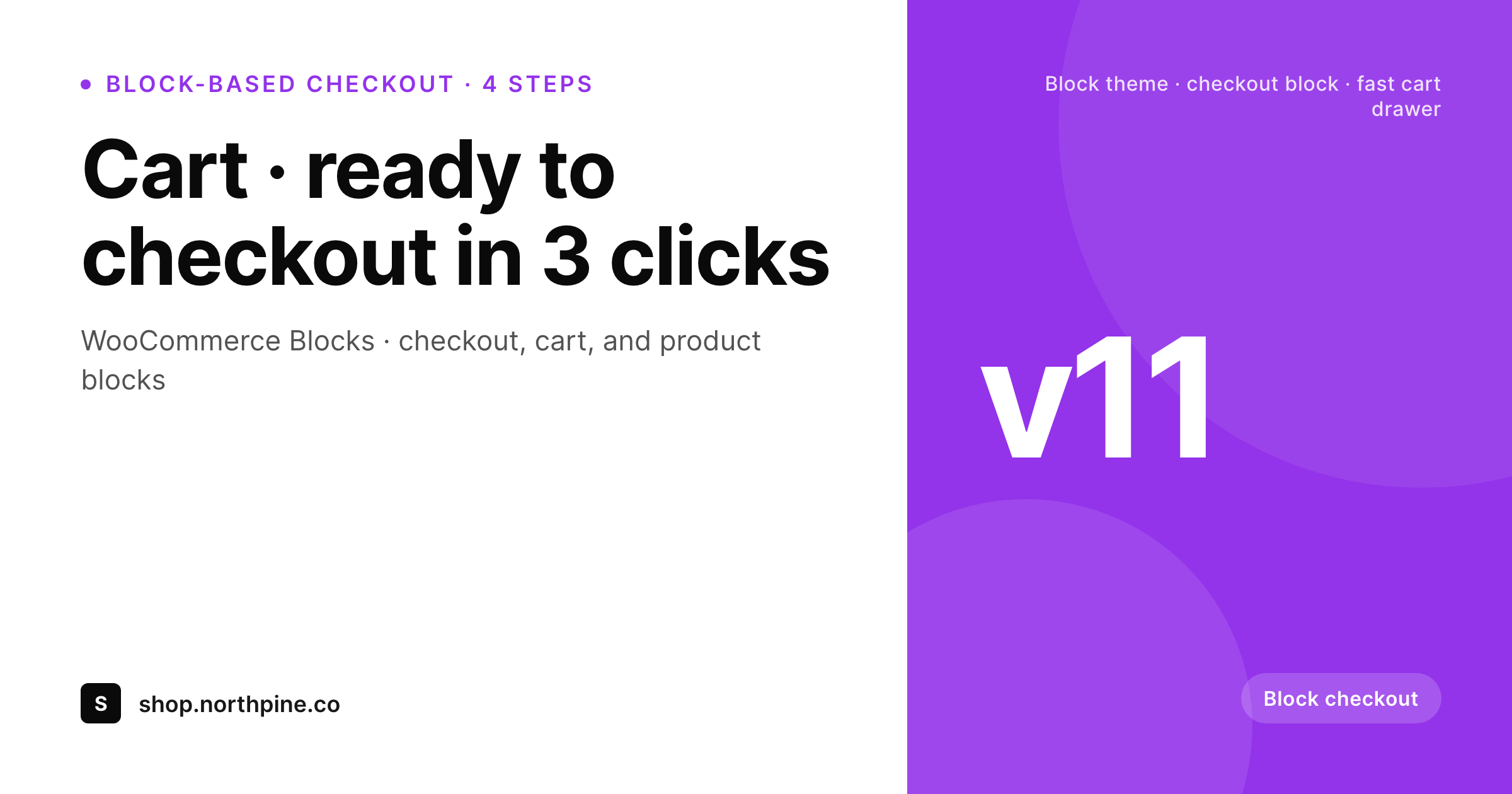
Sample WooCommerce Blocks cart card
Rendered from a real WooCommerce Blocks cart page with item count, total, and block-aware styling pulled from WooCommerce session data.
Comparison
Generic shop OG vs SleekPixel for WooCommerce Blocks
Same shop image on cart and checkout
- Cart and checkout URLs preview with the same generic shop OG image
- Cart item counts and totals never appear in shared previews
- Block-based product grids share like generic archive pages
- Migration from shortcodes to blocks leaves OG cards inconsistent
- Marketing cannot share specific block-based pages as branded previews
SleekPixel
- Detects WooCommerce Blocks in rendered content via block recognition
- Cart and checkout cards render with live item counts and totals
- Product Grid Block URLs share a card showing visible products
- Single Product Block reuses the product OG card template
- Works with classic, hybrid, and full block themes side by side
Features
What SleekPixel gives you for WooCommerce Blocks
Block-aware templates
SleekPixel recognizes which WooCommerce block dominates a page and picks the matching template. Cart, checkout, mini cart, and product grid blocks each have their own visual.
Cart and checkout context
Cart pages show item count and total in the card. Checkout pages show a discreet "Ready to checkout" framing without exposing customer-specific data, only general state.
Theme-agnostic
Block themes, hybrid themes, and classic themes that opt into blocks all work the same way. There is no separate setup per theme type.
Use cases
Where WooCommerce Blocks stores benefit most
Block-based checkout flows
Stores using the block checkout share checkout URLs in customer support. Per-block cards make those URLs read as cart pages, not generic shop URLs.
Block themes and FSE
Full Site Editing themes built around WooCommerce Blocks get consistent OG cards across cart, checkout, archive, and single product without theme-specific patches.
Affiliate-shared product grids
Product Grid Block URLs used as curated collections share cards showing the products in the grid, not a static archive image.
The bigger picture
Block-based commerce deserves block-aware social cards
WooCommerce Blocks is the future of WooCommerce. Block themes are increasingly the default for new stores. Cart, checkout, product grid, and single product pages all run through blocks.
Many of those URLs get shared, especially cart and checkout URLs in customer support contexts and product grid URLs as curated collections from affiliates and editorial sites. The OG image story for blocks has historically lagged the shortcode era, partly because plugins were still adapting. SleekPixel skips that lag by detecting blocks directly.
Cart pages share with item counts. Checkout pages share with cart context. Product grids share with the actual products in the grid.
Single product blocks share with the same per-product card already used for the classic product template. Migration from a shortcode-based theme to a block theme no longer drops OG quality on the floor. Stores that adopt blocks early get the same consistent branding on shared links as stores that stuck with classic templates, and ultimately better cards because blocks expose more granular block-specific data.
Questions
Common questions about SleekPixel for WooCommerce Blocks
Yes. The integration parses the page content for block tags and identifies the dominant WooCommerce block: cart, checkout, mini cart, product grid, or single product. Each detected block maps to a configured template.
Yes. Cart and checkout cards intentionally render only general state, such as item count and total. Customer-specific data, line item names, and addresses are never composed into a cacheable OG image.
Yes. Full Site Editing themes built around WooCommerce Blocks work without any extra setup. SleekPixel runs at the template level, so block-based templates render and detect just as classic templates do.
The same. SleekPixel detects the blocks regardless of theme type. A classic theme that places a checkout block on a custom checkout page gets the block-based card on that page.
Yes. Product Grid Block has a dedicated template that reads the resolved products from the block's query. The card shows the visible product images and a count, distinct from the single-product card.
Yes. Pages built around the Single Product Block share a card identical to the classic product template card, since both render the same underlying WooCommerce product. There is no duplicate template to maintain.
SleekPixel applies a priority rule: cart and checkout win over grid and mini cart on the same URL, since those are the dominant intents. The priority can be reordered from the SleekPixel admin to match a custom theme.
No more than any OG image generator. Cards are rendered once and cached briefly. The render runs after the page finishes building, so the checkout and cart blocks render at full speed for the customer.
Pricing
More than 1000+
happy customers
Explore our flexible licensing options tailored to your needs. Upgrade your license anytime to access more features, or opt for a lifetime license for ongoing value, including lifetime updates and lifetime support. Our hassle-free upgrade process ensures that our platform can grow with you, starting from whichever plan you choose.
Lifetime ♾️
Most popular
EUR
once
- Unlimited websites
- Lifetime updates
- Lifetime support
...or get the Bundle Deal
and save €250 🎁
The Bundle (unlimited sites)
Pay once, own it forever
Elevate your WordPress site with our exclusive plugin bundle that includes all of our premium plugins in one package. Enjoy lifetime updates and lifetime support. Save significantly compared to buying plugins individually.
What’s included
-
SleekAI
-
SleekByte
-
SleekMotion
-
SleekPixel
-
SleekRank
-
SleekView
€749
Continue to checkoutBrowse more
- Twitch overlay
- YouTube podcast thumbnails
- Odnoklassniki banners
- YouTube Music cover art
- Pinterest video pin covers
- Klaviyo email headers
- Dribbble shot covers
- Discord stage banner
- LinkedIn banner images
- Substack post thumbnail
- Weibo post images
- YouTube Shorts thumbnails
- Slack channel headers
- Beacons.ai banner
- YouTube playlist covers