






SleekPixel for Buffer alternative for WordPress
Buffer schedules posts on social networks. SleekPixel makes sure the WordPress link actually looks good when it lands there. Templates render in the admin, og:image and twitter:image meta is written on save, no external scheduler required for the image side of the workflow.
♾️ Lifetime License available
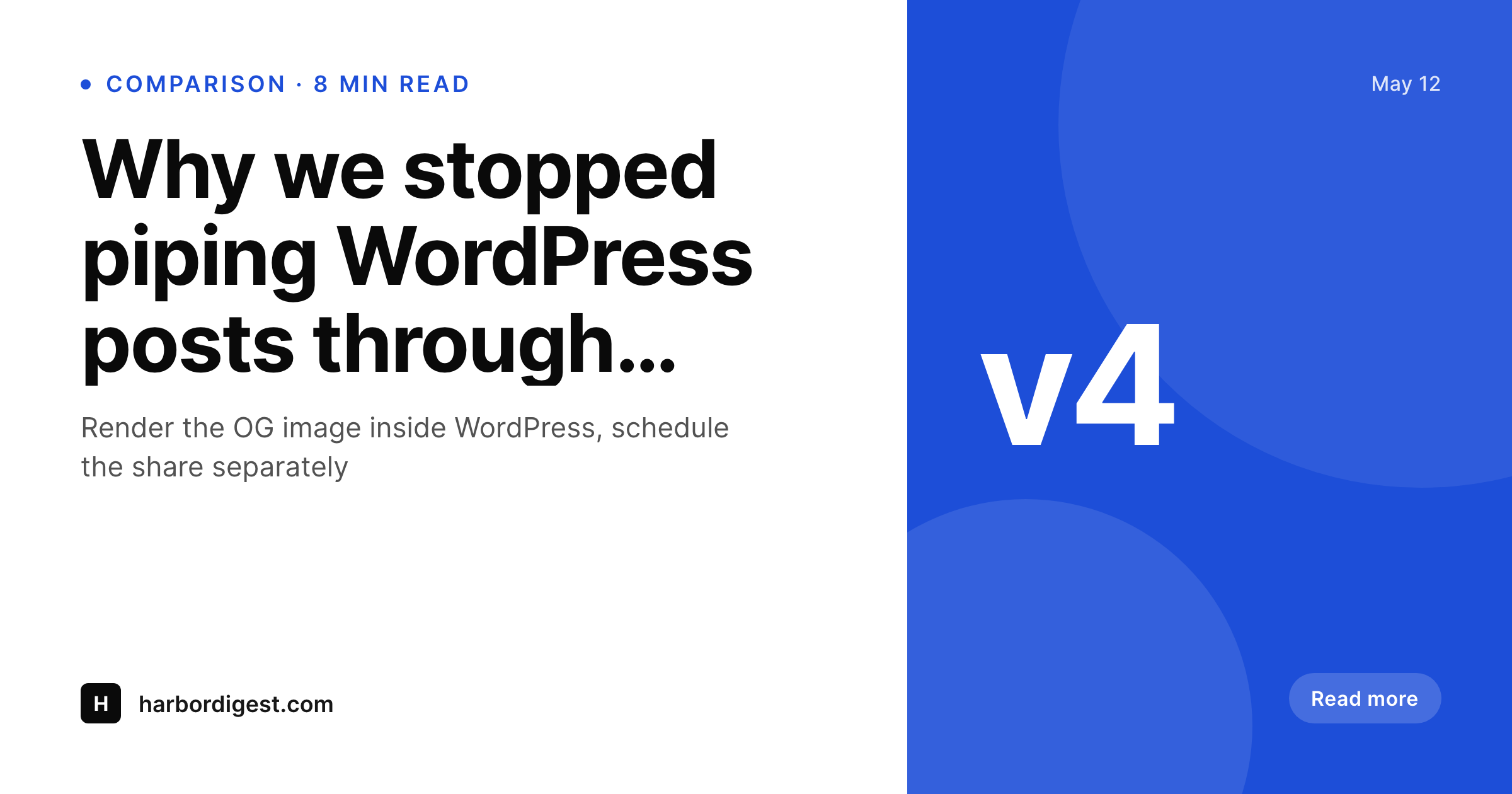
Why teams separate scheduling from share-image rendering
Buffer is a scheduler. It posts a link from WordPress to LinkedIn or X at a chosen time and pulls whatever meta tags the page exposes. If the WordPress site is not writing a proper og:image meta tag, Buffer will surface whatever fallback it can find, often a wide hero image cropped badly or a sitewide default that looks identical on every post. The Buffer side of the workflow is fine. The WordPress side is the actual gap.
SleekPixel fills that gap inside WordPress itself. Templates are designed using regular WordPress blocks, the renderer runs in the same PHP process as the post save, and og:image, og:image:width, og:image:height, and twitter:image meta tags are written directly into the post head. By the time Buffer or any other scheduler scrapes the link, the share preview is already correct. There is no extra step for the editor and no separate dashboard to keep in sync.
The reframe is that scheduling and rendering are different jobs. Buffer is good at picking the right time and queueing across networks, and there is no reason to move that work into WordPress. The work that does belong in WordPress is producing a real per-post share image and writing the meta tag for it. SleekPixel handles that piece, Buffer keeps doing the scheduling piece, and the share previews stop being the weakest link in the chain.
Workflow
From Buffer-only previews to SleekPixel renders
Install SleekPixel
Design a template
Bulk regenerate
Keep Buffer scheduling
Output
What ships when a post is saved
A 1200x630 PNG rendered from the post title, category, byline, and brand mark, written into uploads and linked from og:image and twitter:image meta in the post head.
Comparison
Buffer-only scheduling vs SleekPixel rendering inside WordPress
Buffer share previews
- Pulls whatever og:image WordPress exposes, often a generic sitewide fallback
- No way to design or override the share image from inside the Buffer queue
- Cropping behavior varies by network, hero images get sliced unpredictably
- Editors discover broken previews after the post has already been queued
- Per-post image work falls back to Canva exports manually uploaded to Buffer
SleekPixel
- Renders a real per-post PNG inside WordPress before the post is shared
- Writes og:image and twitter:image meta tags during the post save request
- Templates pull from post title, ACF, Meta Box, and WooCommerce fields
- Bulk regenerate covers existing posts so old links update on re-share
- Works alongside Buffer, Hootsuite, or any scheduler that scrapes meta tags
Features
What SleekPixel gives you for Buffer alternative for WordPress
Per-post images
Every post gets a rendered PNG tailored to its title and metadata, not a sitewide fallback or a manually cropped hero.
Meta written in PHP
og:image, og:image:width, og:image:height, and twitter:image are written into the post head from the same plugin that produced the image.
Scheduler agnostic
Keeps Buffer, Hootsuite, or any other scheduler in place. SleekPixel only takes responsibility for the share image and its meta tags.
Use cases
Where Buffer plus SleekPixel pays off
Editorial sites
Newsrooms keep Buffer for scheduling and stop relying on hero crops for share previews. Every post lands on social with a real per-headline image.
Marketing teams
Campaign pages get branded share previews that match the rest of the launch artwork without a Canva export uploaded into Buffer by hand.
Multi-author blogs
Author bylines and avatars render straight from WordPress user records, so every contributor's posts share consistently without extra work.
The bigger picture
Why scheduling and rendering belong in different tools
Buffer is a strong scheduler and a poor template editor, which is exactly the right shape for what it does. The mistake is treating it as the full share-image pipeline. Buffer can only show what WordPress publishes in its meta tags, and most WordPress sites publish either nothing or a sitewide fallback.
The result is share previews that look identical post after post, which leaks click-through over time and is hard to attribute. Moving the rendering job into WordPress changes the picture. The renderer has access to the post title, the byline, the category, the ACF fields, and the upload directory in the same PHP process, and producing a real per-post PNG is a sub-second operation on a modern host.
Once the meta tag is correct, every scheduler downstream picks it up automatically. Buffer keeps doing what it is good at, the share previews stop being a recurring complaint in editorial reviews, and the workflow as a whole gets simpler not more complicated.
Questions
Common questions about SleekPixel for Buffer alternative for WordPress
No. SleekPixel renders the share image and writes og:image meta inside WordPress. Buffer handles scheduling and posting across networks. The two solve different problems and run side by side.
Yes. Buffer scrapes the link's meta tags when a post is queued or shared. Once SleekPixel writes a real og:image and twitter:image meta tag, Buffer surfaces that artwork without any configuration change on the Buffer side.
Run a bulk regenerate so older posts get fresh PNGs and corrected meta. Social networks cache previews, so a manual cache invalidation through their debug tools may be needed to refresh links already in circulation.
SleekPixel renders one PNG per post that serves both og:image and twitter:image. Per-network variants are not the focus, since most schedulers including Buffer use the same scraped meta across destinations.
Yes. Templates can target any registered post type and pull from any post field, ACF field, Meta Box field, or WooCommerce attribute. Custom post types use the same renderer as standard posts.
No. SleekPixel is a flat plugin license. Re-publishing a post fifty times through a copy review does not change the cost and there is no external render API in the chain.
Yes. The Gutenberg sidebar exposes a download button for the rendered PNG and JPG, which is useful for reusing the same artwork in a newsletter, an Instagram story, or a manual Buffer image attachment.
SleekPixel does not schedule posts, does not connect to social network APIs, and does not produce per-network engagement analytics. Buffer handles all of that and stays in the workflow when SleekPixel is added.
Pricing
More than 1000+
happy customers
Explore our flexible licensing options tailored to your needs. Upgrade your license anytime to access more features, or opt for a lifetime license for ongoing value, including lifetime updates and lifetime support. Our hassle-free upgrade process ensures that our platform can grow with you, starting from whichever plan you choose.
Lifetime ♾️
Most popular
EUR
once
- Unlimited websites
- Lifetime updates
- Lifetime support
...or get the Bundle Deal
and save €250 🎁
💎 Want everything forever? The All Access Pass is going away on 01.08.2026.
The Bundle (unlimited sites)
Pay once, own it forever
Elevate your WordPress site with our exclusive plugin bundle that includes all of our premium plugins in one package. Enjoy lifetime updates and lifetime support. Save significantly compared to buying plugins individually.
What’s included
-
SleekAI
-
SleekByte
-
SleekMotion
-
SleekPixel
-
SleekRank
-
SleekView
€749
Continue to checkoutBrowse more
- Threads profile banners
- Substack podcast cover
- eBay listing images
- Dribbble shot covers
- YouTube Shorts covers
- YouTube community images
- Bandcamp banner
- Nostr note images
- Rednote (Xiaohongshu) post
- Mastodon profile banners
- Snapchat ad images
- Discord server icon
- Fanvue page banner
- Patreon cover images
- VSCO cover