






SleekPixel for feature flag cards
SleekPixel reads the flag name, current rollout percentage, opt-in path, and next-stage date from a single rollout post and renders a Twitter-card share image. Customers see a real rollout status in feeds instead of a vague 'coming soon' tweet.
♾️ Lifetime License available
Flag rollouts deserve visible communication too
Modern product teams ship behind flags, but most rollout communication still happens in private channels - Slack, internal docs, the occasional changelog entry. Customers rarely see a rollout status until it hits 100% and shows up in their UI. A visible rollout post with a graphic that names the flag, the percentage, and the opt-in path tells customers a real story while the rollout is happening.
SleekPixel reads the rollout post's flag_name, rollout_pct, opt_in_path, and next_stage_date fields, then renders a 1200x675 Twitter card. The flag name and percentage are immediately visible. The full rollout narrative stays in the post body.
Each stage of the rollout updates the percentage field. SleekPixel re-renders the card on save, and the most recent share image always reflects the current stage. Customers who care about the feature can subscribe to the post or its tag and watch the visual progress.
Workflow
How a card renders, end to end
Create the rollout post
rollout CPT post. Fields: flag name, rollout percentage, opt-in path, next-stage date, narrative.
Bind the template
Save at each stage
Share at the stages that matter
Output
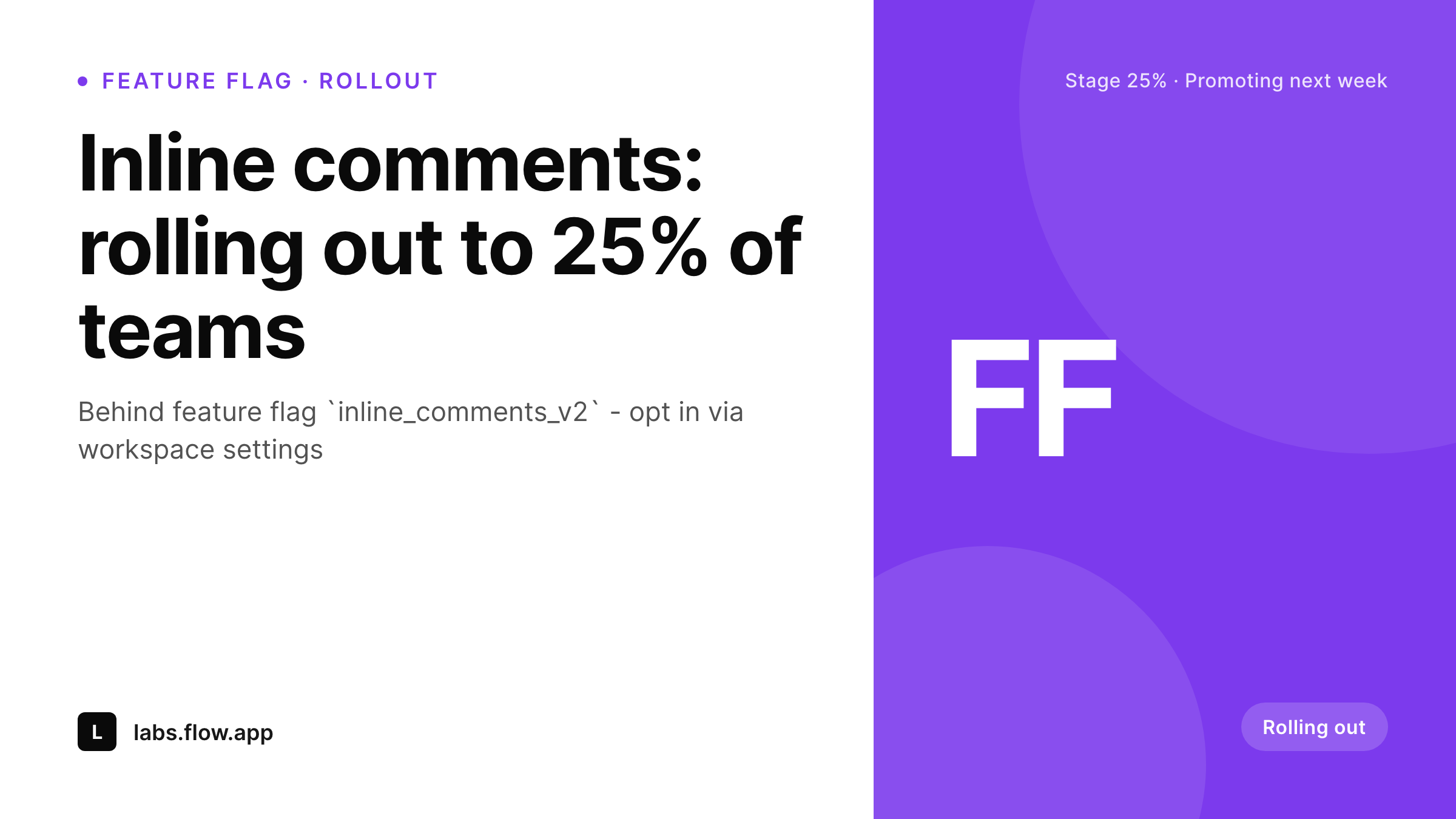
Sample feature-flag rollout card
Rendered from one rollout post: flag name, rollout percentage, opt-in path, and next-stage date. The full rollout narrative stays in the post body.
Comparison
Default twitter card vs SleekPixel for feature flag cards
Plain changelog text snippet
- Rollout communication lives in internal channels, never reaches customers
- Changelog tweets get a generic site OG image; the topic is invisible
- Manual share images mean only big launches get a graphic
- Flag-name typos slip in when the post body and the image are managed separately
- Multi-stage rollouts collapse to a single 'coming soon' announcement
SleekPixel
-
Reads
flag_nameandrollout_pctstraight from the rollout post -
Opt-in path appears as monospace text via a
<code>-styled region - Next-stage date in the footer signals the rollout is actively managed
- Twitter-card 1200x675 plus an in-app 1200x300 banner export
- Falls back to flag-and-percentage-only headline if opt-in path is empty
Features
What SleekPixel gives you for feature flag card
Rollout-aware
The percentage region updates the moment you save the post. A 5% rollout looks different from a 50% rollout on the card, so customers reading shares understand stage in one glance.
Flag-name first
The flag name is rendered in a monospace region. Engineers reading the card recognize the flag immediately and can look it up in their own observability tooling if needed.
Next-stage clarity
The next-stage date in the footer tells customers when the rollout will move forward. Power users can plan around it; cautious customers can opt in early.
Use cases
Where this card fits product comms
Public rollout posts
Product teams publish a rollout post per feature. The card carries the visible status across social and email so customers see real progress instead of vague hype.
Customer-success outreach
CSMs send the rollout card to enterprise accounts asking when a flagged feature lands for them. The percentage tells them whether they are already in the eligible group.
Beta sign-up funnel
When the opt-in path is a self-service workspace toggle, the card serves as the call-to-action graphic in product newsletters and dev community posts.
The bigger picture
Why public rollout posts build product credibility
The teams that publish rollout posts in public end up with a measurable trust advantage. Customers stop treating launches as binary events and start seeing the team behind the product as one that ships continuously and openly. The leverage is highest for technical audiences who are used to flag-driven development.
A flag name in monospace tells them instantly that the team is running a real percentage rollout, not a marketing-orchestrated launch sequence. The opt-in path on the card invites them to try the feature ahead of general availability, which is also where the most useful product feedback comes from. The downside risk is small.
If a rollout stalls or rolls back, the post can be updated to reflect that, and the card re-renders with the new percentage. Customers reading the post forgive a 25%-to-15% rollback far more readily than they forgive silence after a 'launching soon' tweet. The card itself, by being a visible artifact tied to a real percentage, anchors that honesty in something the customer can see and remember.
Over many features, the cadence creates a recognizable brand voice around how the company ships.
Questions
Common questions about SleekPixel for feature flag card
No. Many flags exist for internal infrastructure or experimentation and never warrant a customer-facing post. SleekPixel only renders cards for posts you choose to publish.
Yes. Edit the rollout-percentage field and save. SleekPixel re-renders the card immediately. Existing share URLs pick up the new image when their platform cache clears.
The PNG itself cannot link, but the post body can. The card displays the path as visible text; the host page links to the relevant workspace settings page.
Yes. Most teams keep their flag-management tool as the source of truth and copy the relevant fields onto the WordPress rollout post for public communication. SleekPixel renders from the WordPress fields.
Optionally. A small timeline region can render past stages with their dates. Most teams keep it cleaner and let the post body carry the history.
Add a status field with values like active, paused, rolled-back. The template can apply a different accent color for paused or rolled-back states.
Only if you publish each percentage change to social. Most teams pick stage boundaries (5%, 25%, 50%, 100%) and post the card at those moments, which keeps cache churn low.
Not within a single card render. But you can publish two rollout posts - one for power users, one for general - each with its own opt-in path, both bound to the same flag.
Pricing
More than 1000+
happy customers
Explore our flexible licensing options tailored to your needs. Upgrade your license anytime to access more features, or opt for a lifetime license for ongoing value, including lifetime updates and lifetime support. Our hassle-free upgrade process ensures that our platform can grow with you, starting from whichever plan you choose.
Lifetime ♾️
Most popular
EUR
once
- Unlimited websites
- Lifetime updates
- Lifetime support
...or get the Bundle Deal
and save €250 🎁
The Bundle (unlimited sites)
Pay once, own it forever
Elevate your WordPress site with our exclusive plugin bundle that includes all of our premium plugins in one package. Enjoy lifetime updates and lifetime support. Save significantly compared to buying plugins individually.
What’s included
-
SleekAI
-
SleekByte
-
SleekMotion
-
SleekPixel
-
SleekRank
-
SleekView
€749
Continue to checkout