






SleekPixel for indie game studios: devlog and wishlist cards
Indie game studios ship devlogs, Steam wishlist promos, Next Fest pages, and roadmap posts every week during a build cycle. SleekPixel turns each post on your WordPress site into a clean Twitter card that shows the devlog number, the wishlist call, and your studio brand on each publish.
♾️ Lifetime License available
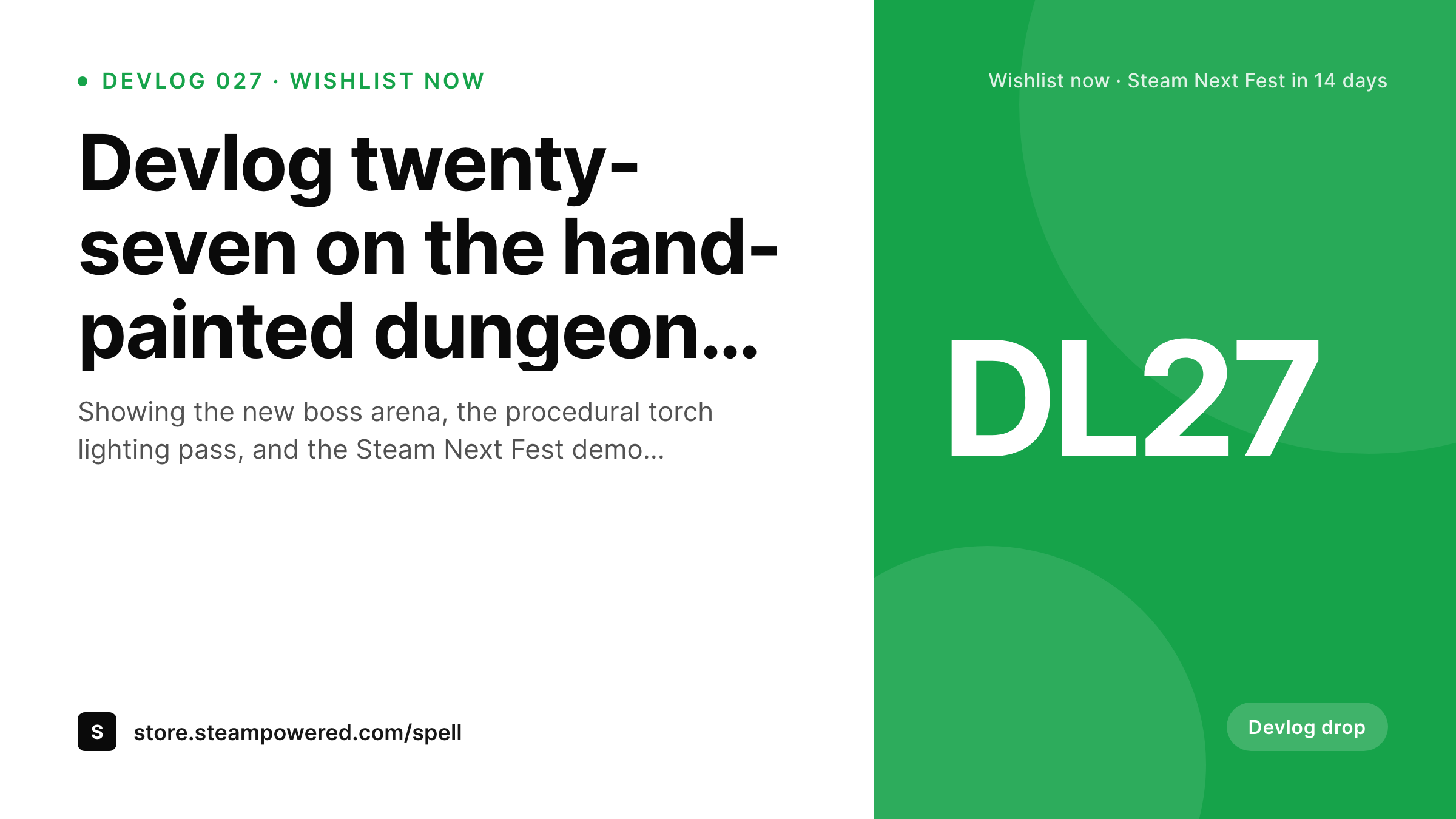
Studio-branded cards on every devlog page
An indie game studio site typically runs a WordPress install with a devlog custom post type for weekly progress posts, a milestone CPT for alpha, beta, and Next Fest announcements, and a steady feed of roadmap update posts, dev-stream recaps, and patch notes. Each one needs a 1200 by 675 Twitter card that fits the studio brand with the same color, the same studio mark, and the same handle across every devlog share on the timeline for wishlist visibility.
SleekPixel reads the post title, the _devlog_number, the _wishlist_url, and any custom _milestone_name meta, then renders a 1200 by 675 Twitter card with the studio accent color and the studio logo. The image regenerates automatically when the devlog post is updated, so a devlog renumber or a milestone change does not leave a stale graphic on the Twitter timeline or the Discord server embed preview shared in the wishlist community channel.
Because the rendered PNG lives at a stable URL tied to the post, the devlog card on Twitter is the same one that shows on the Discord community server embed, in the studio email newsletter, on the Steam community announcement, and in the Google OG result for the devlog page, keeping the studio look consistent without ever opening Unity or Unreal just to render a thumbnail for a tweet.
Workflow
From devlog post to studio Twitter card
Pick a studio template
Map devlog meta keys
Publish the devlog page
_devlog_number and the milestone in _milestone_name, then hit publish and SleekPixel renders the card automatically with no Unity capture step needed.
Share to Twitter and Discord
Output
Sample indie game devlog card
A wide Twitter card for a weekly devlog page. Devlog number, wishlist URL, milestone name, and the studio handle render from the WordPress devlog post meta on the studio site.
Comparison
Default theme OG image vs SleekPixel for indie game studio
Default theme OG image
- Reuses one game key art across every devlog and milestone page on the indie game studio site
- Cannot show the devlog number, the wishlist URL, or the milestone name on the share card itself ever
- Misses the Twitter 1.91 to 1 crop and renders as a stretched flat 1200 by 630 OG banner only once
-
Cannot read
_devlog_numberor_milestone_namemeta on the devlog post block at all - Demands Unity or Unreal capture work for every devlog post, milestone page, or patch notes share
SleekPixel
-
Reads
_devlog_number,_wishlist_url, and_milestone_namemeta automatically every time - Renders a 1200 by 675 Twitter-ready PNG at every published indie game studio devlog post on the site
- Keeps studio accent color, studio mark, and handle placement stable across every devlog share card upload
- Regenerates the image on post update so a milestone change never leaves a stale graphic on the timeline anywhere
- Works on devlog CPTs registered by ACF, JetEngine, Custom Post Type UI, or any custom plugin used on site
Features
What SleekPixel gives you for indie game studio
Devlog progress cards
Every devlog post produces a wide card with the devlog number, the wishlist URL, and the current milestone. The card is ready for Twitter, the Discord community embed, and the studio email newsletter the moment the studio hits publish on the WordPress devlog page on the site.
Milestone page cards
Alpha, beta, and Next Fest milestone pages render a branded card showing the milestone name, the date, and the wishlist URL, all pulled from the same WordPress post meta the studio already maintains in the dashboard for each milestone page on the site across the development cycle.
Patch notes and recap posts
Patch notes posts and dev-stream recap articles automatically share with a studio-styled card so the feed looks like one cohesive studio rather than ten random Unity screenshots from various unrelated dev sessions or one-off patch posts saved randomly across past sprint cycles in the dashboard.
Use cases
Where indie game studios put their SleekPixel cards to work
Weekly devlog shares
Share the new devlog page on Twitter every Friday and the same card appears in the Discord community embed and the studio email newsletter with devlog number and wishlist call all clearly visible at a glance for fans.
Next Fest promos
Next Fest milestone pages render a clean wide card with the date and the wishlist URL so prospective wishlist-ers see the demo at a glance without zooming into the image preview to read the milestone sheet first.
Patch notes shares
Patch notes posts share with a wide card pulling the version number and the studio handle, keeping the studio brand stable across every patch share on Twitter or the Discord embed feed for the wishlist community.
The bigger picture
Why indie game studios need consistent devlog cards
Indie game studios live or die by wishlist growth on Steam. A clean Twitter feed of branded devlog cards, milestone pages, and patch notes signals that the studio runs a real production with a real plan and a real visual identity, while a feed of mismatched Unity screenshots and inconsistent crops reads as a side project that may not ship a polished build at Next Fest as promised. The hard part is that game development leaves almost no time for graphic design, especially when a weekly devlog, a Next Fest milestone page, and a patch notes post all need their own share images in the same week as a packed sprint schedule across multiple feature branches and play-test rounds for the studio core game.
SleekPixel removes that work entirely. Every devlog page, every milestone listing, every patch notes post renders a wide card that uses the studio accent color, the studio mark, and the studio handle in the same place every single time. Wishlist-ers scrolling Twitter see a feed that looks like a real studio with a real plan.
Press writers see a card that matches the studio site they were just on. Search engines pulling the OG image for a devlog page see the same studio identity reinforced. The cumulative effect over a year of weekly devlogs is a feed that feels like one cohesive studio rather than fifty graphics from fifty different sprint sessions, and that consistency is what wins the wishlist click on the next devlog and the launch-week purchase later.
Questions
Common questions about SleekPixel for indie game studio
Yes. SleekPixel maps to any registered ACF or post meta field including _devlog_number, _milestone_name, and _wishlist_url, so a devlog post auto-renders a card with the correct milestone, the devlog number, and the wishlist call every time you publish or update the devlog page on the studio site.
Yes. SleekPixel regenerates the rendered PNG whenever the devlog post is updated, so a wishlist count bump, a milestone change, or a Next Fest date update always produces a fresh share card with no stale graphic lingering on the Twitter timeline or any embedded Discord channel preview anywhere on the server.
Yes. If milestones are categorized by taxonomy or post meta, SleekPixel can switch the accent color and the studio mark per stage so an alpha milestone card looks distinct from a launch milestone card even on the same WordPress install for the same indie game studio brand identity across multiple project stages overall.
Twitter share posts pull the OG image at a 1.91 to 1 aspect, typically 1200 by 675 for the card. SleekPixel renders at that exact size with safe-area padding so the devlog number and milestone stay readable when Twitter crops the preview thumbnail in the user timeline and any embedded reply thread on the platform.
Yes. SleekPixel reads multi-value meta fields and ACF repeaters so a devlog post listing three new feature shipped tags plus the next sprint focus can render a single card with each feature visible on the share image preview without truncating any of the feature names listed in the post meta block.
Yes. The rendered card lives at a stable URL under the devlog post, so the studio can right-click and save the PNG, drop it into a Steam community announcement as the banner image, or include it inline in a wishlist email reply without needing a separate Unity capture step at any point in the workflow.
SleekPixel works with any registered WordPress post type, including CPTs created by JetEngine, Pods, Custom Post Type UI, or ACF. Point it at the milestone CPT and the card pulls the milestone name, the date, and the wishlist URL the same way it would for a normal WordPress devlog or patch notes post.
Yes. SleekPixel can render off the WooCommerce product post type for a paid indie game soundtrack or art-book listing. The card uses the product title, the price, and any custom meta like _format_type the same way it would for a standard WordPress devlog or milestone page on the studio site.
Pricing
More than 1000+
happy customers
Explore our flexible licensing options tailored to your needs. Upgrade your license anytime to access more features, or opt for a lifetime license for ongoing value, including lifetime updates and lifetime support. Our hassle-free upgrade process ensures that our platform can grow with you, starting from whichever plan you choose.
Lifetime ♾️
Most popular
EUR
once
- Unlimited websites
- Lifetime updates
- Lifetime support
...or get the Bundle Deal
and save €250 🎁
The Bundle (unlimited sites)
Pay once, own it forever
Elevate your WordPress site with our exclusive plugin bundle that includes all of our premium plugins in one package. Enjoy lifetime updates and lifetime support. Save significantly compared to buying plugins individually.
What’s included
-
SleekAI
-
SleekByte
-
SleekMotion
-
SleekPixel
-
SleekRank
-
SleekView
€749
Continue to checkoutBrowse more
- diversity report card
- status update cards
- annual report card
- certification badges
- tool of the day cards
- support update cards
- remote first card
- postmortem cards
- review snippet cards
- checklist download card
- Stripe Atlas card
- year in review cards
- framework cards
- chart explainer card
- referral program cards
- Pinterest product pin covers
- Substack post thumbnail
- Xiaohongshu cover images
- X list banners
- Bluesky link cards
- Fansly banner
- Linktree banner image
- Poshmark listing images
- LinkedIn showcase page banners
- Snapchat Discover tiles
- X community banners
- Shopify collection banners
- Mastodon link previews
- LinkedIn banner images
- Twitch offline banners