






SleekPixel for newsletter issue cards
Newsletters work as a series, and the visual cadence on social matters as much as the email itself. SleekPixel reads the issue number, send date, and subscriber count from your WordPress meta and renders a Twitter card so every issue ships with a recognizable brand instead of a generic featured image.
♾️ Lifetime License available
Newsletter issues that share themselves on Twitter
Newsletter operators usually post a Twitter thread or a link to the web version of each issue, but the social card is almost always a generic featured image with no issue number, no topic, and no visual cadence. That underplays the series. A reader who sees Issue 042 understands there are 41 prior issues and an ongoing rhythm. Without the issue number on the card, that signal is missing.
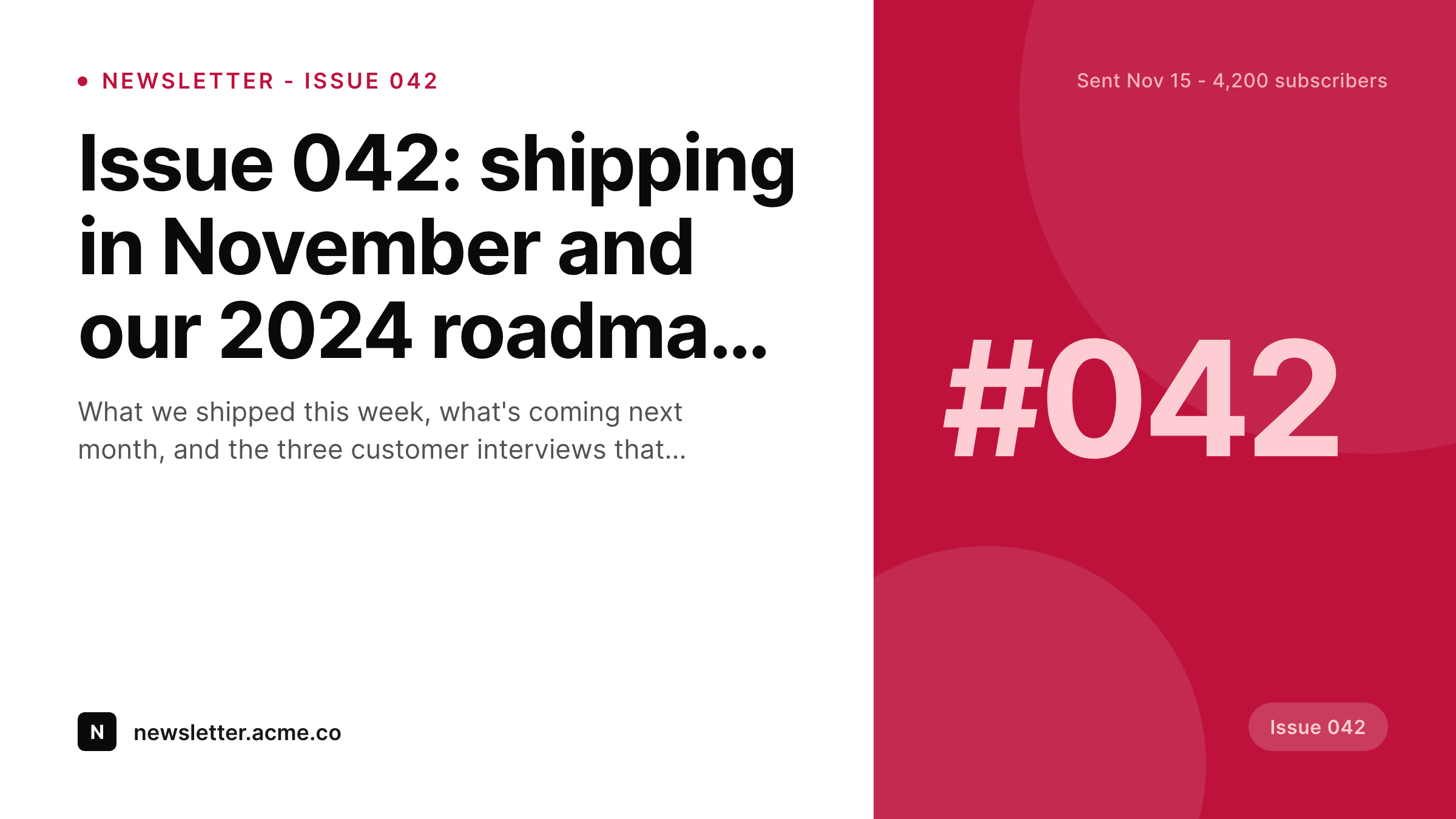
SleekPixel templates the newsletter issue. Map issue_number, send_date, subscriber_count, and issue_topic to the template. Each WordPress post that mirrors a newsletter issue carries those fields. The mark area renders the issue number, the meta line renders the send date and subscriber count, and the preview area highlights the issue's main topic or featured story.
The Twitter 1200 by 675 size is the default because newsletter operators promote each issue on Twitter first. The same template emits a 1200 by 630 OG image for the web archive of the issue and a 1200 by 1200 LinkedIn card for cross-posting. The visual brand stays consistent across the entire series, which compounds recognition with subscribers across months.
Workflow
How SleekPixel handles newsletter issues
Map the issue fields
issue_number, send_date, subscriber_count, and issue_topic as the template inputs. The operator maintains these through a newsletter post type or as standard meta on regular blog posts that mirror the issues.
Draft the issue in WordPress
Publish on send day
Share and archive
Output
Sample newsletter issue card
A Twitter card promoting Issue 042 of a newsletter. The issue number sits on the mark area, the send date and subscriber count on the meta line, and the issue topic in the title slot.
Comparison
Default theme OG image vs SleekPixel for newsletter issue
Default theme OG image
- Default themes show a featured image with no issue number or topic visible on the card
- Send date is missing so the post does not communicate freshness or cadence to readers
- Subscriber count is buried in body text instead of rendered as the social proof point
- Each issue's card looks slightly different because exports happen ad hoc per send
- Newsletter archive on the web reads as a patchwork instead of a series with one brand
SleekPixel
-
Reads
issue_number,send_date, andsubscriber_countfrom meta - Renders the issue number large on the mark area for consistent series branding
- Emits Twitter 1200x675, OG 1200x630, and LinkedIn 1200x1200 from one template
- Updates the card automatically when issue details change on save
- Caches the PNG so feed unfurlers serve the same file across every share
Features
What SleekPixel gives you for newsletter issue card
Issue number on the mark
The issue number anchors the series. The mark area renders #042 large enough to read at thumbnail size, so the subscriber scrolling Twitter sees the issue count immediately and understands the post as part of an ongoing rhythm rather than a one-off promotional share.
Send date on the meta line
The send date communicates freshness. The meta line carries Sent Nov 15 so readers know whether the issue is fresh in their inbox or a back issue from the archive. That context shapes whether they click through or skip past based on whether they already read it.
Subscriber count as social proof
Subscriber count is a fast credibility signal for new readers. The meta line carries 4,200 subscribers or whatever count the operator stores. New readers who see the count and the issue number together understand the scale and longevity of the newsletter in one glance.
Use cases
Newsletter operators that share issues from WordPress
Solo operators and indie newsletters
Indie newsletter operators self-publish through WordPress and use the same template across every issue. The template removes the design dependency so each Friday's send can be promoted on Twitter with a consistent card without filing a separate design request per issue.
Company newsletters and updates
Company newsletters use the template to keep the corporate update series visually consistent across years. The cards in a company newsletter archive read as one ongoing record of the company's progress rather than scattered updates with inconsistent visual treatment.
Newsletter web archive
The web archive page lists every issue with the same template applied. Readers browsing the archive can scan the issue numbers, topics, and dates as a grid that reads as one coherent series across months or years of issues with the same visual brand.
The bigger picture
Why newsletters deserve a per-issue social card
Newsletter operators usually treat the email as the product and the social share as an afterthought. That makes sense when the operator is sending one issue and moving on, but it underplays the value of a long-running series. A newsletter that has been sending for two years has 100-plus issues, a substantial subscriber count, and a record that proves the operator's commitment to the audience.
The social card is the one place where new readers might encounter the series for the first time, and a generic featured image gives them none of that context. SleekPixel makes the per-issue card the default. Every issue gets a card with the issue number on the mark, the send date and subscriber count on the meta line, and the topic in the title slot.
Across a year of weekly sends that produces 52 consistent cards, a clean archive page, and a recognizable brand for the newsletter that compounds with each issue. New readers who land on issue 142 can immediately see that this is the 142nd issue, that 4,200 people subscribe, and that the next issue is coming next Friday. That context is exactly what converts curiosity into a subscription.
And the operator gets the cards for free because the same WordPress post that mirrors the email also renders the social card on publish, with no additional design work per issue across the entire run of the newsletter.
Questions
Common questions about SleekPixel for newsletter issue card
Yes. The mark area renders the issue number in any format you store. #042 with leading zeros, Issue 42, or Vol 4 No 2 all work. The template handles the typography and sizing so longer formats stay readable while shorter formats use a larger font for visual emphasis on the card.
Yes. A WordPress cron task can refresh the subscriber count meta on a scheduled basis by hitting your email platform's API. Mailchimp, ConvertKit, Beehiiv, and Substack all expose subscriber count endpoints that a small WordPress integration can pull from on a daily schedule.
Yes. The title slot renders the issue's main topic or featured story headline. Most issues have a primary topic that anchors the email, and the template surfaces that topic on the social card so readers see at a glance what this issue is about, not just that an issue exists.
Yes. Use separate page groups for each newsletter brand. A company that runs an engineering newsletter and a product newsletter sets up two page groups with two brand definitions, and the template handles each one with its own colors, fonts, and brand mark.
Yes. If you change the template or update the brand colors, the existing posts can be re-rendered by triggering a save on each one. The page group definition lets you bulk-update by clearing the cache for all issues, which forces a re-render on the next request.
Yes. If you import a Substack archive into WordPress through one of the standard importers, each imported issue becomes a WordPress post that can use the template. Map the imported meta to the template inputs and every back issue renders with the new visual brand.
Yes. Use a featured_story meta field for the lead headline and a separate secondary_stories field for additional callouts. The template renders the featured story prominently and lists secondary stories on the meta line for issues with multiple stories worth surfacing on the social card.
Yes. The first render after publish stores the PNG and serves it on subsequent requests. Editing the issue meta invalidates the cache and triggers a regeneration so the file always reflects the current issue details, including any corrections to subscriber count or send date.
Pricing
More than 1000+
happy customers
Explore our flexible licensing options tailored to your needs. Upgrade your license anytime to access more features, or opt for a lifetime license for ongoing value, including lifetime updates and lifetime support. Our hassle-free upgrade process ensures that our platform can grow with you, starting from whichever plan you choose.
Lifetime ♾️
Most popular
EUR
once
- Unlimited websites
- Lifetime updates
- Lifetime support
...or get the Bundle Deal
and save €250 🎁
The Bundle (unlimited sites)
Pay once, own it forever
Elevate your WordPress site with our exclusive plugin bundle that includes all of our premium plugins in one package. Enjoy lifetime updates and lifetime support. Save significantly compared to buying plugins individually.
What’s included
-
SleekAI
-
SleekByte
-
SleekMotion
-
SleekPixel
-
SleekRank
-
SleekView
€749
Continue to checkoutBrowse more
- KakaoTalk channel banners
- Pinterest board covers
- YouTube Music cover art
- Behance banner
- YouTube thumbnails
- Threads post images
- Telegram channel images
- Poshmark listing images
- Vimeo channel banners
- Linktree banner image
- Klaviyo email banner
- Beacons.ai banner
- Instagram ad images
- Discord server icon
- Twitch stream overlay images