






SleekPixel for changelog cards
SleekPixel reads each changelog entry's title, date, version, and category and renders a custom OG image on save. The changelog itself becomes the source for how every entry's link preview looks.
♾️ Lifetime License available
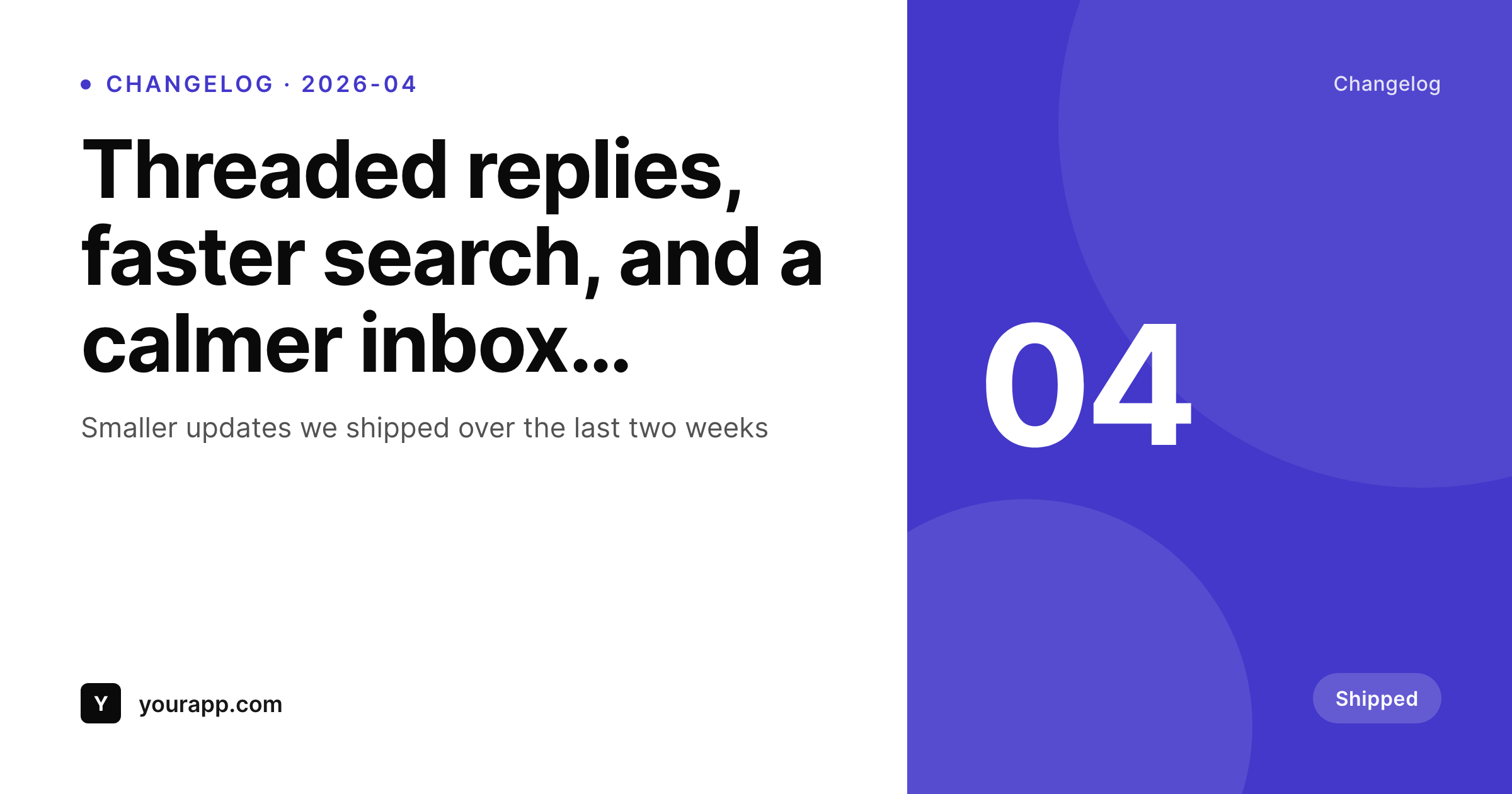
Changelogs are dense. Their cards should not be
Changelogs collect every small change a product makes: bug fixes, copy tweaks, performance improvements, the occasional feature. Each entry is its own URL, each entry is shareable on its own, and most entries are too small to justify a designer pass. The result is that every changelog entry shares the same generic site card, even though each entry is genuinely different content. Readers cannot tell at a glance which entry a tweet is linking to.
SleekPixel makes every changelog entry visually distinct. You build one template in the WordPress admin using fields like {post_title}, {changelog_date}, {version}, and {category}. Every time a changelog entry saves, SleekPixel renders that template with the post's actual data and writes the result into the og:image meta tag. Bug fixes, features, and improvements all share one visual language but show their own metadata on the card.
Edit the template once and every past changelog entry regenerates. Add a new field, say a contributor or an area of the product, and every entry inherits it. The detailed changelog text stays in the post body. The card summarising it is generated from the same source.
Workflow
From changelog entry to social-ready in one save
Design the template
Connect to post type
Save the entry
Share anywhere
Output
Sample social card from a changelog entry
This card was rendered from a changelog entry's title, date, and category. Same template, every entry.
Comparison
Hand-made changelog graphics vs SleekPixel
Manual graphic per entry
- Changelog entries are too small to justify a designer pass each
- Categories and dates drift between the post body and the graphic
- Updating the brand means re-exporting every past changelog card
- Most changelog shares end up using the generic site-logo card
- No automation: relies on someone remembering to redo the card
SleekPixel
- Auto-generated OG image per changelog entry on save, every time
- Per-post variables: title, date, version, category, custom fields
- Category pill and date badge baked into the template
- Edit the template once and bulk-regenerate every past entry
- Falls back gracefully if a category or version is missing
Features
What SleekPixel gives you for changelog cards
Category-aware
Templates render a category pill (Feature, Fix, Improvement) from a dynamic field, so each entry's card matches its content type.
OG + Twitter meta
SleekPixel writes the og:image, twitter:image, and twitter:image:alt tags directly on each changelog post. No theme code required.
Regenerate on demand
Updated the template or your category list? Bulk-regenerate every past changelog card from the admin in one pass.
Use cases
Where this fits best
Public changelogs
Every entry earns a per-category card so the share preview tells readers what kind of change they are about to read.
Multi-product changelogs
Product or area pulled per entry, so readers can see which part of the suite an update belongs to before clicking.
Active dev teams
Frequent shipping does not mean frequent design tickets. Cards regenerate from the entries themselves.
The bigger picture
Why changelog cards earn their keep
Changelogs are one of the most-linked surfaces in B2B software. Customers paste them into support threads, sales reps paste them into evaluation docs, and the team itself paste them into customer emails. The link preview is the only piece of content that gets rendered on every share regardless of platform.
A category pill on the card answers the most common pre-click question (feature, fix, or improvement?) without forcing the reader to open the page. Hand-designed graphics per changelog entry stop being realistic past a few entries a week. The middle path, a template that pulls category and date from the entry itself, keeps every share visually distinct without a designer in the loop.
SleekPixel adds bulk regeneration so brand or template tweaks refresh the entire archive.
Questions
Common questions about SleekPixel for changelog cards
Yes. SleekPixel supports any custom post type. Point it at your changelog CPT and the template applies to every post saved under it.
Yes. Category is just another dynamic field. Render it as a coloured pill, a corner badge, or both depending on the template.
The template renders without it, or you can set a default like 'Update'. Design the layout so missing fields collapse cleanly. Nothing breaks if data is incomplete.
Yes. The admin has a one-click bulk regeneration that re-renders all images for posts using the template. Useful after brand updates or category list changes.
No. The image is rendered once at save time and stored as a static PNG. Visitors load a regular image URL, no rendering happens at view time.
Yes. SleekPixel supports per-category, per-tag, and per-CPT templates. Route fixes and features to different templates if you want.
The archive page stays in its theme role. The social card is separate metadata SleekPixel manages. They do not conflict.
Yes. Each generated image is a real PNG saved to the uploads folder. Page loads stay fast and images survive even if the plugin is later disabled.
Pricing
More than 1000+
happy customers
Explore our flexible licensing options tailored to your needs. Upgrade your license anytime to access more features, or opt for a lifetime license for ongoing value, including lifetime updates and lifetime support. Our hassle-free upgrade process ensures that our platform can grow with you, starting from whichever plan you choose.
Lifetime ♾️
Most popular
EUR
once
- Unlimited websites
- Lifetime updates
- Lifetime support
...or get the Bundle Deal
and save €250 🎁
💎 Want everything forever? The All Access Pass is going away on 01.08.2026.
The Bundle (unlimited sites)
Pay once, own it forever
Elevate your WordPress site with our exclusive plugin bundle that includes all of our premium plugins in one package. Enjoy lifetime updates and lifetime support. Save significantly compared to buying plugins individually.
What’s included
-
SleekAI
-
SleekByte
-
SleekMotion
-
SleekPixel
-
SleekRank
-
SleekView
€749
Continue to checkoutBrowse more
- founding customer card
- case study banner
- playlist cards
- contributor spotlight card
- salary report cards
- transparency report card
- product launch cards
- fundraising announcement cards
- merch drop cards
- founder letter card
- doors closing card
- Twitter thread card
- waitlist open card
- year-end recap card
- team hire card
- Pinterest board covers
- Bluesky link cards
- Instagram highlight covers
- LinkedIn showcase page banners
- X ad images
- Behance banner
- Tumblr header
- Instagram ad images
- Telegram channel images
- X Space banners
- YouTube thumbnails
- Telegram bot avatar
- VK community cover photos
- Gumroad product covers
- Douyin thumbnails