






SleekPixel for growth experiment cards: hypothesis shares
Growth experiments are wider than A/B tests. They start from a clear hypothesis, often span multiple variants, and document the path from question to answer. SleekPixel reads the hypothesis number, the variant count, and the headline result from custom fields and composes a Twitter card that frames the experiment narratively.
♾️ Lifetime License available
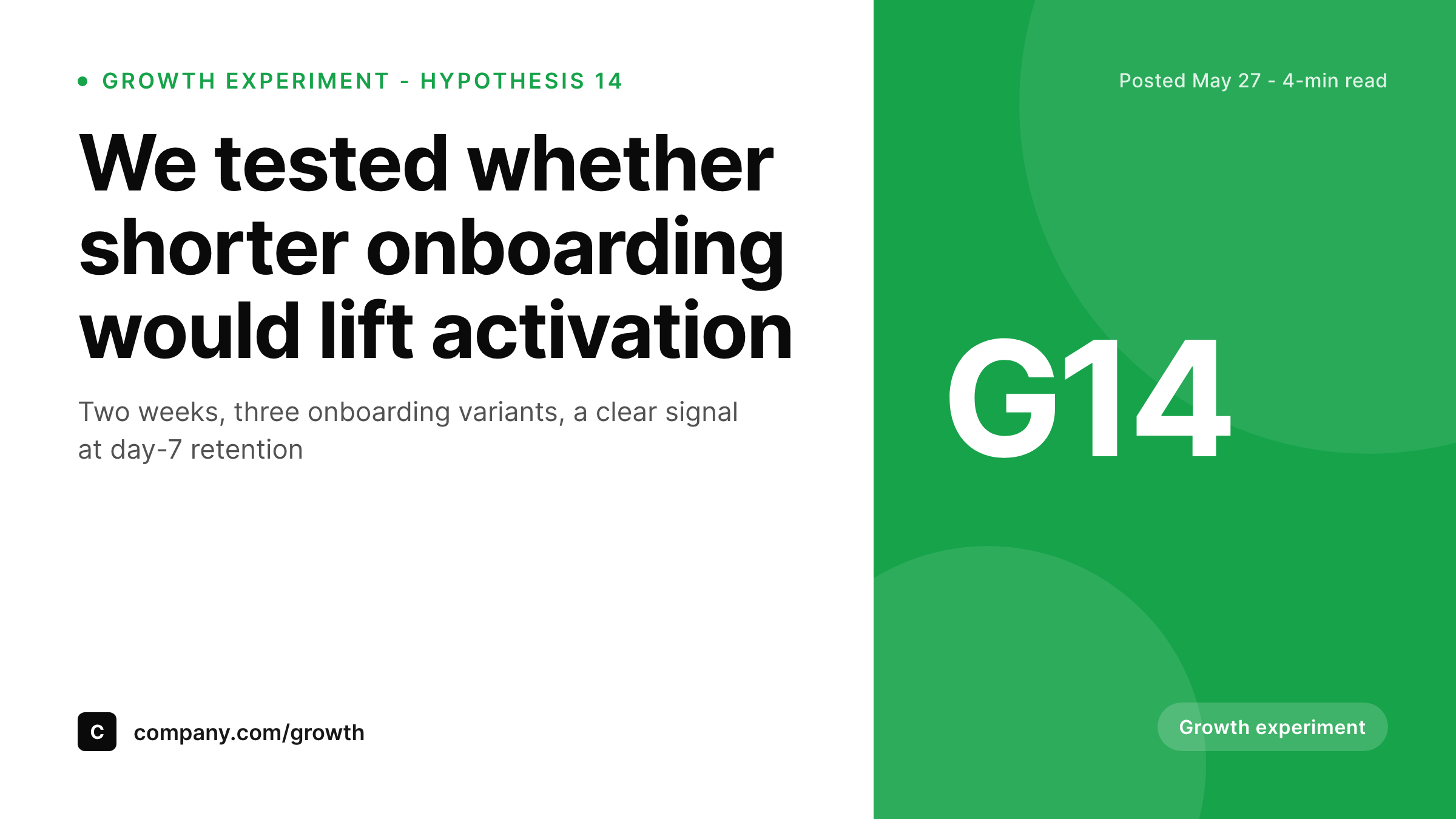
Growth experiments are narratives, not just numbers
Growth experiments live somewhere between a structured A/B test and a product investigation. They usually start from a clear hypothesis like 'shorter onboarding will lift day-7 activation,' run three or four variants instead of two, and document both the quantitative result and the qualitative learnings. The recap reads more like a story than a data dump, which means the share image has to set up the narrative rather than just surface a number.
The setup uses three custom fields: hypothesis_number for the corner mark (G14 for growth experiment 14), variant_count for an optional subhead detail like '3 onboarding variants,' and result_lift for the headline lift on the primary metric. The accent is a green tuned for growth-team posts, slightly more saturated than the experiment recap preset to distinguish the two categories in the same feed.
The post body carries the full narrative: the hypothesis, the variants tested, the data, the qualitative interviews if any, and the change shipped to the product. The card carries the hypothesis number and the headline result so readers can place the experiment in the team's broader research stream. Over time, the series of cards documents the growth team's thinking in a way that single posts cannot.
Workflow
From hypothesis to growth experiment card
1. Add growth custom fields
hypothesis_number, variant_count, and result_lift as custom fields on the growth experiment post. The fields are short strings that the template reads into the corner mark, subhead, and second subhead line.
2. Pick the growth experiment template
3. Publish the experiment writeup
4. Share to the growth audience
Output
Sample growth experiment card
A Twitter card with the hypothesis headline, the variant count in the subhead, the G14 corner mark for the experiment number, and the result lift visible in the footer or subhead line.
Comparison
Default theme OG image vs SleekPixel for growth experiment cards
Default theme OG image
- Cannot show the hypothesis number, so multiple experiments blur in the feed
- Misses the variant count, which is the scale signal for multivariate experiments
- Buries the result lift, so the unfurl entices nobody to click through
- Treats growth experiments identically to marketing posts, mismatching the audience
- Forces a designer to compose a one-off graphic for every hypothesis writeup
SleekPixel
-
Maps
hypothesis_numbercustom field to the corner mark asG14 -
Renders the variant count from
variant_countin the subhead -
Surfaces the headline lift from
result_liftas a secondary subhead line - Uses a growth-team accent slightly more saturated than the experiment recap preset
- Composes deterministically on save with no headless browser involved
Features
What SleekPixel gives you for growth experiment card
Hypothesis number in the corner
The corner mark renders from hypothesis_number as G14, G27, or whatever short code your growth team uses. The series gives each hypothesis a stable identifier readers can reference, and the cards line up as a chronological growth-research record.
Variant count in the subhead
The subhead surfaces the variant count from variant_count as a short detail like '3 onboarding variants tested in parallel.' That number communicates the experiment's scope before the body is read, which separates serious multivariate work from a casual A/B comparison.
Result lift on a second line
An optional second subhead line carries the result lift from result_lift as a percentage or absolute number. The two-line subhead structure handles longer headlines better than a single line, which is the right tradeoff for growth experiments with narrative framing.
Use cases
Where growth experiment cards earn the most engagement
Twitter growth threads
Growth practitioners share experiment recaps on Twitter constantly. The card surfaces the hypothesis number and the variant count, which are exactly the details that the growth-Twitter audience reads first when deciding whether to engage with a recap.
Growth newsletter writeups
Public growth newsletters like Lenny's Newsletter regularly cite case studies. The card carries the headline data into any newsletter preview, which makes the citation feel substantive and the linkback worth clicking through to.
Practitioner Slack communities
Growth and product Slacks reshare experiment URLs constantly. The card stays consistent across every reshare, which builds recognition for the team's research stream over time and turns single posts into a recognized growth program.
The bigger picture
Growth experiments build a research record one card at a time
Growth teams that share experiment writeups publicly are doing more than marketing. They are building a documented research record that future hires, partners, and observers can browse. The value of that record compounds: each new hypothesis adds to the stream, each result confirms or contradicts earlier work, and over time the team develops a public reputation for thinking carefully about growth questions.
The share image is the surface that makes the record visible. Without a consistent card on every writeup, the stream reads as scattered posts. With a consistent card, the same accent, same corner-mark style, same two-line subhead structure across dozens of experiments, the stream reads as a research program.
SleekPixel makes the consistency almost free because the template is the source of truth and the post fields drive the layout. Six months after a hypothesis is published, the card on the post still carries the hypothesis number and the result lift because the fields are still in the post. Two years later, when a new growth analyst joins the team and browses the company blog, they see a continuous research stream that documents the team's thinking on growth.
That continuity is the real reason to share experiments publicly, and SleekPixel makes the visual half of the continuity essentially automatic. The team focuses on the experiments themselves, the templates focus on the visual presentation, and the resulting record looks like a deliberate research program even when each individual post is written by a different teammate.
Questions
Common questions about SleekPixel for growth experiment card
Three fields cover the standard case: hypothesis_number for the corner mark like G14, variant_count for the subhead detail, and result_lift for the secondary subhead line. Together they capture the scope and the result of the experiment in one compact layout.
The growth experiment preset is tuned for hypothesis-driven, often multivariate experiments. The corner mark uses a G prefix to distinguish growth research from general experiments. The accent is slightly more saturated, and the two-line subhead handles variant count plus result lift simultaneously, which the recap preset does not.
Yes. The 1200 by 675 canvas reads well on LinkedIn when shared as an image, though for LinkedIn you might prefer to switch the SleekPixel template configuration to a 1200 by 1200 square variant. The same rendered PNG works across both platforms with the right variant selected.
Use the subhead to communicate the in-progress state, like 'preliminary signal at day 7' or 'two weeks in, week three to come.' The card can carry interim results honestly, and a follow-up post when the experiment completes can carry the final card with the same hypothesis number.
No. The field is a free string, so use whatever convention your team prefers: G14, Q2-3, ONB-PAYWALL, or anything that maps to your internal experiment tracker. The corner mark renders whatever you supply, which keeps the convention aligned with your existing systems.
The card is intentionally focused on the quantitative headline because the audience scans for numbers first. Qualitative findings belong in the post body, where they can be quoted and contextualised. The card sets up the narrative; the body delivers it. Both surfaces work together rather than competing for the same space.
Yes. The SleekPixel WP-CLI command walks every post in the growth experiment category and rerenders each card using the current template. Useful after a brand refresh or a template iteration, when you want the historical research stream to reflect the current visual identity.
In the WordPress media library, attached to the experiment post as the featured image. The same file powers the OG image, the Twitter image, and the RSS thumbnail, so every consumer of the post URL surfaces the same card without duplicate uploads in the media library.
Pricing
More than 1000+
happy customers
Explore our flexible licensing options tailored to your needs. Upgrade your license anytime to access more features, or opt for a lifetime license for ongoing value, including lifetime updates and lifetime support. Our hassle-free upgrade process ensures that our platform can grow with you, starting from whichever plan you choose.
Lifetime ♾️
Most popular
EUR
once
- Unlimited websites
- Lifetime updates
- Lifetime support
...or get the Bundle Deal
and save €250 🎁
The Bundle (unlimited sites)
Pay once, own it forever
Elevate your WordPress site with our exclusive plugin bundle that includes all of our premium plugins in one package. Enjoy lifetime updates and lifetime support. Save significantly compared to buying plugins individually.
What’s included
-
SleekAI
-
SleekByte
-
SleekMotion
-
SleekPixel
-
SleekRank
-
SleekView
€749
Continue to checkoutBrowse more
- YouTube Shorts covers
- X list banners
- Threads profile banner
- LinkedIn showcase page banners
- Linktree banner image
- Farcaster cast images
- Instagram highlight covers
- LinkedIn article covers
- Facebook cover photos
- SoundCloud track art
- Reddit subreddit banners
- Open Graph images
- Bandcamp release cover
- X social cards
- KakaoTalk channel banners