






SleekPixel for command of the day cards
Daily series like command-of-the-day depend on a steady visual cadence. SleekPixel reads the command, the day number, and the year from your WordPress post meta and renders a Twitter card so the cadence ships itself, day after day, without a design ticket per post.
♾️ Lifetime License available
A daily CLI series that publishes on autopilot
Daily content series are powerful because the cadence does the heavy lifting. A reader who sees Day 142 of 365 understands immediately that there have been 141 prior tips and there will be 223 more. The structure communicates commitment. But that structure only works if the day number is rendered consistently on every share, which means the design has to be templated or the cadence breaks down within a month.
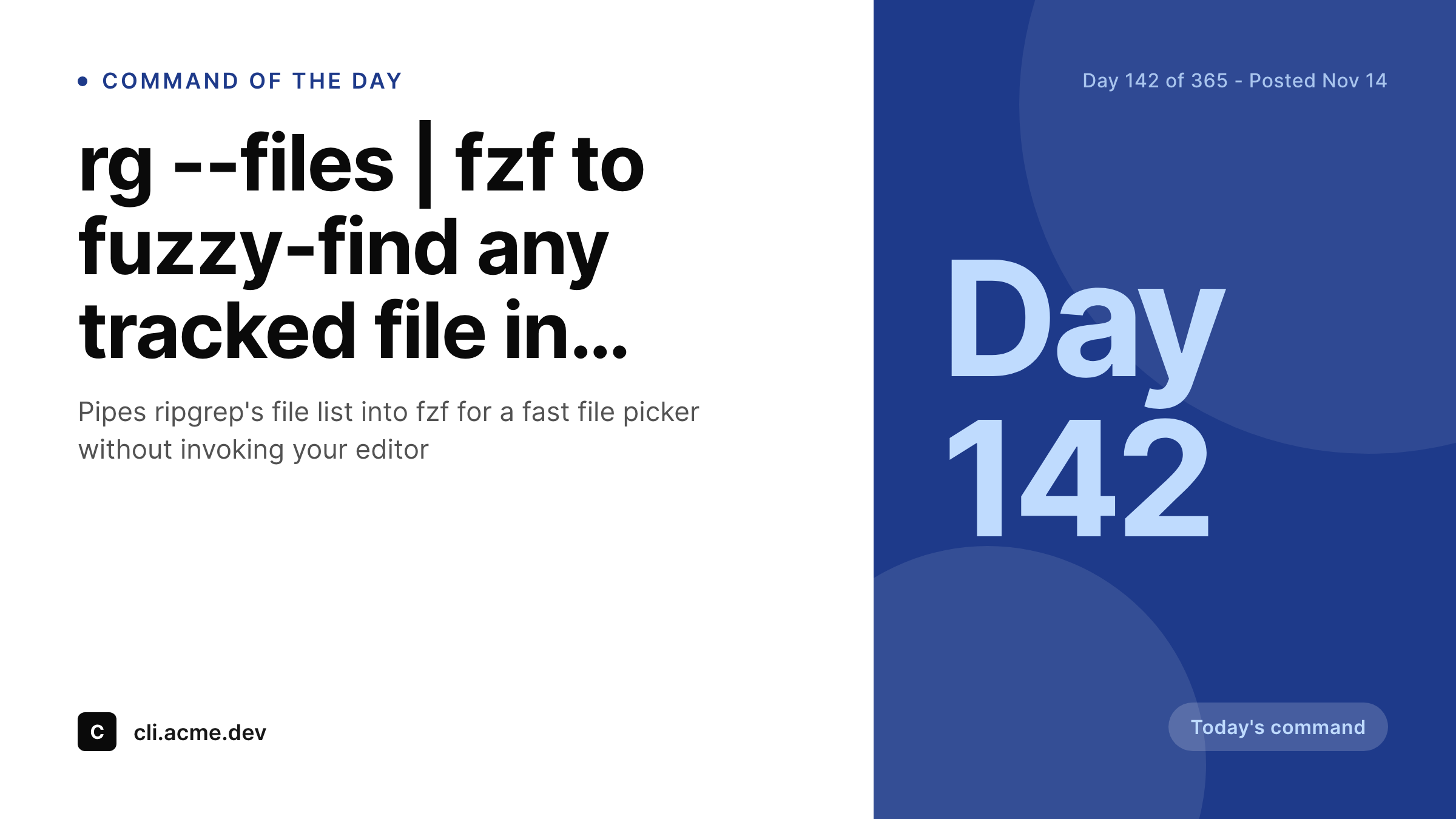
SleekPixel makes the daily series a template. Map cli_command, day_number, year, and command_description to the layout. Each day's post is a WordPress entry with those fields filled in. The mark area carries the day number, the meta line carries the day-of-365 ratio, and the preview area carries the actual command in a monospace font.
The Twitter 1200 by 675 size is the default because the audience is developers scrolling daily. The same template emits a 1200 by 630 OG image for the blog and a 1200 by 1200 LinkedIn card for occasional reposts. Three sizes, one render, one daily post. The cadence ships itself because every post has the same predictable shape.
Workflow
How SleekPixel handles a daily command series
Map the daily fields
cli_command, day_number, year, and command_description as the template inputs. The day number can be a manual integer or computed from the publish date with a small WordPress filter on the meta.
Draft the next day's tip
Schedule for the daily drop
Share to developer feeds
Output
Sample command of the day card
A Twitter card for Day 142 of a daily CLI command series. The day number sits on the mark, the day-of-365 ratio on the meta line, and the command typesets in the preview area.
Comparison
Default theme OG image vs SleekPixel for command of the day
Default theme OG image
- Default themes show a featured image with no day number or actual command visible
- Day-of-365 ratio is missing from the card so the cadence does not come through
- Each daily post needs a fresh design pass because no template captures the structure
- Command lives in body text instead of rendered as the value proposition on the card
- Series archive looks like a patchwork because each card was built in a different week
SleekPixel
-
Reads
cli_command,day_number, andyearfrom meta - Renders the day-of-365 ratio automatically on the meta line for every post
- Emits Twitter 1200x675, OG 1200x630, and LinkedIn 1200x1200 from one template
- Daily posts ship without a design dependency because the template handles every render
- Caches the PNG so feed unfurlers serve the same file across every share
Features
What SleekPixel gives you for command of the day card
Day number on the mark
The day number is the spine of the series. The template renders it large on the mark area so a reader scrolling Twitter sees Day 142 immediately and understands the series is ongoing. That visual anchor builds compound interest in the audience over time.
Command on the preview area
The command is the actual value of the post. The template typesets it in monospace with the prompt character intact so readers can scan and copy in three seconds. The selection effect lifts engagement on the days where the command fits a reader's current workflow.
Day-of-365 on the meta line
The day-of-365 ratio reinforces the cadence. The meta line renders Day 142 of 365, so the audience sees both the current day and the long arc. That framing lifts retention because readers commit to following along across the rest of the year.
Use cases
Teams that run daily CLI series from WordPress
DevRel daily content
DevRel teams run year-long daily series as part of their developer-brand strategy. The template removes the design dependency so the daily cadence can actually be sustained for the full 365 days without burning out the team.
Series archive pages
The archive page renders as a calendar grid of 365 cards, each one consistent in layout and typography. That visual record is the long-tail value of the series because readers who discover it mid-year can scroll back through the entire history.
Education and tutorial sites
Education sites run daily learning series to build habit. The template carries the day number and the topic on every card so the audience builds the habit of checking in each morning to see today's command and update their personal CLI cheat sheet.
The bigger picture
Why daily series fail without a template and succeed with one
Daily content series are one of the strongest developer-brand moves a company can run, and they are also one of the hardest to sustain. The reason is design overhead. A daily series needs a fresh card every day, and even a five-minute design pass per card adds up to forty hours over a year.
That is enough overhead to kill the series by month two when the design team is busy with launches. Templated rendering changes the calculus. Each daily post is just a WordPress entry with two meta fields filled in.
The day number and command flow into the layout automatically, the card renders at publish time, and the series sustains itself without a design ticket per day. That makes the difference between a series that runs for six weeks and one that completes the full 365 days. The compound value is significant.
A complete year of daily cards builds a 365-entry archive that readers discover, scroll, and return to long after the series ends. The brand recognition compounds with each card because the layout, typography, and day number format stay identical from Day 1 to Day 365. The cumulative effect on developer brand and on inbound for the company's main product is far larger than any individual post, because the series acts as a long-running marker of the team's commitment to the audience.
Questions
Common questions about SleekPixel for command of the day card
Yes. Use a small WordPress filter that subtracts the series start date from the post's publish date to produce the day number. Store that as the day_number meta on save so the template reads a stable value rather than recomputing it on every render call.
The denominator on the day-of ratio is configurable per page group. A 30-day series renders Day 12 of 30, a 100-day challenge renders Day 47 of 100, and an open-ended series renders just Day 142 without a denominator. The template handles all three formats.
Yes. The mark area renders the day number large because it is the spine of the series. The number is sized larger than other text on the card so a reader scrolling fast sees the day count immediately, even if they cannot read the command itself at small sizes.
Yes. The brand line renders the series name like 100 Days of Bash or 365 Days of CLI. Store the series name as a constant in the page group definition or as a meta field on each post. The same template handles any series name with appropriate sizing on the brand line.
Some daily series include rest days where no post publishes. The day counter handles this by reading from the publish date, so a rest day on Day 50 means Day 51 publishes on the next day with the correct number. You can also skip the count if your series has fixed numbering.
Yes. A year-end recap post can use the same template with a different badge like Day 365 - Series Complete. The card carries the same brand and the recap post body can link back to the favorite commands from across the year for easy browsing on the archive.
Yes. The same template handles any cadence by reading the day or week or month number from meta. A weekly series renders Week 12 of 52, and a monthly series renders Month 6 of 12. The composition stays the same, only the unit on the mark area changes.
Yes. The first render after publish stores the PNG and serves it for subsequent requests. Editing the post invalidates the cache and triggers a regeneration so the file always reflects the current command and day number stored on the post.
Pricing
More than 1000+
happy customers
Explore our flexible licensing options tailored to your needs. Upgrade your license anytime to access more features, or opt for a lifetime license for ongoing value, including lifetime updates and lifetime support. Our hassle-free upgrade process ensures that our platform can grow with you, starting from whichever plan you choose.
Lifetime ♾️
Most popular
EUR
once
- Unlimited websites
- Lifetime updates
- Lifetime support
...or get the Bundle Deal
and save €250 🎁
The Bundle (unlimited sites)
Pay once, own it forever
Elevate your WordPress site with our exclusive plugin bundle that includes all of our premium plugins in one package. Enjoy lifetime updates and lifetime support. Save significantly compared to buying plugins individually.
What’s included
-
SleekAI
-
SleekByte
-
SleekMotion
-
SleekPixel
-
SleekRank
-
SleekView
€749
Continue to checkoutBrowse more
- Pinterest product pin covers
- Kick stream thumbnails
- Douyin cover
- Pinterest pins
- Instagram grid tiles
- Facebook group banners
- Klaviyo email banner
- Twitch starting soon screen
- Ghost feature images
- Instagram carousel slides
- Lemon8 post
- LinkedIn event banners
- Threads story-style images
- Twitter/X header
- YouTube Shorts covers