






SleekPixel for web design agency
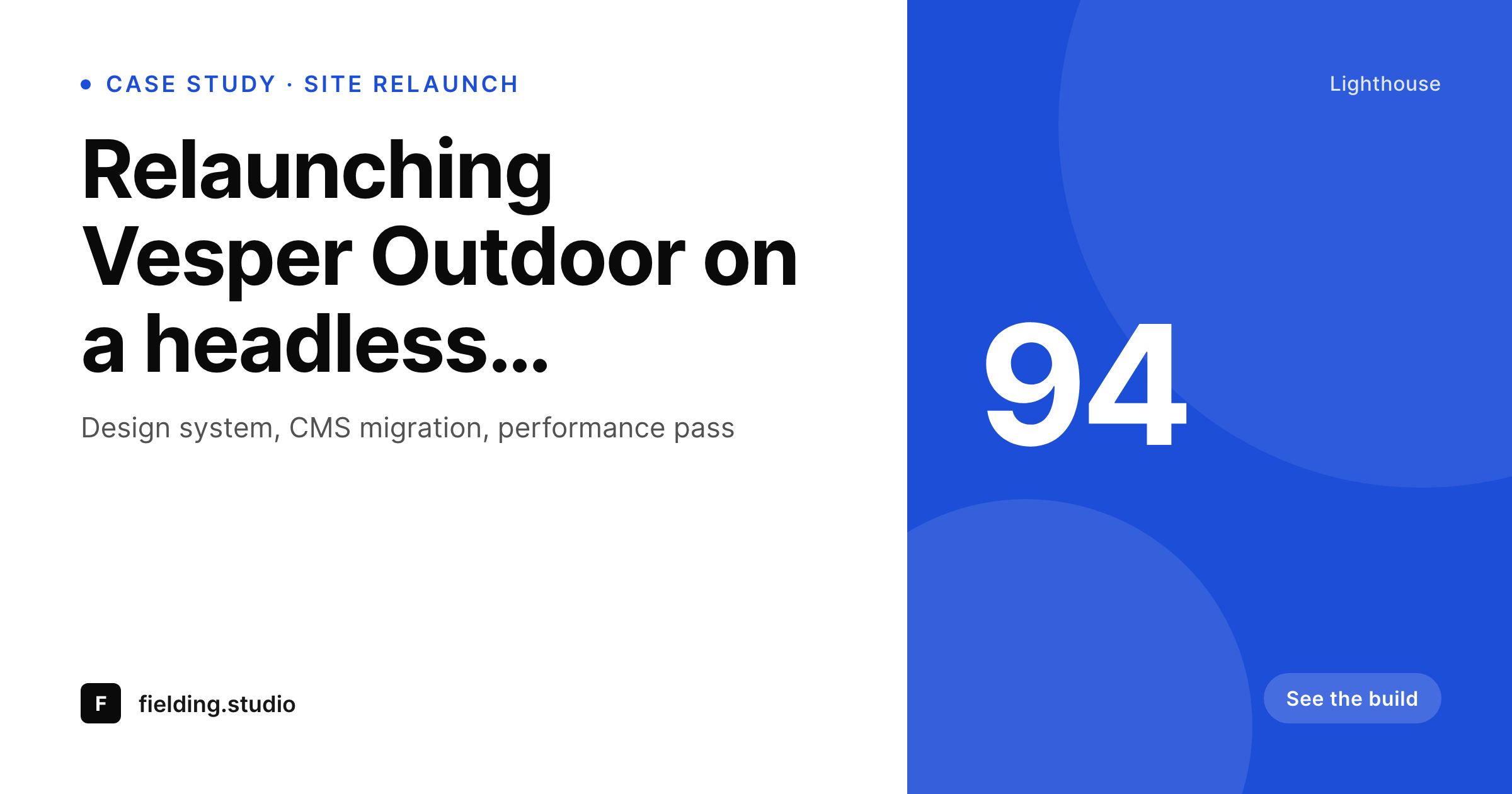
Studio case studies, journal posts, and process notes already carry sector, scope, and headline metric. SleekPixel reads those fields on save and renders the OG card automatically, so the link previews look as considered as the sites you ship.
♾️ Lifetime License available
Design studios under-design their own marketing
A web design studio is unusually visible. The portfolio is the marketing surface, the case study is the proof, and the journal is the voice. All three live or die on whether the share preview holds up. A studio that ships exquisitely typeset client sites and then shares its own case studies with a stretched logo and a truncated title undercuts the entire pitch in one preview. The cobbler-with-no-shoes problem is sharper here than almost anywhere else on the web, because the buyer is judging the studio specifically on visual judgment.
The data is already structured. Each case study has a client, a sector, a scope (brand, design, build, migration), a stack, a headline performance number, and a launch date. The journal has authors, topics, and read times. The same fields that drive the case-study detail page should drive the OG card. The only reason they don't, in most studios, is that nobody sets up the renderer, so a senior designer ends up retyping the case-study title into a Figma file the night before launch.
SleekPixel takes the post seriously as the source of truth. The senior designer composes one branded template, maps the existing post fields, and the cards render on save. Case studies ship with their headline metric. Journal posts ship with their author. Service pages ship with the scope. The studio's marketing surface starts looking like the studio's client work, because the same discipline drives both.
Workflow
From case-study draft to portfolio-ready
Compose the studio template
Map the post fields
Publish through review
Refresh on rebrand
Output
What gets generated per case study
A 1200 by 630 OG card with case-study title, sector, scope, headline metric, and studio wordmark, rendered live from the post fields.
Comparison
Manual studio graphics vs rendered cards
Figma exports
- Senior designers retype case-study titles into Figma the night before launch
- Journal posts ship without an OG card when the studio is at capacity
- Stack badges and Lighthouse scores get omitted because they're a chore to render
- Studio rebrand forces redoing every case-study card in the archive
- Process notes and capability pages share with default WordPress logos
SleekPixel
- Case studies render with sector, scope, and headline metric on save
- Journal posts render with author byline, topic, and read time
- Capability and service pages share with their scope-led card
- Bulk regenerate after a studio rebrand without per-post work
- Twitter, LinkedIn, and OG variants from one template
Features
What SleekPixel gives you for web design agency
Stack-aware cards
Case studies render the stack tags they were built on. WordPress, headless, Webflow migration, all surface in the share preview.
Performance numbers
Lighthouse, Core Web Vitals, or revenue-lift numbers render directly into the card. Studios that win on performance show it on the share.
Process and journal posts
Long-form journal entries about process, design systems, and tooling render their own author-led card. The voice of the studio actually circulates.
Use cases
What design studios generate with SleekPixel
Client case studies
Every project shipped gets a card with sector, scope, and headline metric. The portfolio reads as one body of work, not a folder of mismatched exports.
Journal posts
Studio-voice essays render with author and topic. Senior designers get attribution on the share, and the journal becomes a recruiting surface.
Capability pages
Service and capability pages share with scope-led cards. Pitch teams send the link to a prospect and the preview lands as composed.
The bigger picture
Why share previews are a design studio's pitch
Buyers of design services pay heightened attention to the visual discipline of the studio's own marketing. A prospect lands on a case-study link from a tweet or a LinkedIn post, and before they read a word of the case study they have already judged the studio on whether the share preview was considered. A truncated title and a stretched homepage logo put the studio behind in the first second; a clean, branded card with the headline metric in place puts the studio ahead.
The cumulative effect across the volume of shares a studio generates over a year is the difference between landing in the consideration set and not. The second reason is internal. Senior designers at small studios are the people who can least afford to be doing graphic exports for the studio's own marketing.
Every hour rendering a case-study card is an hour not spent on a client design system, a pitch concept, or a recruiting page. SleekPixel removes that rendering work by tying the card to the post. The studio's case studies, journal entries, and capability pages all render automatically as content publishes.
The senior team stays on the work that actually compounds, the marketing surface stays coherent, and the cobbler finally gets shoes.
Questions
Common questions about SleekPixel for web design agency
Yes. The case-study post type can have a 'stack' taxonomy or repeater field, and the template renders those tags as small badges on the card. WordPress, headless, Webflow migration, and Shopify projects each carry a visible stack label in the share preview.
Yes. Journal posts get their own template variant with author byline, topic, and read time. The same render approach covers both, and the templates can share design tokens so the studio's identity stays unified across surface types.
Lighthouse scores stored as a custom field on the case-study post render directly into the card. Core Web Vitals or any other performance metric works the same way, as long as the number is on the post. Studios that win on performance can show that visibly on the share.
Each client site can run its own SleekPixel install with a client-branded template. The studio ships the renderer as part of launch, the client's editorial team publishes without ever needing the studio for graphics, and the studio walks away cleanly post-launch.
Yes. SleekPixel reads any field on a post, including Advanced Custom Fields, Meta Box, native custom fields, and taxonomies. Studios that already have a structured case-study CPT can wire it into the renderer without a data migration.
Yes. Render rules can scope by post status, taxonomy, or a custom flag. Confidential client work can render a redacted card without the client's name and logo, while public case studies render the full version. The post field controls which variant ships.
Save itself adds a fraction of a second per post because rendering happens on the new save only. Bulk regenerate, used during a rebrand, runs in the background and is paced so the editorial team can keep working. A site with hundreds of posts refreshes overnight without blocking admin.
Yes. One save can produce a 1200 by 630 OG card, a 1200 by 627 LinkedIn variant, and a 1200 by 600 Twitter summary card. Each variant pulls from the same post fields, sized correctly for each surface, written into the matching meta tag.
Pricing
More than 1000+
happy customers
Explore our flexible licensing options tailored to your needs. Upgrade your license anytime to access more features, or opt for a lifetime license for ongoing value, including lifetime updates and lifetime support. Our hassle-free upgrade process ensures that our platform can grow with you, starting from whichever plan you choose.
Lifetime ♾️
Most popular
EUR
once
- Unlimited websites
- Lifetime updates
- Lifetime support
...or get the Bundle Deal
and save €250 🎁
💎 Want everything forever? The All Access Pass is going away on 01.08.2026.
The Bundle (unlimited sites)
Pay once, own it forever
Elevate your WordPress site with our exclusive plugin bundle that includes all of our premium plugins in one package. Enjoy lifetime updates and lifetime support. Save significantly compared to buying plugins individually.
What’s included
-
SleekAI
-
SleekByte
-
SleekMotion
-
SleekPixel
-
SleekRank
-
SleekView
€749
Continue to checkoutBrowse more
- Facebook ad images
- Snapchat Discover tiles
- Telegram channel images
- YouTube Music cover art
- Nostr note images
- Mastodon profile header
- YouTube end cards
- Twitch offline banners
- Threads profile banner
- Kindle book cover
- Audible audiobook cover
- Substack post headers
- GitHub README banners
- YouTube community images
- eBay listing images